
Have you ever wondered why some Lincoln lawns stay thick and vibrant through a 95-degree August afternoon while others struggle with patchy brown spots and persistent dandelions? It isn't just luck or better soil. Most often, the difference is a professional 6 step fertilizing program lawn strategy that works with Nebraska's unique climate rather than against it. We know how frustrating it is to spend your precious weekends guessing at nitrogen ratios or fighting a losing battle against crabgrass. You want a lush, healthy space to enjoy with your family without the stress of managing a complicated maintenance schedule yourself.
This guide reveals how a structured approach transforms your Nebraska turf into the pride of the neighborhood. By matching nutrient delivery to our local seasonal growth surges, you can achieve a thick, weed-free lawn that stays resilient all year long. We will walk you through each vital stage of the process, from early spring pre-emergents to late fall winterizers. You will discover exactly how a professional program removes the guesswork and provides the consistent care your grass needs to thrive, giving you back your leisure time and total peace of mind.
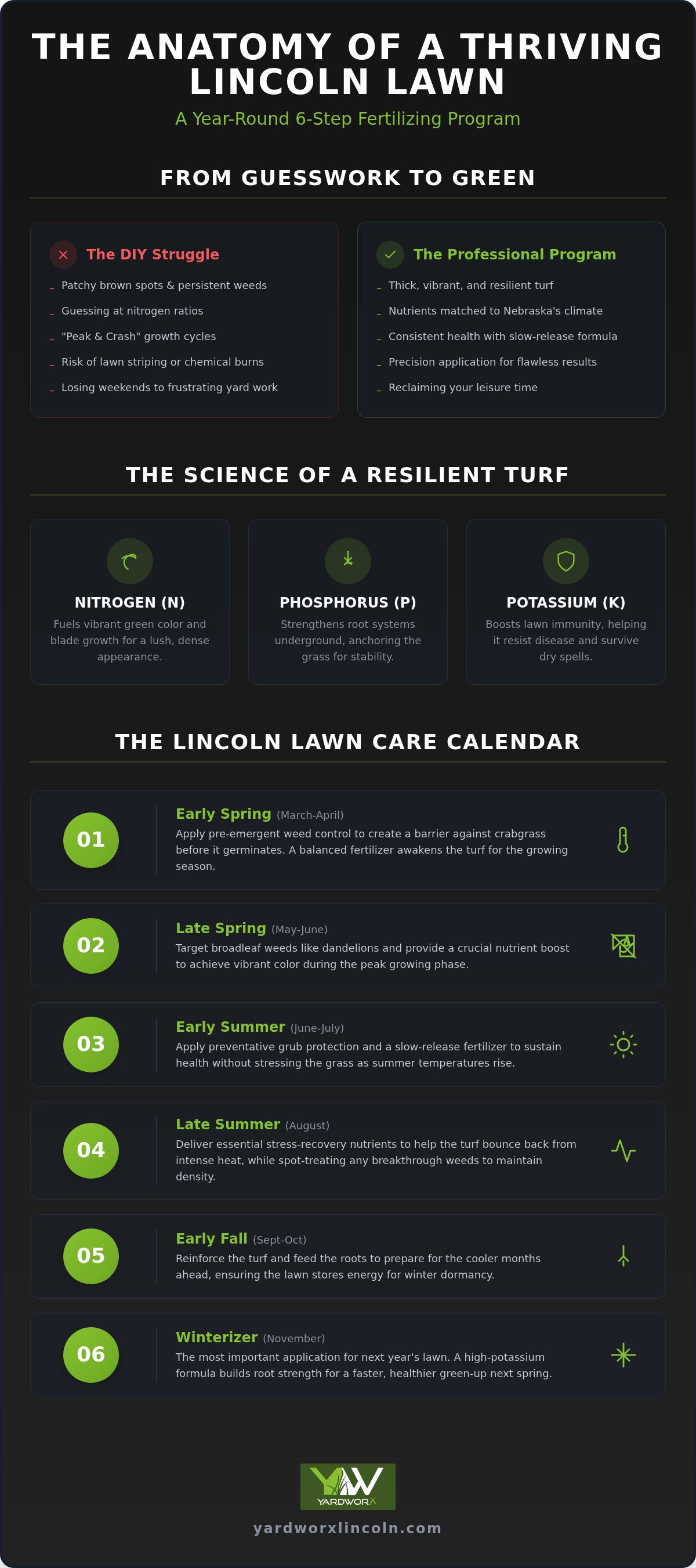
Key Takeaways
- Learn why year-round consistency outperforms one-off treatments for maintaining a vibrant and resilient Lincoln turf.
- Discover how a professional 6 step fertilizing program lawn strategy eliminates the guesswork of nitrogen ratios and application timing.
- Identify the specific treatments needed to target tough local weeds like Creeping Charlie and dandelions before they take over.
- Understand the benefits of precision application in preventing common DIY issues like lawn striping and accidental chemical burns.
- Reclaim your weekends by transitioning to a hands-off maintenance schedule managed by a reliable, locally owned team.
The Science of the 6-Step Fertilizing Program
A healthy lawn doesn't happen by accident. It's the result of a deliberate, holistic nutrient management system. While many homeowners hope a single bag of "weed-and-feed" from a big-box store will solve their problems, these one-time treatments often fall short. They provide a temporary surge of color but fail to support the grass through the intense heat of a Nebraska July. A professional 6 step fertilizing program lawn approach treats your turf as a living ecosystem that requires different nutrients as the seasons change.
Understanding The Science of Fertilizer is the first step toward a better yard. Every application uses a specific ratio of nitrogen, phosphorus, and potassium (NPK). Nitrogen fuels the vibrant green color and blade growth you see on the surface. Phosphorus focuses on the hidden world underground, strengthening the root systems that anchor your grass. Potassium acts like an immune system booster, helping your lawn resist diseases and survive the dry spells common in our region. By balancing these elements throughout the year, you build a lawn that's resilient from the inside out.
Nutrient Timing vs. Random Application
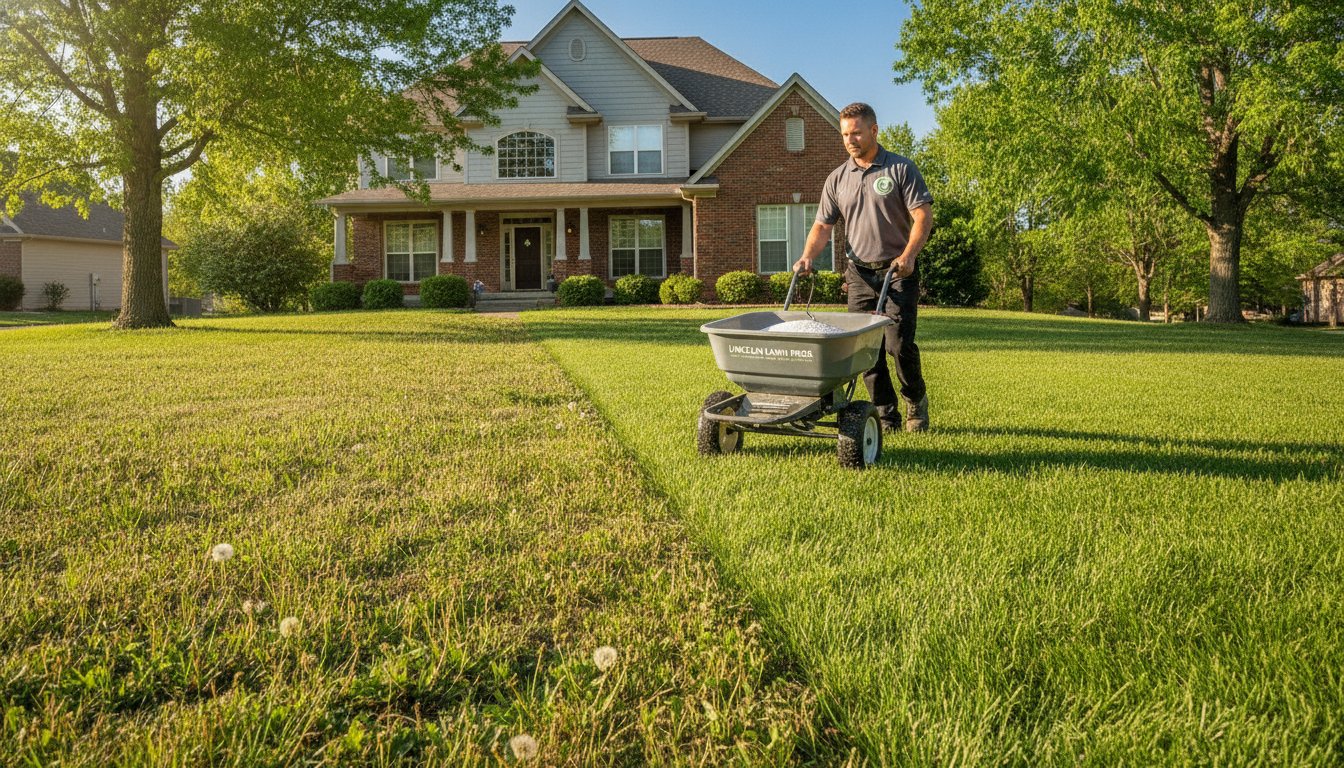
Applying fertilizer at the wrong time often leads to a "peak and crash" cycle. You might see a sudden explosion of growth that requires frequent mowing, followed by yellowing just weeks later. Standard consumer products often release nutrients all at once, which stresses the plant. Professional, slow-release fertilizers provide a steady, controlled feed that matches the natural growth cycle. This ensures consistent health without the maintenance headache.
Building Soil Health in Lincoln, NE
Lincoln's heavy clay soil compacts easily and drains poorly. A structured 6 step fertilizing program lawn doesn't just feed the grass; it improves soil structure over time. As nutrient levels stabilize, the ground becomes better at retaining moisture and allowing roots to breathe, which is vital during Nebraska droughts. A thick, lush turf density serves as your lawn's best natural defense by crowding out weed seeds before they can take hold.
The 2026 Lincoln Lawn Care Calendar: Breaking Down the 6 Steps
A successful 6 step fertilizing program lawn strategy depends entirely on the calendar. In Lincoln, our weather swings from freezing to sweltering in a matter of weeks, so a rigid date-based plan isn't enough. You need an approach that responds to soil temperatures and specific growth patterns. Following a structured schedule ensures your grass receives exactly what it needs at the precise moment it can use it most effectively. This methodical rhythm creates a lawn that doesn't just survive the season but actually thrives through it.
Our comprehensive program covers these essential stages:
- Step 1: Early Spring (March-April) : Application of pre-emergent weed control and a balanced fertilizer to wake up the turf.
- Step 2: Late Spring (May-June) : Broadleaf weed control and a nutrient boost for vibrant color during the peak growing phase.
- Step 3: Early Summer (June-July) : Preventive grub protection and slow-release feeding to sustain health as temperatures rise.
- Step 4: Late Summer (August) : Stress recovery nutrients and targeted weed spot treatments to maintain density.
- Step 5: Early Fall (September-October) : Turf reinforcement and root feeding to prepare for the cooler months ahead.
- Step 6: Winterizer (November) : High-potassium application for root strength and a faster green-up next spring.
Spring Essentials: Preventing the First Wave of Weeds
Step 1 is a high-stakes race against soil temperatures. Once the ground hits a consistent 55°F, crabgrass seeds begin to germinate across Lincoln lawns. Applying a pre-emergent during this critical window creates a protective barrier that stops these invaders before they ever break the surface. According to the UNL Extension Lawn Care Calendar, timing your applications based on local conditions is the most effective way to maintain turf health. Step 2 follows shortly after, providing a vital nutrient boost that deepens the green color as the growing season hits its full stride.
Summer and Fall: Protection and Preparation
Protecting roots from the intense July heat in Nebraska requires a steady hand. We use slow-release products during the summer to prevent growth surges that could stress the plant. As the weather cools, Step 6 becomes the most important application for your future lawn. This winterizer builds the underground energy reserves needed for a healthy start next year. If you're ready to let the experts handle the logistics, the team at Yardworx Lawn & Landscape can coordinate your fertilization with aeration and overseeding to ensure total property care.
Targeting Lincoln’s Toughest Weeds and Pests
While a consistent schedule is vital, the true strength of a 6 step fertilizing program lawn strategy lies in its ability to neutralize Lincoln's most aggressive invaders. Common weeds like dandelions and clover are persistent, but our region also faces resilient species that can quickly choke out healthy grass if left untreated. The Yardworx Lawn & Landscape approach utilizes Integrated Pest Management (IPM), a methodical system where we monitor your lawn's specific ecosystem to apply targeted treatments only when and where they are needed. This proactive care ensures we are building a robust defense that protects your property while remaining mindful of the local environment.
One of the most effective tools in this defensive lineup is the pre-emergent barrier applied early in the season. By stopping crabgrass seeds before they have the chance to germinate in the soil, we prevent the most common summer eyesore from ever appearing. It is far more efficient to block a weed's life cycle at the start than to battle a mature plant that has already established a footprint in your yard. This preventative layer is the foundation of a thick, uniform lawn that stays green and weed-free through the peak growing months.
Winning the War on Creeping Charlie
Many Lincoln homeowners find Creeping Charlie to be their most frustrating challenge. This low-growing, vine-like weed thrives in shady, moist areas and spreads through a complex network of runners that can quickly overtake large patches of turf. Because it has waxy leaves that repel standard store-bought sprays, it often survives DIY attempts at removal. Our team uses professional-grade selective herbicides designed to penetrate this waxy coating and travel down to the root system. We time these applications for when the plant is most vulnerable, ensuring this aggressive invader is neutralized without harming your surrounding grass.
Grub Control: Preventing Turf Destruction
Grubs are the silent destroyers of Nebraska lawns, living underground and feeding directly on your grass roots. You might have a grub infestation if your lawn feels spongy underfoot or if you notice irregular brown patches that can be lifted up like a piece of loose carpet. These larvae are typically the offspring of Japanese Beetles, and their presence can lead to secondary problems like mole activity. Moles are attracted to lawns with high grub populations as a primary food source. By including targeted grub control in Step 3 of our program, we protect your root system from damage and naturally discourage moles from tunneling through your property.