
A 6-step fertilizer program schedules six lawn-care treatments across the growing season, with the timing and treatment type changing as the grass’s needs shift. Fall feeding is an important part of the plan: it’s intended to help restore roots stressed by summer and support healthier spring green-up. That’s what to expect from a 6-step fertilizer program, a season-long approach rather than six identical applications.
It’s understandable to want a clear schedule and know what each visit is meant to do. The right timing depends on grass type and the local growing season, so a program for Lincoln should reflect Midwest conditions rather than follow a one-size-fits-all calendar. Cool-season lawns, common in the region, grow differently from warm-season grasses.
This guide explains how treatments change through the season, why grass type affects timing, and how fall fertilizer supports root recovery after summer stress. You’ll also see why fertilizing works best alongside sound mowing, watering, and aeration, and how each step contributes to lawn health.
WHAT IS A SIX STEP LAWN PROGRAM?
A six-step lawn program spreads fertilizer and weed control across the growing season. The exact treatment mix varies with the lawn and local timing. In Lincoln, the effective lawn-growing season runs roughly seven to eight months, from late March through November. The key is matching each treatment to grass growth, weeds, and seasonal stress.
How does a six-step program compare with a four-step or DIY plan? A six-step schedule spreads treatments across more points in the season; a four-step plan uses fewer visits. DIY care gives you control over products and timing, but you’ll need to coordinate applications consistently.
What are the six steps in a typical lawn fertilizer program? A common sequence includes spring pre-emergent protection, a late-spring follow-up, summer care, disease treatment when needed, fall recovery, and winter preparation. Some programs combine or adjust treatments to suit the lawn.
- Early spring pre-emergent crabgrass control and fertilizer: The first application pairs fertilizer with a pre-emergent herbicide. This helps feed turf as growth resumes and targets crabgrass before it becomes established. Timing follows seasonal conditions, not a fixed date for every yard.
- Spring pre-emergent follow-up and weed control: A second treatment can extend pre-emergent coverage and address broadleaf weeds. One example schedule places the repeat application after the first has been in place for 8-10 weeks. That interval is a program example, not a universal Lincoln calendar.
- Late-spring weed control and turf support: Fertilizer supports active grass growth, while broadleaf weed control targets visible weeds. A dense, actively growing lawn can better fill open spaces, but fertilizing alone cannot correct poor mowing or watering practices.
- Summer care and optional fungus control: Summer treatments may address insects or weeds, while extra preventive fungicide applications can be spaced 20 to 30 days apart during the disease-active season from May through September. Fungus risk and lawn conditions guide whether that added treatment is appropriate.
- Fall recovery fertilizer and broadleaf weed control: Fall fertilizer is intended to help restore roots damaged during summer and feed above-ground grass. Broadleaf weed control may accompany the application. This recovery phase supports healthier spring green-up after winter.
- Late-fall winter preparation: A final feeding can prepare cool-season turf for winter dormancy and support growth when spring returns. The product and timing should suit the lawn’s condition and the remaining growing season.
How much does a six-step lawn fertilizer program cost in the United States? The price depends on lawn size, treatment selection, turf condition, and application frequency, and is provided after a quote request. The number of steps alone doesn’t determine the cost.
For Lincoln lawns, the schedule should account for the local growing season and the grass’s response to heat. Explore the Lincoln lawn fertilizing program to see how seasonal treatments fit into a planned approach. That’s what to expect from a 6-step fertilizer program: a sequence of treatments shaped around seasonal lawn needs.
Second pre-emergent application
A second pre-emergent application extends early-spring weed prevention as turf moves into active growth. Timing, even coverage, and care around sensitive areas all affect how the treatment suits the lawn.
Seasonal Timing and Scheduling
In one schedule, the second application falls in mid-May, after the first has been in place for 8-10 weeks. Grass growth and weather help determine the useful window, so the calendar may shift with local conditions. A clear treatment notice should identify the planned application, its purpose, and any watering instructions, helping households plan around the visit.
Safe Application Around Sensitive Areas
For children and pets, follow the product label’s directions for access to treated turf. Point out gardens and newly seeded areas before applying, since the intended treatment and lawn condition affect where it belongs. The label also provides directions for handling and watering; avoid assuming one rule applies to every product.
A typical second pre-emergent application uses fertilizer labeled 17-3.5 with 25% PCSCU and .08% Dimension, scheduled for mid-May. The first treatment and this follow-up target weeds at different points in the season. Pre-emergent products are intended to prevent targeted weeds from establishing, while fertilizer supplies nutrients as grass grows.
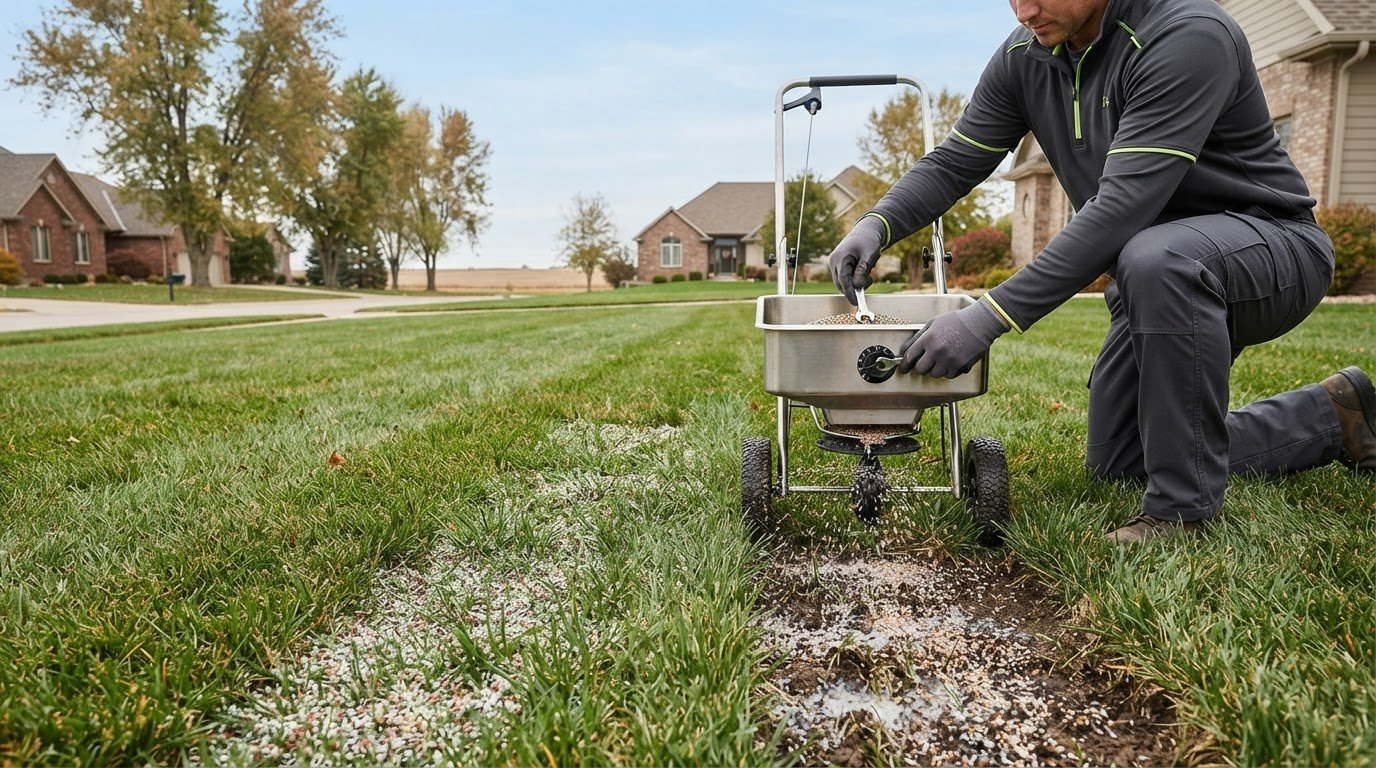
Even distribution matters. Calibrated spreaders help apply granular fertilizer evenly, while inconsistent coverage can leave patchy results. Application depth also affects nutrient availability, so measuring the lawn and applying the correct amount is more reliable than guessing by eye. Keep granules on the turf rather than allowing them to drift into garden beds.
Watering instructions are part of the application plan: customers are asked to water the lawn within 48 hours after treatment. The schedule should also distinguish this spring weed-control step from later summer treatments, such as grub control that targets larvae. Each application has a seasonal purpose, so the notice should make clear which treatment is being applied and what follow-up the lawn needs.
Two details deserve attention together, but they are not interchangeable: uneven fertilizer application can produce patchy results, and improper application depth can affect nutrient availability. A treatment plan is stronger when it keeps both concerns in view rather than treating a generally even-looking pass as the whole measure of care. The aim is to avoid patchiness while also respecting the depth concern; neither point replaces the other. Keeping these considerations distinct helps maintain focus on the application itself.
How grass type and growing season determine program frequency
A six-step schedule works best when its timing follows grass growth, not just calendar dates. In Lincoln, the effective growing season runs roughly seven to eight months, from late March through November. Cool-season turf needs different timing from warm-season grass.
Does a six-step schedule fit every lawn? No. Grass type, active growth, weather, soil, and existing turf stress all affect useful timing and frequency. The goal is healthy growth, not simply applying more fertilizer for a greener appearance.
Cool-Season Grass and Midwest Timing
Cool-season grasses dominate many Midwest lawns and grow most actively when temperatures are between 60 and 75 degrees. Their seasonal feeding windows typically include early spring, late spring, early fall, and late fall. In Lincoln, those growth periods need to fit the local season, which stretches from late March through November.
Summer changes the plan. When temperatures rise above 85 to 90 degrees, cool-season grasses reduce metabolic activity. Fertilizing during hot, dry conditions can add stress rather than support useful growth, so summer applications should account for heat, moisture, and turf condition. Winter dormancy is another poor time to push active growth.
Why More Fertilizer Can Work Against Turf
Fertilizer beyond the lawn’s needs can waste product, harm grass, and contribute to environmental problems. Too little can also leave turf short of nutrients. The appropriate application rate depends on the product, the lawn’s needs, and the area being treated. Soil testing can help identify nutrient levels and pH.
Grass responds differently depending on soil and weather. For example, a lawn facing summer heat may not benefit from the same timing as turf entering active fall growth. Insect activity or visible stress may call for a separate lawn treatment, not an automatic increase in fertilizer.
Seasonal Planning and Local Requirements
In Nebraska, a seasonal plan can time treatments around active growth: early- and late-spring feeding, followed by early- and late-fall applications. The schedule should avoid hot, dry summer conditions and winter dormancy. A six-step plan may include weed or insect treatments alongside fertilizer, but these steps serve different purposes.
Do local or state rules restrict fertilizer timing, phosphorus, or applications near waterways? Requirements depend on the jurisdiction and the specific restriction, so a general six-step calendar can’t answer every compliance question. Account for applicable rules when choosing treatment timing, products, and application locations.
Benefits of an all-inclusive lawn fertilization program
A coordinated lawn care plan connects fertilizer timing with weed control and ongoing turf care. An early-season application, for example, can target crabgrass while supporting grass growth; a later treatment can address broadleaf weeds. Giving each step a clear purpose makes the schedule easier to follow than separate, uncoordinated applications.
You may notice gradual changes in color, density, and weed pressure as the lawn responds to treatments. The timing and degree of change depend on weather, soil, and existing turf condition. Fertilizer supports growth, but it can’t correct every cause of thin or stressed grass on its own.
Monitoring connects each application to what the lawn actually shows. After treatment, look for uneven color, persistent weeds, thin patches, or signs of stress. These observations can help distinguish a nutrition issue from problems related to watering, mowing, soil compaction, or weather. Adjustments should reflect the lawn’s needs rather than automatically adding fertilizer.
- Crabgrass remains visible: Review whether early-season weed control matched the lawn’s timing and conditions.
- Broadleaf weeds persist: Identify the affected areas and consider whether the treatment targeted those weeds.
- Grass looks uneven: Check coverage and application technique, since inconsistent distribution can create patchy results.
- Growth slows during heat: Consider weather and moisture before assuming the lawn needs more fertilizer.
Fertilization works best alongside proper mowing, watering, and aeration. Aeration helps address compacted soil, while overseeding introduces grass seed to thin areas. Together, these practices support turf growth and help new grass establish in open areas. They serve a different purpose from fertilizer, which supplies nutrients rather than filling bare spots.
A thin patch, for instance, may need overseeding and suitable watering, while a compacted area may benefit from aeration. Fertilizer alone won’t replace either step. Matching the treatment to the visible problem keeps the program practical and avoids applying products without a clear purpose.
Timing matters throughout the season. Fertilizer supports active growth, while aeration and overseeding should suit the lawn’s condition and growing period. A six-step program coordinates these seasonal decisions, but the lawn’s response, including soil and weather conditions, guides any adjustments. The goal is a coordinated approach to healthy turf, not instant transformation.
Fall fertilizer to support root recovery
Fall feeding helps the lawn recover after summer stress. The application is intended to support roots affected by summer and provide nutrients for above-ground grass. Fall fertilization and winter preparation can also support healthier spring green-up the following year. Fall fertilizer is a seasonal part of lawn care, not simply an attempt to keep grass green before winter.
In one fall schedule, fertilizer labeled 18-3-9 with 30% UFLEXX and 2% Iron Oxide is applied during September and October. Those figures describe that specific fertilizer example, not every fall product. Fertilizers release nutrients at different rates and in different forms, so product choice and application timing should match the lawn’s needs.
Root recovery matters because summer conditions can stress turf. A fall application supplies nutrients as the lawn prepares for winter, supporting above-ground growth as well. The aim is to support recovery and the seasonal transition, rather than force growth regardless of weather, soil, or turf condition.
- Consider the lawn’s summer condition: Areas with visible stress may need attention as the lawn enters fall growth.
- Match the product to the need: Nutrient composition and release rate influence how fertilizer fits the application.
- Use even coverage: Consistent application helps avoid untreated strips and concentrated patches.
- Coordinate weed control: Broadleaf weed control may accompany fall fertilization, depending on the program.
Fall applications can combine fertilizer and broadleaf weed control to address two seasonal lawn needs in one visit. Fertilizer supports the grass, while weed control targets broadleaf weeds. These treatments serve different purposes, so the lawn’s condition and selected product should guide how they’re combined.
Watering and mowing still matter after fall fertilizer. Follow the product’s application directions and adjust routine lawn care to current growth. Fertilization works best alongside proper mowing, watering, and aeration; nutrients alone can’t overcome poor care practices. Soil and weather also affect the lawn’s response, so watch for changes rather than expecting every yard to react identically.
As winter approaches, fall feeding helps prepare the lawn for the dormant season and supports spring green-up. For a practical next step, request help planning fall lawn care around root recovery and seasonal fertilizer timing.
In Lincoln, Nebraska, Yardworx Lawn & Landscape schedules slow-release fertilization and broadleaf weed control for mid-September, followed by winterizing fertilization in late October to complete what to expect from a 6-step fertilizer program.
Yardworx Lawn & Landscape: Weekly Lawn Mowing Services
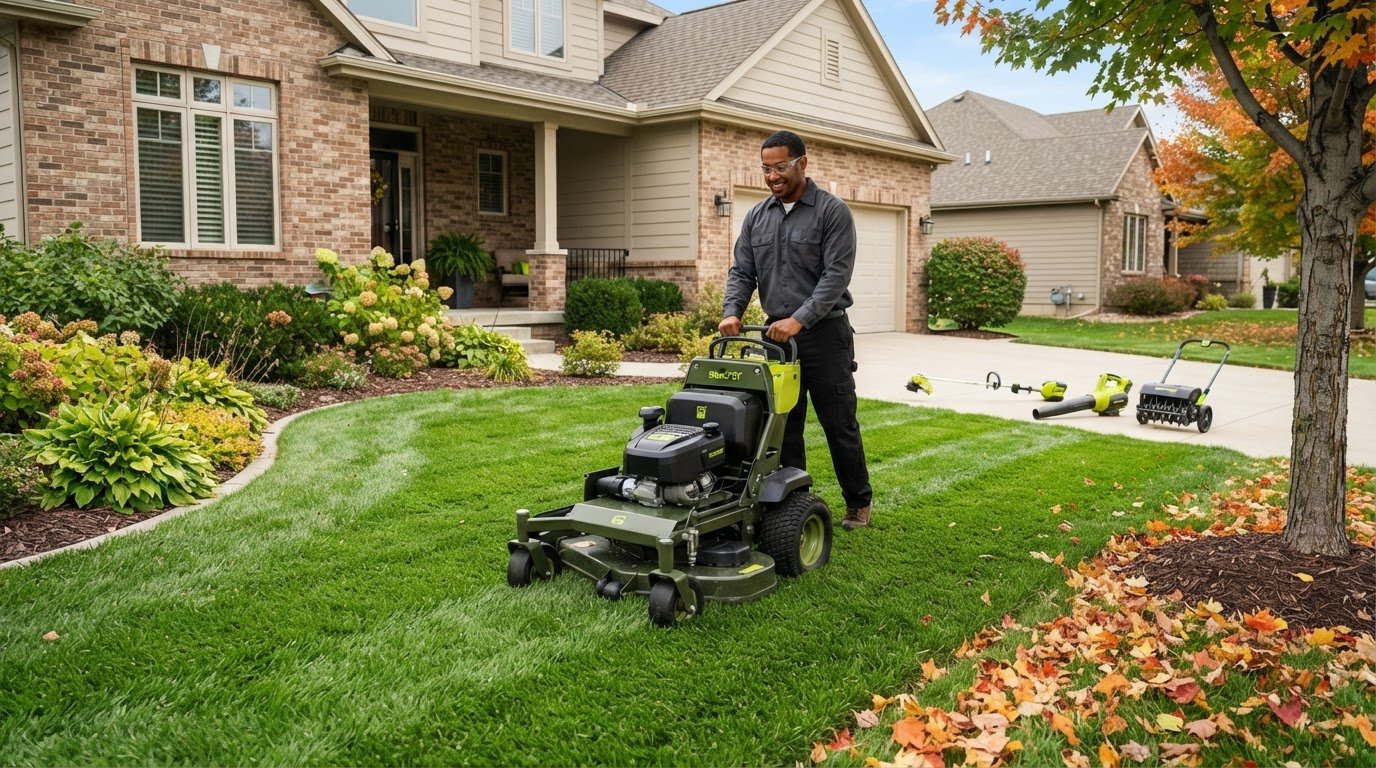
Yardworx Lawn & Landscape is a natural next step when you want a steady routine for both lawn growth and appearance. Its 6-Step Fertilizing Program supports seasonal feeding, while Weekly Lawn Mowing Services help keep grass maintained through the growing season.
If your lawn has thin or compacted areas, Aeration & Overseeding can complement fertilizing by addressing soil and turf coverage. These services target different needs, helping you focus on the condition your lawn shows, whether it needs regular upkeep, seasonal nutrients, or support for sparse growth.
Contact Yardworx Lawn & Landscape to discuss lawn care for your property.
Give Your Lawn a Thoughtful Next Step
Understanding what to expect from a 6-step fertilizer program can help you make a steady plan for your lawn, rather than reacting to every bare patch or weed as it appears. The next step is to match routine care to what your yard needs now, then build from there as the season changes.
Yardworx Lawn & Landscape offers a 6-Step Fertilizing Program, Weekly Lawn Mowing Services, and Aeration & Overseeding. Together, these options address seasonal feeding, regular upkeep, and thin or compacted turf, each with a distinct role in lawn care. Choose the support that fits your property and the work you want taken off your list.
Contact Yardworx Lawn & Landscape to discuss your lawn care. A thoughtful plan can make caring for your yard feel more manageable and help you move into the next season with confidence.
Frequently Asked Questions
Why fertilize through a program?
A program coordinates applications with the lawn’s changing needs instead of treating every season alike. It also gives you a routine for noticing what’s working, such as whether weeds persist or turf stays thin. In Lincoln, soil testing can help guide nutrient choices by showing nutrient levels, pH, and organic matter. That information makes lawn care decisions more specific than choosing fertilizer by appearance alone.
What’s in each of the steps?
The contents vary by program, but six visits can combine fertilizer with targeted lawn treatments. A typical plan may address pre-emergent weed prevention, follow-up weed control, summer insects, broadleaf weeds, and fall or winter preparation. Each treatment has a different purpose: fertilizer supplies nutrients, while weed or insect control targets specific pests. Review the purpose of each scheduled application to distinguish routine feeding from treatment for a particular lawn issue.
When should each step of a six-step fertilizer program be applied?
Timing follows active grass growth and local weather, not a universal calendar. Yardworx Lawn & Landscape spaces fertilizer applications every 45 to 60 days from spring through fall. In Lincoln, that schedule should account for cool-season turf slowing during hot, dry weather. Before each visit, note recent rainfall, dry areas, and mowing activity; those conditions help explain how the lawn may respond and whether watering instructions need attention afterward.
What nutrients and products are included in each fertilizer application?
Products differ in nutrient balance and release rate, so every step need not use the same fertilizer. Product labels show the nutrient analysis, while soil conditions and the lawn’s needs guide selection. For example, a product labeled 17-3.5 represents a different nutrient balance from one labeled 18-3-9. Those are program examples, not a fixed formula for every lawn. Application rates also depend on the product and the area being treated.
How does a six-step fertilizer program vary by grass type and climate region?
Grass type and the length of its active growing season shape the schedule. Midwest lawns commonly use cool-season grasses, while warm-season lawns in the Deep South can grow for nine to ten months. These regional differences affect when fertilizer supports active growth and when applications should pause. In Lincoln, weather patterns and lawn growth provide more useful timing cues than copying a calendar designed for a warmer climate—where properties often benefit from tailored approaches by designers like Nu Scape Designs that prioritize low-maintenance, regional landscape planning.
What are the risks of overfertilizing, including lawn burn and nutrient runoff?
Too much fertilizer can harm grass, waste product, and contribute to environmental problems. Lawn burn is visible turf injury, while excess nutrients can move beyond the treated area. Apply only the amount suited to the lawn’s needs and measured area, and spread it evenly. Don’t wash granules from hard surfaces into drains. Proper equipment and careful coverage help reduce uneven results and unnecessary fertilizer movement.
How much does a six-step lawn fertilizer program cost in the United States?
Costs vary with lawn size, treatment selection, turf condition, and application frequency.