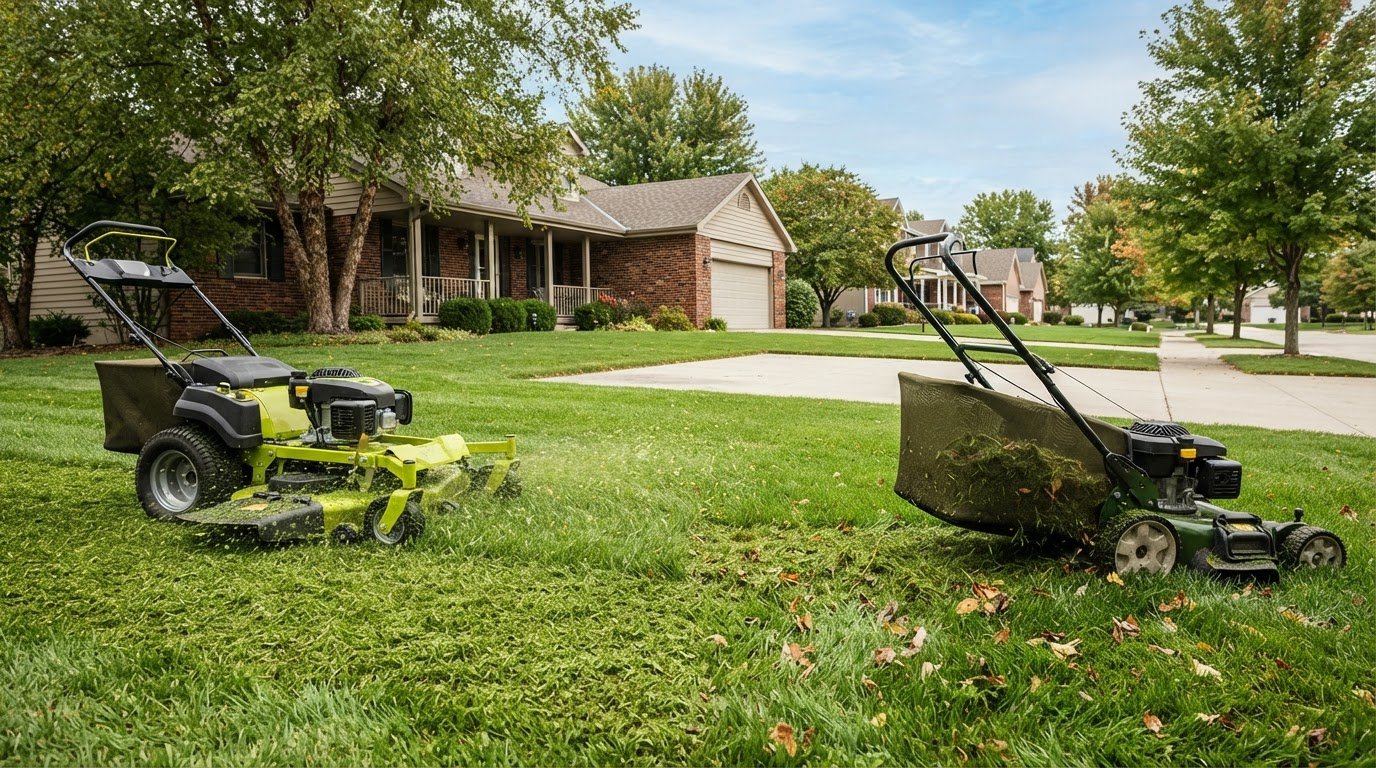
A Lincoln lawn typically needs 20-24 mowing visits from April through October, so lawn care in University Place, Lincoln, is best budgeted as a seasonal plan rather than a single task. The annual total depends on which services your yard needs, including mowing, lawn treatments, aeration and overseeding, leaf removal, or snow and ice removal.
It’s understandable to want a clear number before planning the year. But a useful budget starts with the work your lawn needs and when it should be done, not with treating every service as a fixed annual expense.
This guide explains how to plan your yearly yard-care needs, when seasonal services fit, and how fertilization and weed control support a healthy lawn. You’ll also learn how mowing schedules respond to growing conditions and what to consider when arranging maintenance, aeration, overseeding, and winter snow removal in University Place, Lincoln.
What's optimal timing for seasonal lawn services?
In Lincoln, plan for 20-24 mowing visits from April through October, with timing adjusted as grass grows. For University Place, compare recurring schedules and estimate terms; a quote request should define the yard and work involved.
Seasonal Mowing and Maintenance Timing
Lincoln’s main mowing season runs from April through October, and peak growth can call for mowing every 7-10 days. A seasonal plan should follow the grass, not just the calendar: spring growth may speed up after rain, while a slower-growing stretch can change the interval. In fall, account for leaves and the final growth period when setting visits.
For residential yards, map the season in steps: set a regular mowing rhythm, adjust it as growth changes, then schedule fall cleanup around leaf buildup. The Lincoln lawn care page gives local service context. A defined schedule makes it easier to plan visits across the growing season.
Factors That Shape Mowing Schedules
Rainfall, grass type, and season all affect how quickly a lawn grows and how often it needs mowing. After a rainy stretch, a residential lawn may grow faster than during dry weather. Watch for rapid growth and adjust the schedule to suit the lawn rather than assuming the same interval will work from April through October.
Property conditions matter, too. Shaded sections may grow differently from sunny, open areas, while slopes, narrow strips, and obstacles affect how a mowing visit is carried out. A yard with several garden edges, for example, needs more finishing work than a simple open lawn. Describe these details when requesting a quote so the work scope reflects your University Place property.
Mowing, Edging, and Trimming
Mowing maintains the open lawn, while edging sharpens borders and trimming reaches around fences, trees, and beds. Together, these tasks give a property a tidy finish. When comparing estimates, check that the requested scope clearly describes the work rather than assuming “mowing” includes every finishing task.
Price depends on lawn size, growth, visit frequency, and the amount of edging or trimming required, and is given after a quote request. Instant estimates may not reflect those details until the work scope is clear. For one-time mowing, define the specific visit and finishing tasks; for recurring service, set an ongoing cadence that can adjust with growth. This helps match the schedule to the lawn instead of paying for a routine that doesn’t fit.
If you’re looking for recurring lawn care in University Place, Lincoln, compare the work included and the available scheduling options. Yardworx provides weekly mowing as part of seasonal service packages, with no residential contract required. Request a quote for your property and the specific work you need.
What should I budget annually for Lincoln yard care services?
Build an annual plan around the work your University Place property needs, rather than assuming every yard requires the same service mix. Lincoln location, lawn condition, irrigation setup, and landscaping features all affect the scope.
Service Coverage and Local Availability
University Place is a Lincoln neighborhood, and Yardworx serves the entire city. Available services include weekly mowing, lawn treatments, landscape bed weed control, irrigation maintenance, leaf removal, and snow and ice removal. Choose the tasks that fit your property and the season.
Which companies serve University Place in Lincoln, NE? Yardworx provides lawn and landscape services across Lincoln, including weekly mowing, lawn treatments, seasonal cleanup, and snow and ice removal. When requesting a quote, describe the specific tasks and areas you want included.
What lawn care services are available in University Place, Lincoln, Nebraska? Yardworx offers weekly mowing, fertilizing and weed control, irrigation maintenance, leaf removal, and snow and ice removal. Aeration and overseeding, landscape bed weed control, and other seasonal services can address needs beyond routine mowing.
Budgeting for Landscaping and Maintenance
Group annual expenses by purpose: routine turf care, landscape-bed upkeep, irrigation maintenance, and seasonal cleanup. Then note which tasks recur and which are occasional. A property with planted beds, irrigation equipment, and areas that collect leaves needs a different work plan from a simple open lawn.
For a useful quote, describe the lawn’s size and condition, areas needing trimming, beds needing weed control, and any irrigation concerns. The work requested and property conditions affect the estimate. A written task list makes it easier to compare the scope of services without confusing different kinds of work.
What should homeowners check before hiring a lawn care company in University Place? Compare the written scope, visit frequency, seasonal tasks, and how the schedule accommodates changes in growth or weather. Make sure the estimate distinguishes mowing from edging, bed care, irrigation maintenance, and cleanup.
Local Rules and Turf Choices
Do Lincoln or Lancaster County have lawn watering restrictions or local lawn care rules? Any applicable watering limits concern irrigation, not mowing or edging, so follow current local water-use instructions when watering. Keep irrigation decisions separate from the rest of your maintenance plan.
What grass types and lawn care practices are best for University Place, Lincoln? Cool-season turf, such as Kentucky bluegrass or tall fescue, suits the region. Choose care based on the existing grass, shade, soil moisture, and wear. A shaded lawn and a sunny play area, for example, may need different attention.
Lincoln’s service hours can differ by provider, so include preferred visit windows when arranging a recurring plan. For a property-specific outline, share your yard-care needs and the tasks you want included.
Aeration, overseeding, and snow removal costs
These services address different seasonal needs, so plan for each according to the work involved. Aeration relieves compacted soil, overseeding adds grass seed to thin areas, and snow and ice removal addresses winter accumulation. A lawn with worn patches may benefit from aeration and overseeding, while a property with walkways and a driveway may also need winter clearing.
Before arranging aeration and overseeding, consider the lawn’s condition. Compacted ground, thin growth, and bare patches help define the work area and whether both services make sense. Yardworx offers aeration and overseeding as a turf-care service. Describe the affected areas and current lawn condition when requesting a quote.
Aeration and fertilizing serve different purposes. Aeration opens the soil, while a fertilizing program supplies nutrients; neither replaces the other. A 6-step fertilizing program is one structured option, while aeration and overseeding address soil compaction and thin turf. For example, a lawn with healthy coverage but compacted soil may need a different plan from one with bare areas.
Lincoln homeowners should also consider the timing of turf work. Aeration and overseeding are commonly scheduled when grass can recover and new seed can establish, rather than during harsh summer heat or dormant winter conditions. The best sequence depends on the turf’s condition and the area being treated. Describe bare spots, heavy foot traffic, and soil compaction to shape the scope. If turf damage or ridges stem from underground burrowing, insights from Aerating Thatching Co. can help identify and resolve mole issues before reseeding.
Snow removal is a separate winter budget item, often arranged by event or through a recurring plan. The work area matters: clearing a driveway differs from clearing a longer walkway or several access points. List the surfaces that need attention and whether ice treatment is part of the requested scope. This makes the estimate reflect the actual property rather than a general description.
Prices for these services depend on the property and the requested work, and are given after a quote request. For aeration, relevant factors include lawn area, soil condition, and whether overseeding is included. For snow and ice removal, consider the areas to clear, access, and the service arrangement. Request separate line items so seasonal turf work and winter removal remain easy to compare.
Prepare by walking the lawn and noting thin patches, compacted paths, and areas where water collects. Then list winter surfaces, such as the driveway and front walk. These details help distinguish seasonal turf care from winter removal and make it easier to plan the work for your property.
These services cover distinct tasks, so compare each with the work your property needs. A quote can clarify how lawn area, surface access, and requested treatments shape the scope.
Landscaping maintenance
In University Place, landscape maintenance covers the areas around the lawn as well as the turf itself. A useful plan separates open grass, planting beds, irrigation areas, and walkways. A property with weed-prone beds, for example, needs different attention from one with mostly open lawn. Walk the yard and note each area before setting a maintenance routine.
Start with the landscape beds. Identify weeds, exposed soil, and places where grass is creeping into planting areas. Yardworx provides landscape bed weed control to help keep these boundaries neater. Note which beds need attention and whether weeds are scattered or widespread. A clear description helps define the work instead of treating every part of the landscape as the same task.
Irrigation maintenance is another part of a complete landscape plan. Look for uneven watering, blocked sprinkler heads, and areas that stay dry while nearby grass appears wet. Observe each zone while it runs, noting heads that spray pavement or miss planting beds. These details help identify where irrigation maintenance may be useful.
Lincoln’s summer mowing guidance recommends keeping grass at 3 inches or more during June through August . That height is a useful reference when coordinating mowing with surrounding landscape work. For instance, mowing too close to a bed edge can leave an untidy border, while a clear boundary makes the lawn and planting area look deliberate. Include bed edges and irrigation zones in the yard’s maintenance notes.
Fall maintenance can include checking beds for weeds, inspecting irrigation performance, and planning leaf removal around lawns and planted areas. Leaves in a bed may need different attention from leaves covering grass or a walkway. Make a short checklist of beds needing weed control, visible irrigation issues, and places where leaves collect. This keeps seasonal tasks distinct and helps prevent overlooked areas.
The scope of landscape maintenance depends on the property and requested work. Relevant factors include the number and condition of beds, the amount of weed control needed, access around planting areas, and any irrigation maintenance. A small bed beside a clear walkway presents a different scope from several beds with dense weeds and obstructed sprinkler heads.
Use a simple walkthrough to prepare: start at the front entry, follow the lawn edge, inspect each bed, then observe the irrigation zones. Record specific issues, such as weeds beside a foundation or a sprinkler head watering a sidewalk. These observations help turn a broad landscaping request into a practical maintenance plan for your University Place property.
Lincoln lawn fertilization and weed control
Fertilization and weed control address different problems, even when they affect the same lawn. Fertilizer supports turf growth, while weed control targets unwanted plants in the grass or landscape beds. In Lincoln, start by identifying what you see: thin turf, uneven color, broadleaf weeds, or weeds concentrated along bed edges. This helps shape a plan around your lawn’s actual needs.
Before choosing a fertilizer approach, inspect the lawn’s condition and recent care. Note areas that look pale, patches with uneven growth, and places where grass competes with weeds. Dense, even growth may call for a different treatment plan from thin areas with visible weeds. Record these differences so the work can address specific sections.
Timing should follow the lawn’s growing season and condition. Fertilizer applied when grass is actively growing can support turf development, while an unsuitable application period may not match what the lawn needs. Weed control also depends on the target: a weed growing through turf is different from one spreading across a planting bed. Describe the weed’s location and appearance before planning treatment.
Separate lawn weeds from landscape-bed weeds. Dandelions scattered through grass, for example, differ from weeds emerging among shrubs or around a walkway. Bed edges need attention because grass and weeds can spread into planting areas. Yardworx’s landscape bed weed control targets these areas and helps maintain a defined border between lawn and beds.
Fertilization and weed control work best as parts of an ongoing maintenance plan, not as interchangeable tasks. A treatment schedule should account for the lawn’s condition, the type of weeds present, and seasonal growth. Keep a simple record of treated areas and visible changes. If the same weed returns near a fence or bed edge, that location can guide the next inspection and treatment decision.
For lawn care in University Place, Lincoln, start with a walk-through. Mark thin or discolored areas, identify weeds by location, and note whether they appear in grass or beds. Then describe recent maintenance and any irrigation concerns. These details help define the work and distinguish a lawn treatment from landscape bed weed control.
Keep expectations grounded in the actual scope: the treatment selected, the area covered, and the lawn’s existing condition all matter. A property with isolated weeds needs a different plan from one with widespread growth. Share your observations and request help planning lawn fertilization and weed control for the areas that need attention.
Yardworx Lawn & Landscape in Lincoln offers pest control, including mosquito and tick treatments, as well as Christmas light installation. These seasonal services are separate from fertilization and weed control.
Yardworx Lawn & Landscape: Weekly Lawn Mowing Services
Yardworx Lawn & Landscape provides weekly lawn mowing for homeowners who want a steady maintenance routine through the growing season. Pairing regular mowing with a 6-Step Fertilizing Program can address both recurring upkeep and turf nutrition. For lawns with compacted soil or thin patches, Aeration & Overseeding offers a separate seasonal service to consider.
Choose services that fit your yard’s needs: weekly mowing for regular upkeep, fertilizing and weed control for planned lawn treatments, or aeration and overseeding for turf care. Matching each task to its purpose helps organize ongoing care without treating every service as part of the same visit.
For weekly mowing or help planning lawn care, visit Yardworx Lawn & Landscape online or contact the team.
Build a Yard Plan That Works for You
Turn your notes into a practical yard-care plan by deciding which areas need attention first. You might prioritize a healthy lawn, clearer planting beds, or a more manageable seasonal routine. For lawn care in University Place, Lincoln, matching each task to your property’s needs makes the next steps easier to organize.
Yardworx Lawn & Landscape provides Weekly Lawn Mowing Services, a 6-Step Fertilizing Program, and Aeration & Overseeding. These options can support different goals, from consistent upkeep to care for thin or compacted turf. Choose the service that fits the work you want done, then describe the areas and concerns that matter most.
Ready to put your yard plan into action? Contact Yardworx Lawn & Landscape to discuss your lawn-care needs. A clear starting point can help you move toward a tidier, healthier outdoor space with greater ease.
Frequently Asked Questions
How often should my grass be mowed?
During peak growth in Lincoln, mow every 7-10 days, then adjust as growth slows. For example, a lawn growing quickly after rain may need attention sooner than a lawn growing slowly in dry weather. Check the grass regularly rather than relying on a fixed weekday. Keeping a consistent rhythm helps prevent long, uneven growth and makes each mowing easier to manage.
What are the benefits of professional lawn care?
Professional lawn care can make recurring yard tasks easier to organize and keep the work consistent. For example, weekly mowing can be coordinated with fertilizing or aeration when those needs arise. Yardworx mulches grass clippings back into the lawn, returning them to the turf rather than removing them. Residential services don’t require contracts, and service hours are Monday through Friday, 8 am to 5 pm; weekends are closed.
What are typical lawn mowing prices in University Place, Lincoln?
The scope of mowing depends on the property and requested work. Lawn size, grass condition, visit frequency, and the amount of edging or trimming affect the work involved. To help define a quote, describe the yard’s layout and areas needing extra attention, such as narrow strips beside a fence or grass around planting beds. Yardworx’s weekly mowing service is offered through seasonal packages.
When should lawns in Lincoln, Nebraska be fertilized, aerated, and overseeded?
Fertilizer applications are spaced every 45 to 60 days from spring through fall. Aeration and overseeding are recommended in fall, typically starting mid-August. For example, a homeowner planning fall turf work can schedule those services around the lawn’s condition and the areas needing attention. Aeration and overseeding are available together, while fertilizing follows its own seasonal application schedule.
Which lawn care companies serve University Place in Lincoln, NE?
Yardworx Lawn and Landscape serves Lincoln with weekly mowing, fertilization, weed control, landscape maintenance, leaf removal, and snow and ice removal. Its services are available across the city, including University Place. Request a quote and describe the work your property needs.
How do local lawn care companies compare by reviews, services, and reliability?
Compare providers by written scope, visit frequency, seasonal services, and how they handle schedule changes due to growth or weather. Local professionals completed 313 jobs over the period described and had a 92% repeat customer rate; these figures do not compare individual providers.