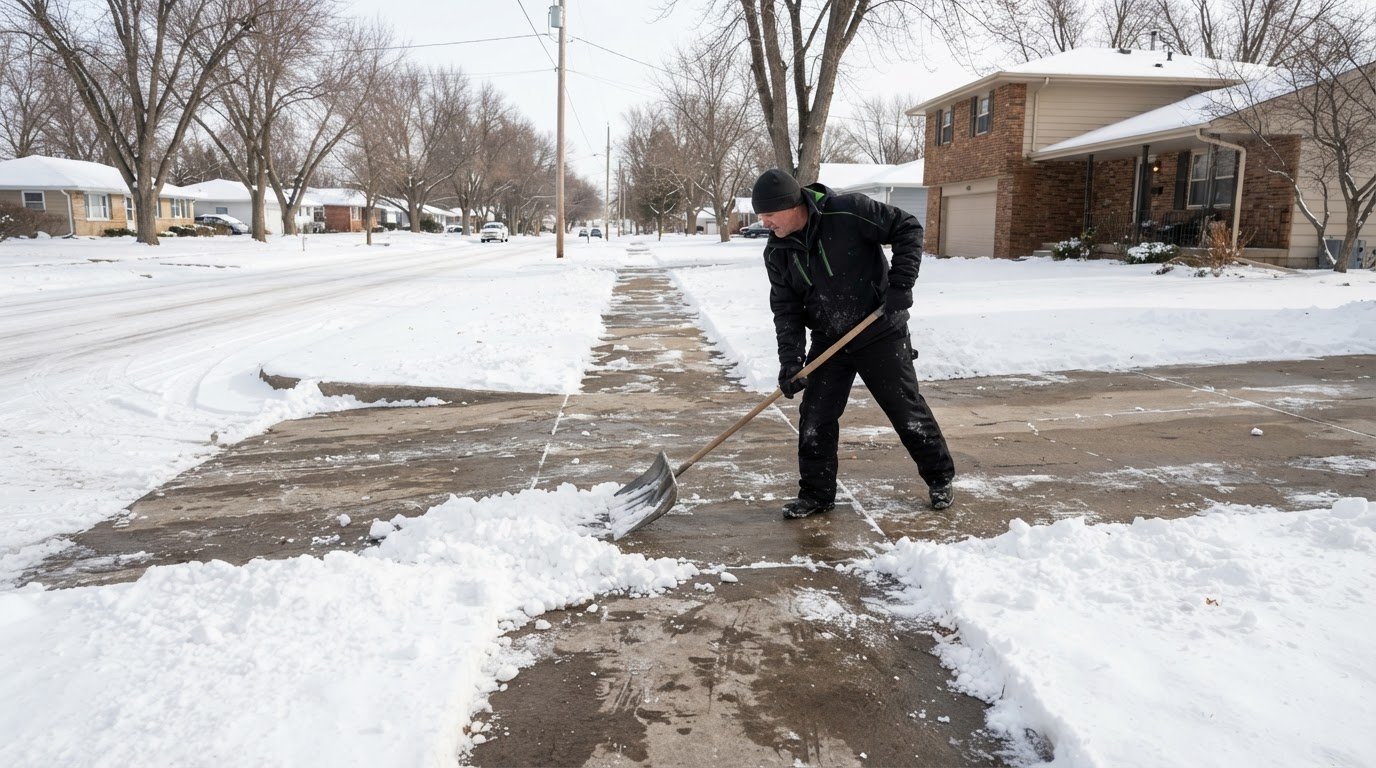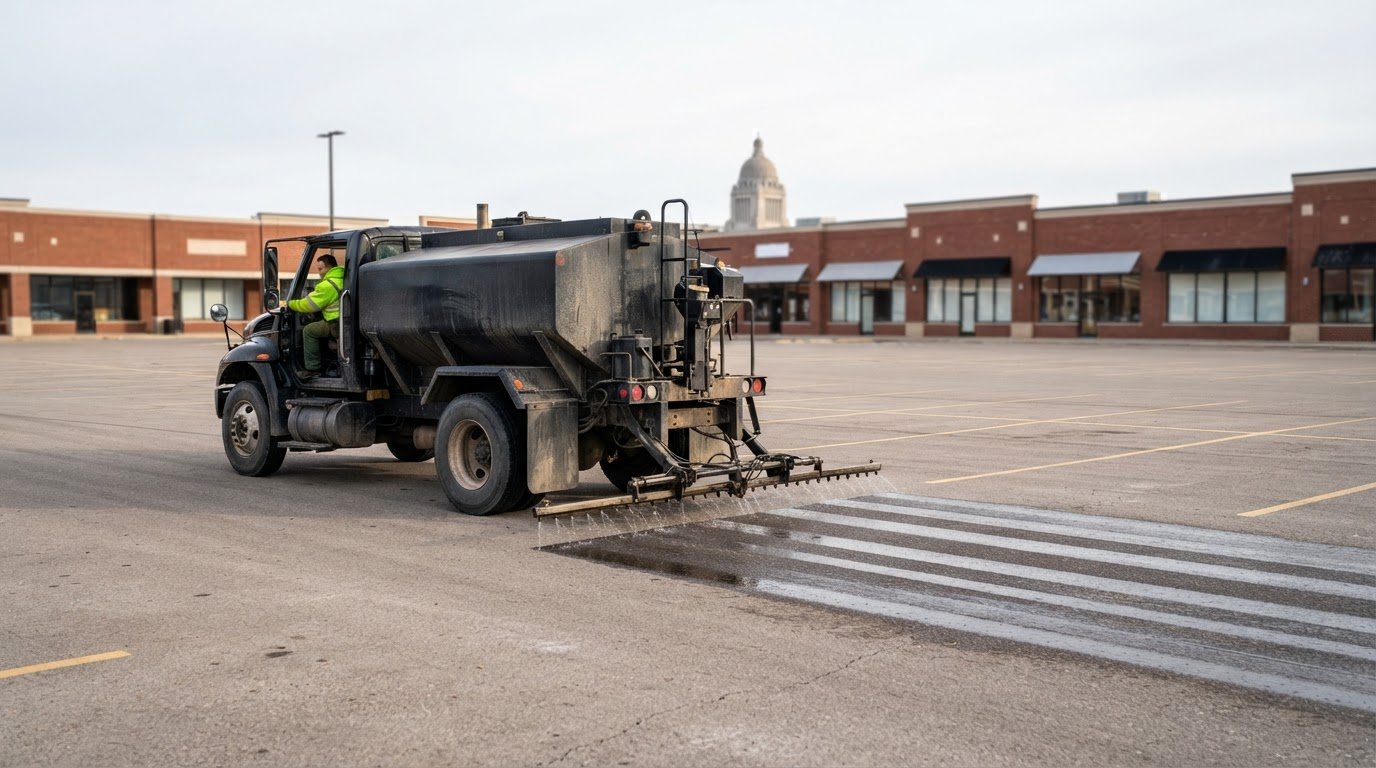

Snow damage is often decided before the first plow pass. The practical answer to how to avoid lawn damage from snow plows is to mark lawn edges and beds clearly, then plan snow piles away from vulnerable grass and shrubs. Keep snow from being repeatedly pushed onto the same turf, where its weight and salt can take a toll.
It’s easy to focus on clearing the driveway and leave lawn care for later, but a little planning can help protect both. This guide explains where to direct snow, how to reduce salt stress on grass and shrubs, and what to do about torn turf, bare spots, and uneven edges after the ground thaws. You’ll also learn how to identify damage that needs more than a quick spring cleanup and plan recovery in the right order.
2. Managing salt damage to grass
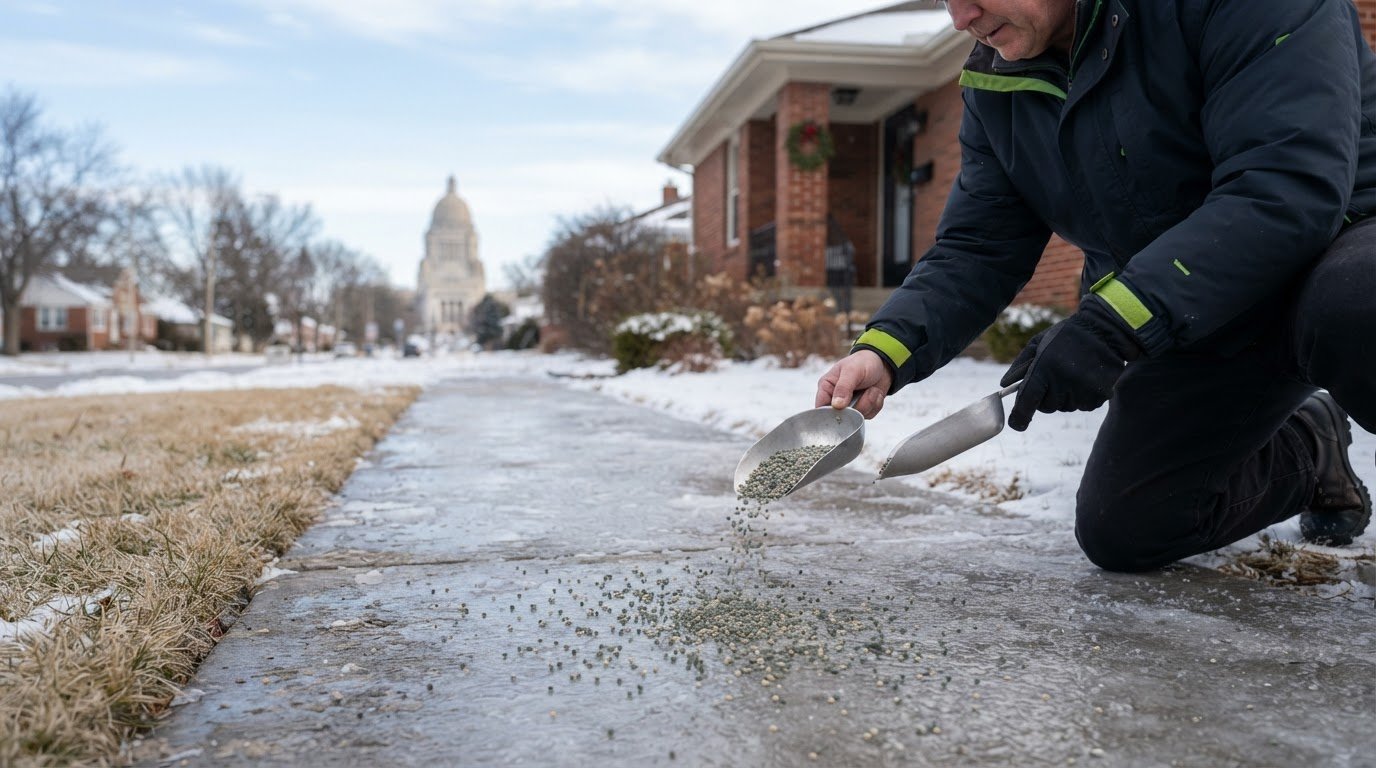
Salt and ice-melt products can stress grass, leaving brown patches. Along a driveway or curb, plowed snow may hold salt against the same turf through repeated storms. Planning where snow goes can reduce exposure, but spring care also matters if salt has reached the lawn.
Once grass begins growing, flush affected areas with water and assess their condition. Check the full area beside the pavement, not just the most visible brown patch. Salt can spread with melting snow, so damage may follow runoff or appear where snow was repeatedly piled. Compare affected spots with nearby grass that had less contact.
Spring rain alone may not resolve salt damage. If brown patches persist after growth resumes, consider how often the area was exposed to salt or ice melt. Repeated exposure may call for targeted treatment rather than waiting for rain to restore the turf. Address the recurring salt contact too, or the same strip may remain vulnerable next winter.
- Trace the exposure: Check curbside edges, driveway margins, and places where plowed snow accumulated.
- Flush and observe: Water affected ground after growth begins, then watch whether grass resumes growth or remains brown.
- Review snow placement: Identify piles that repeatedly sit against the same lawn edge, and plan a different location.
- Reduce repeat contact: Avoid unnecessary salt or ice-melt buildup near turf, and keep runoff from concentrating in one spot.
Salt stress can also affect shrubs beside pavement when salty meltwater reaches their roots. Keep plowed snow away from planting beds where possible, and observe those plants as spring growth starts. In Lincoln, distinguish salt-burned lawn patches from insect-related damage; Lincoln pest control services address a different source of plant stress.
As part of avoiding lawn damage from snow plows, note where brown areas appear in relation to snow piles, pavement, and drainage. This pattern can help distinguish salt exposure from other causes, such as standing water or torn turf. If damage returns in the same curbside strip, change the snow-placement plan before next winter instead of relying on spring rain alone.
Excess salt and ice-melt products can leave brown patches of stressed grass. Compare a damaged strip with the places where salty snow was deposited and meltwater traveled, and consider whether exposure happened repeatedly. This helps focus attention on the affected area instead of treating every brown patch alike. Spring rain alone may not resolve salt damage, and repeated exposure may need targeted treatment. If the same area remains affected, use that history to guide your response and change where snow is placed. Keep observing the lawn as growth resumes, distinguishing improvement from persistent browning before deciding whether the response is working. Address recurring contact, not just its visible symptoms.
3. Repairing damage to curbs, turf, and plants
Wait for the ground to thaw before starting spring repairs. Snowplow pressure and freeze-thaw cycles can shift, crack, or settle concrete slabs and pavers. After the snow clears, mark uneven spots so you can find them again. Reassess each area after the ground fully thaws, when movement and underlying conditions are easier to evaluate.
Don’t grind, patch, or reset a hard surface before assessing the soil beneath it. A cracked curb or uneven paver may reflect a problem with the base, not just the visible surface. If soil or drainage remains unsettled, an early patch may not last. Assess the area after thaw, then address soil, drainage, and base issues before repairing edges.
Torn turf needs patience too. Let the ground thaw and dry before repositioning displaced sod. Raking, rolling, or pressing grass into place while soil is frozen or saturated can injure roots and slow recovery. Once conditions are workable, check whether torn pieces remain intact. Pieces that still hold together can be fitted back into the damaged area.
Choose the repair according to the damage:
- Intact torn sod: Fit usable pieces together, then settle them against the soil after it has thawed and dried.
- Minor turf damage: Aggressive overseeding and topdressing can help fill thin or lightly disturbed areas.
- Severely damaged sod: If torn pieces can’t be pieced back together, replacing the affected turf is an option.
- Uneven concrete or pavers: Record the location after snow clears, reassess after thaw, and correct base or drainage problems before surface work.
Inspect plants beside the plow route, especially shrubs beneath or beside accumulated snow. Snow weight can damage shrubs, so assess bent or broken growth after piles melt. Remove loose debris from the bed without pulling at frozen soil or roots. If branches or plants have shifted, wait until the surrounding ground is workable before restoring the bed.
Spring repairs work best in sequence: assess the site after thaw, correct soil and drainage conditions, then restore turf and edges. This order helps prevent a freshly repaired lawn edge from shifting beside a settling paver. It also helps distinguish torn turf from an area that needs overseeding. A careful inspection can turn winter damage into a clear repair plan.
Use the visit after thaw to decide what needs attention, rather than treating every visible defect as a surface problem. Don’t grind, patch, or reset hard surfaces before evaluating the underlying soil, because early surface repairs may not last. Mark uneven concrete or pavers once snow clears, then revisit them after the ground fully thaws to see which spots remain uneven.
Keep turf work in the same weather-dependent sequence. Let the ground thaw and dry before resetting or repairing torn or displaced sod. If plows have lifted sod but the pieces remain intact, fit them back together to repair damaged lawn sections. Assess the area after thaw, then address soil, drainage, and base issues before repairing grass and edges. This order ties decisions to ground conditions instead of rushing into visible fixes.
4. Piling snow away from vulnerable shrubs
Choose snow-pile locations before the first plow pass, not during a storm. A shrub beside the driveway can disappear behind rising snowbanks, making it easy to bury its branches. Mark the planting-bed edge and choose an open area away from shrubs. Directing snow elsewhere reduces the weight on branches and helps keep beds accessible.
Walk the property and trace the full plow route, from the driveway entrance to the turn or parking area. Note where the blade naturally pushes snow at corners, along garage doors, and near sidewalks. If a shrub sits at the end of a driveway, designate another place for the displaced snow. A planned landing area helps prevent each pass from adding weight to the same plant.
- Mark vulnerable beds: Use visible markers to show where shrubs and planting beds meet pavement.
- Choose a snow zone: Select an open area away from shrubs and keep it clear for plowed piles.
- Plan the push direction: Set a route that moves snow toward the designated zone, not across a bed.
- Review tight spaces: Check corners, narrow walks, and driveway ends where snow can collect beside plants.
On a narrow Lincoln driveway, a pile at the street-side corner may seem convenient but can cover nearby shrubs. A different push direction or an open lawn area may provide room for snow without loading branches. For a shared driveway, agree on placement before snowfall so each pass follows the same plan.
Keep the designated zone consistent through the season. Moving piles repeatedly can create new snowbanks beside shrubs that were initially clear. If the usual area fills, choose another open spot before the next plow pass. Don’t use the nearest bed as overflow, especially where branches extend toward pavement.
After a snowfall, check shrubs near the plow route. If a pile has settled against branches, avoid adding more snow there on the next pass. Adjust the route or placement while the snow is still visible. A simple winter map of the plow path, shrub beds, and chosen pile locations makes the plan easier to repeat across the property.
Snow placement helps protect plants as well as clear pavement. Setting boundaries and a practical snow zone ahead of time can reduce the chance that accumulated snow presses on vulnerable shrubs. Revisit the layout when storm patterns reveal a problem, such as a driveway corner filling faster than expected, and direct the next pile to open ground.
5. Planning snow placement
Map the plow route before the first expected snowfall. Walk the property with the HOA property manager and agree where snow should go, identifying lawn edges, beds, curbs, and pavement. A shared plan gives operators clear boundaries instead of leaving them to guess where edges are under snow. For a Lincoln parking area, mark lane edges and choose snow zones that avoid repeatedly loading the same grass.
Install reflective plow markers or bright stakes before the ground freezes and the first expected snowfall. Place them where drivers can see driveway and parking-lane edges, curbs, and transitions to lawn. Stakes should remain visible above expected snowbanks. Marking both sides of a pavement edge helps distinguish the plowable surface from adjoining turf, especially near a turn or walkway.
- Mark lawn boundaries: Set visible markers beside grass and planting beds before snowfall hides their edges.
- Show pavement limits: Use snow stakes along driveway and parking-lane edges to identify curbs and turf boundaries.
- Choose pile locations: Direct snow toward planned open areas rather than repeatedly stressing one lawn section.
- Share the layout: Review the route and snow zones with the HOA property manager before service begins.
Plan each plow movement, not just the final pile. A blade clearing a driveway may push snow toward the nearest lawn edge. A second pass can move the same pile again, concentrating pressure on the same grass and soil. Choose a destination for each push, such as an open area away from turf edges, beds, and access routes. Avoid layouts that require repeated piling along one narrow strip.
After each storm, note where snow accumulated and compare it with the planned zones. If the driveway entrance repeatedly sends snow onto a curbside lawn, change the push direction or designated pile area. Record affected spots while they are easy to see. Reviewing the route shows where markers need repositioning and boundaries need to be clearer.
At winter’s end, compare visible damage with the placement plan. Look for recurring ruts, torn edges, or stressed grass near the same snow zones. Use these patterns to adjust next season’s layout, markers, and instructions. A plan that reflects actual damage is more useful than repeating a layout that directs snow toward vulnerable turf. Clear boundaries and deliberate placement help keep plows on pavement rather than lawn edges.
5. How do snow plows damage lawns and curbside grass?
Roadside strips, driveway borders, sidewalks, and walkways are directly exposed to snow-removal equipment. Their edges can be hard to see after fresh snow covers the pavement. A blade that rides too close can catch the lawn, slice turf, or lift a section from the soil. The damage may show up as a torn edge after the snow melts.
Blade contact can remove grass in strips or pull up whole sections. A driveway entrance is especially vulnerable when a plow turns and pushes snow toward the lawn. The blade may dig into the turf where pavement meets grass. Repeated passes over the same boundary can enlarge a small tear and leave uneven soil beside the pavement.
Wheels cause a different kind of damage. Truck- or tractor-mounted plows can rut grass when tires leave the pavement and cross a soft lawn edge. The tracks may compact soil and leave depressions that collect water during thaw. A marked driveway boundary shows where pavement ends, while a clear route helps prevent unnecessary tire travel across grass.
- Blade damage: A blade can slice, lift, rip, or tear turf along curbside edges.
- Tire ruts: Plow tires can leave visible tracks where equipment crosses lawn.
- Hidden irrigation: Unmarked sprinkler heads near pavement can be struck or scraped.
- Landscape lighting: Fixtures bordering grass can be hit when snow hides their position.
Irrigation sprinkler heads and landscape lights may sit close to the plow route beneath the snow. If unmarked, they can be struck by a blade or tire, even when the operator cannot see them. For example, a head near a driveway edge may be buried under a snowbank and caught during a later pass. Mark these features before winter so their locations are visible.
Damage often follows a pattern. A torn strip beside a sidewalk suggests blade contact, while parallel depressions may indicate tire ruts. Broken fixtures or sprinkler heads near a curb can mean equipment crossed the boundary. Recognizing the pattern helps show where the route needs clearer markers or a different snow-placement plan.
To reduce repeat damage, mark curbside grass, pavement edges, and fixtures before snow covers them. Then keep plow tires and blade movements within the visible clearing area. If you’re planning snow removal for a property with vulnerable lawn edges, discuss a snow-damage prevention plan before the next snowfall.
Yardworx Lawn & Landscape: Snow & Ice Removal
Yardworx Lawn & Landscape provides Snow & Ice Removal for properties in Lincoln and neighboring towns. If you’ve planned snow zones to protect lawn edges and planting beds, share those priorities when arranging service. A clear placement plan helps align winter access needs with your property’s landscaping.
After snow season, lawn care may help address turf that needs attention. Yardworx also offers Weekly Lawn Mowing Services, a 6-Step Fertilizing Program, and Aeration & Overseeding to support seasonal lawn maintenance. The right next step depends on whether your property needs snow clearing, ongoing care, or help recovering from winter stress.
Contact Yardworx Lawn & Landscape to discuss Snow & Ice Removal for your property.
Make Next Winter Easier to Manage
Use the spring thaw to start planning for next winter. Note where plow traffic crossed lawn edges, where snow accumulated, and which areas need clearer boundaries. These observations can guide changes before the ground freezes, rather than leaving decisions until snow covers the site.
A useful way to approach how to avoid lawn damage from snow plows is to treat snow placement as part of ongoing property care. Choose a plan that works with your driveway, walkways, planting beds, and daily access needs. If winter damage has left turf needing seasonal attention, Yardworx Lawn & Landscape also offers Weekly Lawn Mowing Services, a 6-Step Fertilizing Program, and Aeration & Overseeding.
For help planning snow and ice removal around your property’s needs, contact Yardworx Lawn & Landscape. A thoughtful plan now can help you head into the next winter with greater confidence and a better-prepared landscape.
Frequently Asked Questions
How do I mark lawn edges and sprinkler heads before snow plowing?
Place visible stakes beside pavement boundaries and sprinkler heads before snowfall. Walk the property while the ground is workable, following the driveway, sidewalk, and curb. Mark heads near turns and other spots where plow tires might cross. Use markers that stand out against snow and show each feature’s location without blocking the cleared route.
What stakes or markers are best for protecting lawn edges from snow plows?
Choose bright, reflective snow stakes that remain visible above snowbanks. They should distinguish pavement from grass, especially at driveway entrances, curves, and parking-lane edges. Mark beds and lawn borders too, so operators can recognize landscaping beneath the snow. A consistent line of markers is more useful than a single stake at a corner, where the boundary may change direction.
How far should snow plow blades stay from grass and curbs?
Keep the blade on the paved surface and avoid cutting into the lawn edge. The working clearance depends on the curb shape, pavement boundary, and plow setup, so use visible markers to define the route instead of guessing a measurement. At a rounded driveway entrance, for example, mark where pavement curves into grass so the blade can follow the paved line without scraping turf.
How do I protect grass from piled snow, salt, and snow removal equipment?
Choose a snow-pile area away from grass you want to preserve, and avoid directing every pass toward the same lawn strip. Keep salt and ice-melt products from accumulating beside turf, since runoff can carry them into grass and planting areas. Mark sprinkler heads and pavement edges before plowing, then inspect lawn strips after thaw. If brown patches appear as growth resumes, flush the affected area and assess recovery.