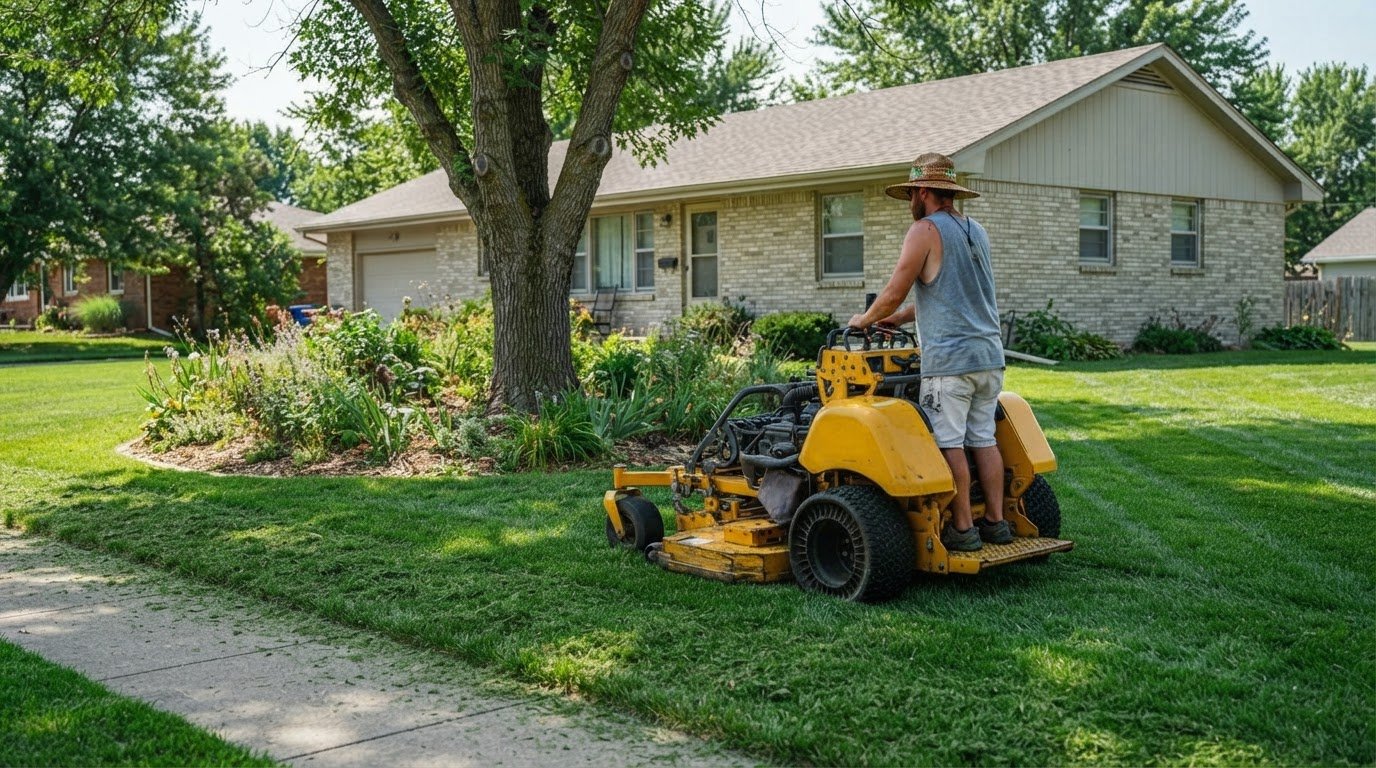

A provider change is smoother when the mowing schedule, service scope, and payment terms are clear before the handoff. Switching lawn care providers in Lincoln means comparing what weekly mowing covers and how each plan fits your property, rather than choosing on price alone.
It’s reasonable to want a dependable routine and a neat lawn without adding another task to your week. This article explains what to consider when switching lawn care providers in Lincoln, including weekly mowing, service details that affect a quote, and how to compare payment arrangements.
You’ll also find practical steps for ending your current service and starting a new one, from confirming the final visit to understanding how recurring lawn care works through the season. With those details in hand, you can make the switch with a clearer idea of what to expect.
Free estimates and payment options
A written estimate helps Lincoln homeowners understand the work before a mowing schedule begins. It should identify the property, service frequency, and tasks included. Weekly mowing and seasonal cleanup are different scopes, even when both contribute to a well-kept yard. Yardworx Lawn & Landscape provides free estimates, so you can review the proposed work before deciding. A clear scope also gives you a starting point for discussing service needs.
Price depends on the property size, mowing scope, access, and schedule, and is given after a quote request. Those details matter because a simple, open lawn takes different work from one with narrow gates, obstacles, or several separate turf areas. A useful estimate describes the work being priced instead of relying on a broad service label. Lincoln lawn care plans can distinguish recurring care from other property needs; see the Lincoln lawn care information for the local service context.
Payment options can also shape the handoff. A per-visit invoice ties each charge to a completed mowing appointment, while recurring billing groups charges into a regular payment cycle. Seasonal billing may organize work across a defined service period. These are common structures to compare, not promises that every provider accepts each method. Match the billing rhythm to the written schedule, and make sure the due date and accepted payment method are clear before service starts.
- Scope: Separate weekly mowing from add-ons, such as leaf removal, so the estimate doesn’t blur routine and seasonal work.
- Schedule: Confirm how a weather delay affects the next visit and its billing date.
- Changes: Identify how added tasks or a changed mowing frequency affect the written estimate.
- Payment: Note the invoice timing, due date, accepted method, and any stated late or processing charges.
Before switching, look for overlap between the old and new service periods, cancellation terms, unpaid invoices, and charges for work outside the agreed scope. These are the main risks that can create duplicate billing or surprise fees. Compare the final service date with the new start date, then keep a copy of each agreement and invoice. That simple sequence gives you a record if a billing question arises.
For example, if the previous company has already scheduled one final cut, clarify which service period it covers before the next schedule begins. Keep seasonal tasks distinct: leaf removal shouldn’t be assumed to belong to weekly mowing unless the estimate includes it. A clearly written scope, schedule, and payment method make the change easier to follow and help protect your budget from misunderstandings.
Customer reviews and satisfaction
Reviews can offer clues about what a lawn care relationship is like after the first visit. For Lincoln homeowners, look beyond general praise such as “great service.” Specific comments about scheduling communication, tidy edges, or careful work around garden beds give more useful context. A review describing a problem and how it was addressed can also help you assess the provider’s approach.
Read several reviews together and look for recurring themes rather than treating one account as the full picture. Repeated mentions of clear scheduling, for instance, may suggest that communication is a consistent strength. Comments about uneven results across visits may point to a concern worth discussing. Reviews reflect individual experiences, so compare their details with the expectations that matter for your property.
Timing adds useful context. A review written after one visit describes a different experience from one that discusses care across a season. Look for details about how the landscape held up during changing conditions, how crews handled access, and whether the finished work matched the agreed scope. A beautiful lawn photo can show appearance, but it won’t explain communication or follow-through.
- Look for specifics: Comments about gates, garden borders, cleanup, or communication are more informative than broad praise.
- Notice repeated patterns: Similar observations across separate reviews can help identify consistent strengths or concerns.
- Consider the response: A professional reply to a concern can show how a company handles feedback, without proving every issue was resolved.
- Match the service: Reviews about mowing may not describe the experience of landscape bed weed control or other work.
Satisfaction also depends on clear expectations. A homeowner might expect clippings to be removed, while a mowing service may mulch them back into the lawn. That difference can shape the experience even when the lawn looks neat. Compare reviews with the written work scope, visit timing, and communication practices. A specific example of how a concern was handled is more useful than a star rating alone.
During a provider change, use reviews as one part of your decision, alongside the estimate and service terms. Note which concerns matter most, such as consistent appearance, careful work near beds, or timely updates. Then discuss those priorities directly as the new arrangement begins. If you’d like to share what matters for your property, send a message about your lawn care needs. Clear priorities make it easier to judge whether the ongoing service is meeting your expectations.
Lincoln lawn care prices
For a Lincoln property, mowing cost depends on the work required, not just the lawn’s appearance. Yardworx provides a personalized quote based on the property and service scope. Factors can include mowable area, terrain, obstacles, access, grass condition, and schedule. An open yard may involve a different amount of work than a lawn divided by garden beds, trees, and narrow passages.
Frequency can affect the amount of work involved at each visit. If mowing is delayed while grass grows tall, the crew may need more time than for routine maintenance. A general mowing guideline is to cut no more than one-third of the grass blade height at a time. That makes current lawn condition relevant when comparing a regular schedule with a one-time visit.
Look closely at what each estimate includes. “Lawn care” can describe different scopes, so compare the actual tasks rather than broad labels. One estimate may cover mowing only, while another lists edging, trimming, or cleanup separately. Yardworx weekly mowing mulches clippings back into the lawn. A written scope makes it easier to understand what the service includes.
- Property: Note slopes, gates, trees, garden beds, and other features that affect access or mowing time.
- Schedule: Compare the proposed visit frequency and how the provider handles a weather-related delay.
- Included work: Separate mowing from edging, trimming, clipping removal, and seasonal cleanup.
- Additional care: Keep fertilization and aeration as separate items unless the estimate explicitly includes them.
Seasonal services need their own place in your plan. Aeration and overseeding address different needs from routine mowing, so grouping them under a vague label can make comparisons confusing. Yardworx recommends aeration and overseeding for fall, with service starting in mid-August. Fertilizing and landscape bed weed control are also distinct services, so review each task and its schedule separately.
To compare estimates, make a side-by-side list using the same property details and requested work. Mark what each quote includes, excludes, or treats as an extra. Compare the service schedule and payment timing alongside the total quoted for that scope. A lower quote may cover fewer tasks, while a higher one may include additional work. Clear details help Lincoln homeowners choose a plan that fits their lawn and budget.
Local lawn care providers and experience
Lincoln homeowners benefit from choosing a provider whose routine fits their property. A front lawn with an open gate needs different coordination than a fenced yard with narrow access. Local familiarity can also help a crew plan around neighborhood layouts and property-specific instructions. During switching lawn care providers in Lincoln, focus on clear service practices, not experience claims alone. Ask how the team handles arrival updates, access, and work around outdoor features.
Before signing up, ask what each visit includes, how the schedule is set, and how weather delays are communicated. Also ask who handles special instructions, such as closing a gate or avoiding a newly planted garden bed. Clear answers help you understand the working routine before the first appointment.
A reliable process should make it clear how property instructions reach the crew. If you ask that equipment stay clear of a garden border, make sure the instruction is shared before work begins. Specific communication about access and property details helps set expectations more effectively than a general claim of expertise.
- Service scope: Ask which tasks are included during a regular visit and which require separate scheduling.
- Property access: Describe gates, parking, pets, and outdoor obstacles that could affect the crew’s route.
- Communication: Ask how you’ll hear about a schedule change or an access issue.
- Work quality: Clarify how the crew handles missed areas, clippings, and debris around paths or beds.
- Accountability: Find out who receives feedback and how property notes are updated for later visits.
Use a specific example when discussing expectations. If leaves collect beside a walkway, explain whether you expect that debris cleared during routine work or handled as separate cleanup. If a gate must remain secured, include that instruction before service begins. These details turn general promises into observable parts of the visit, making it easier to assess whether the arrangement suits your home.
Lincoln properties differ in layout, landscaping, and access, so a useful first conversation should focus on your yard. Describe the areas that need attention and the routine you want, then ask how service will be delivered. Yardworx offers weekly mowing, lawn treatments, landscape bed weed control, and seasonal services such as leaf removal and aeration and overseeding.
Allen Investments reports that its owner has 15 years of landscaping business experience. That detail can be part of a comparison, but it does not by itself explain how a particular visit will be handled. Ask how the provider translates experience into clear instructions for your property, including the work requested and any access details. Then compare the answer with the routine you need, rather than treating a tenure figure as a substitute for a service plan.
When reviewing a provider, keep the discussion grounded in your yard: describe the areas that need attention and ask what to expect during each visit. A clear explanation gives you a practical basis for deciding whether the service fits your needs.
How do I cancel or transfer service from my current lawn care provider?
Start with your current provider’s agreement. Find its cancellation instructions, renewal terms, notice period, and any stated charges. These terms vary, so rely on your written agreement rather than assuming a standard rule. If the service was arranged by email or through an online account, review those records too. Save a copy of the terms before sending a cancellation request.
Next, send written notice using the method specified in your agreement. Include your name, service address, requested end date, and a request for written acknowledgment. Keep the message and reply with your invoices. If another visit is scheduled, ask whether it falls before or after the requested end date. This creates a dated record of your request and the provider’s response.
Before the final visit, settle the account details. Compare the latest invoice with completed work, outstanding balances, and charges described in your agreement. Ask for an itemized explanation if a charge doesn’t match the service record. Don’t assume a scheduled visit has been canceled just because you sent notice. Written confirmation can clarify the final service date and prevent billing confusion.
- Review: Locate cancellation terms, renewal details, and the required notice method.
- Notify: Send a dated written request with your address and requested end date.
- Confirm: Keep the provider’s acknowledgment and clarify any scheduled visit.
- Close out: Match the final invoice to completed work and retain payment records.
- Coordinate: Set the next start date to avoid overlapping visits or a gap in care.
For a smooth transfer, align the last confirmed visit with the first appointment under the new arrangement. Record the previous provider’s final service date, the new start date, and property instructions that need to carry forward. Share details such as gate access or areas needing attention with the incoming service team. Keep cancellation and scheduling records together.
During switching lawn care providers in Lincoln, a clear handoff helps preserve a consistent routine without duplicate appointments. If your current agreement includes a notice period, plan the transition around that term instead of assuming an immediate change. To discuss setting up the next service schedule for your property, contact the team about your lawn care transition.
As you compare the incoming schedule with the old provider’s final visit, you can also review the service options and prices listed on the page. These details can help you decide which services to include in the handoff and what to ask about before confirming the new arrangement.
If the transfer includes lawn or landscape work, timing and preparation matter too. In Lincoln, pre-emergent herbicide is applied before soil temperatures reach 50°F to help prevent crabgrass and dove weed from sprouting. Applying fresh mulch at proper depth and timing helps prevent weed growth, retain moisture, control soil erosion, and insulate roots from temperature extremes. Share any relevant plans for these services with the incoming team so the transition reflects the care your property needs.
Yardworx Lawn & Landscape: Lawn Care
Yardworx Lawn & Landscape is a natural next step when you want a dependable routine for your Lincoln lawn. Its weekly lawn mowing services help keep grass neat, while the 6-Step Fertilizing Program supports ongoing lawn care. For turf that needs attention beyond regular mowing, aeration and overseeding offer another seasonal service to consider.
Choose the support that fits your property and priorities, whether that means weekly mowing or a broader lawn care plan. Yardworx Lawn & Landscape provides lawn care and seasonal services for residential and commercial properties in Lincoln and neighboring towns.
Contact Yardworx Lawn & Landscape to discuss care for your lawn.
Set Up Your Next Lawn Care Routine
Make the change a fresh start for your lawn, not simply a new name on the schedule. Switching lawn care providers in Lincoln gives you a chance to shape a routine around your yard’s condition and the care you want through the seasons. A clear conversation about your priorities can help turn that change into a manageable plan.
Yardworx Lawn & Landscape offers weekly lawn mowing services, a 6-Step Fertilizing Program, and Aeration & Overseeding. These options can support routine upkeep and seasonal lawn needs, depending on what your property calls for. Choose the service focus that best fits your next step, then share your goals with the team.
Contact Yardworx Lawn & Landscape to discuss care for your Lincoln lawn. A steady routine starts with a conversation, and your next season can begin with a lawn care plan that suits your home.
Frequently Asked Questions
How much does lawn care cost in Lincoln, Nebraska?
Lawn care costs depend on your property and the services included, so a personalized quote is the useful starting point. Factors include the area to maintain, lawn condition, access, visit schedule, and whether you need mowing alone or additional care. A yard with several garden beds may require a different scope from an open lawn. Compare written estimates by the tasks included, not just the total.
Which lawn care providers in Lincoln have the best reviews?
No single provider is the right fit for every Lincoln homeowner; useful reviews are the ones that address your needs. Look for specific comments about scheduling, communication, careful work, and how concerns are handled. A review describing a real situation, such as work around a garden edge, offers more context than a star rating alone. Compare those patterns with the service routine and property expectations that matter most to you.
When is the best time to switch lawn care providers in Lincoln?
Plan the switch around the previous provider’s final service date and the new provider’s start date. Confirm which service period the last cut covers to avoid overlap or duplicate billing.