
Did you know that a single crabgrass plant in your yard can produce up to 150,000 seeds, each one waiting to sprout and crowd out your grass next season? It's a staggering number that explains why those generic bags from the big-box store often fall short of expectations. If you've felt the frustration of timing your applications perfectly only to have a late Nebraska freeze or a sudden heatwave undo your hard work, you aren't alone. Many of your neighbors in Lincoln struggle with the same volatile weather patterns that make DIY lawn care feel like a guessing game.
We want to help you trade that confusion for confidence. By choosing a professional weed and feed program Lincoln NE families rely on, you can ensure your lawn receives the exact nutrients and protection it needs at the precise moment it needs them. This guide reveals how to synchronize fertilization with our local soil temperatures for a lush, healthy lawn that's safe for your kids and pets. We will explore our comprehensive 6-Step Fertilizing Program and show you how a hands-off approach can give you back your weekends while delivering the thick, weed-free results you've always wanted.
Understanding Weed and Feed in Lincoln: Product vs. Program
The term "weed and feed" is a common way to describe products that combine lawn fertilizer with weed killer. While it sounds simple, achieving a lush lawn in Nebraska requires more than just grabbing a random bag from a local hardware store. A true weed and feed program Lincoln NE homeowners can rely on isn't a single product; it's a strategic sequence of treatments designed to work with nature rather than against it.
Success depends on understanding the biology of your yard. Before you can eliminate unwanted growth, you have to ask, What is a weed? and when is it most vulnerable? In Lincoln, our cool-season grasses like tall fescue need specific nutrients at specific times. Using a generic product often means applying the wrong chemical at the wrong stage of growth. This leads to disappointing results and wasted effort, leaving you with the same dandelions you had last year.
To better understand this concept, watch this helpful video:
The Limitations of Store-Bought Weed and Feed
Many DIY enthusiasts reach for granular bags because they seem convenient. However, these products have significant drawbacks. For the herbicide to work, the granules must physically stick to the weed leaves. This usually requires the lawn to be wet with dew or light rain, but not so wet that the product washes away. If the conditions aren't perfect, the weed control simply falls to the soil and fails to work.
There's also a real danger of lawn damage. Lincoln often experiences sudden heat spikes in the early summer. Applying a high-nitrogen store-bought feed during a hot spell can "burn" your grass, causing yellow patches that take weeks to recover. These all-in-one products try to do too much at once. They often under-deliver on both the nutrients your grass craves and the weed-killing power you need.
The Professional Alternative: Targeted 6-Step Fertilization
A professional 6-step fertilizing program offers a holistic approach that generic bags can't match. Instead of a single application, this method treats your lawn as a living system. We use professional-grade products that are specifically formulated to penetrate Lincoln's heavy clay soil, ensuring nutrients actually reach the roots. This is the foundation of a high-quality weed and feed program Lincoln NE families trust for long-term health.
The professional advantage often comes down to the application method. While some steps use high-quality granules, others utilize liquid applications. Liquid treatments provide superior coverage for broadleaf weeds, ensuring the herbicide stays exactly where it's needed. This targeted strategy ensures your lawn stays healthy and vibrant while you spend your weekends enjoying your outdoor space instead of managing heavy bags and chemicals.
Nebraska Timing: When to Start Your Program
Lincoln's spring weather is famously erratic. One day you're wearing a light jacket, and the next you're bracing for a late April snowstorm. This volatility makes timing a weed and feed program Lincoln NE residents can trust quite difficult. While many people look at the calendar, the most successful lawns are managed by looking at the soil. Our local data shows the last freeze in Lincoln typically happens between April 12th and May 16th, which means a "one size fits all" date simply won't work.
The "55-degree rule" is the gold standard for Southeast Nebraska. Crabgrass begins to germinate once soil temperatures hit 55°F at a four-inch depth for several consecutive days. If you wait until you see dandelions blooming, you've likely missed your best window for prevention. Starting too late means you're playing catch-up all summer, fighting mature weeds that have already begun to steal nutrients from your grass. It's much easier to stop a seed from sprouting than it is to kill a hardy, established plant.
Early Spring: The Pre-Emergent Window
The primary goal in late March or early April is prevention. We focus on stopping crabgrass before it ever breaks the surface. Since a single plant can produce 150,000 seeds, missing this window creates a massive headache for the rest of the year. You can learn more about this specific battle in our guide on how to get rid of crabgrass in Lincoln, NE. Beyond weed control, this early application wakes up your turf after a harsh winter, providing the initial boost of nitrogen needed for that deep green color.
The 2026 Lincoln Lawn Care Calendar
As we move deeper into the season, the focus shifts from prevention to protection. The ideal soil temperature for your first application in 2026 is a consistent 55°F at a four-inch depth for at least three consecutive days. Once the spring rains taper off, your irrigation maintenance becomes vital. Proper watering keeps the "feed" portion of your program active during the dry July spells, ensuring nutrients reach the roots instead of sitting dormant on the surface.
When dealing with established broadleaf weeds later in the spring, we often utilize targeted herbicides. For those concerned about the science behind these treatments, you can review the EPA information on 2,4-D, which is one of the most widely studied and common ingredients used for residential lawn safety. If you're unsure when your specific property is ready for its first treatment, you can always reach out to our local team for a professional evaluation.
DIY vs. Professional Weed and Feed Programs
Many homeowners think a weed and feed program Lincoln NE is as simple as a Saturday trip to the hardware store. While buying a bag and a spreader seems cheaper initially, the true cost includes your limited weekend time and the risk of inconsistent results. A professional service provides neighborly reliability, ensuring your property looks its best while you relax with your family. We take pride in being a local Lincoln team that understands the specific needs of neighborhoods from SouthPointe to Fallbrook. This local expertise means we aren't just applying product; we're caring for our community's outdoor spaces.
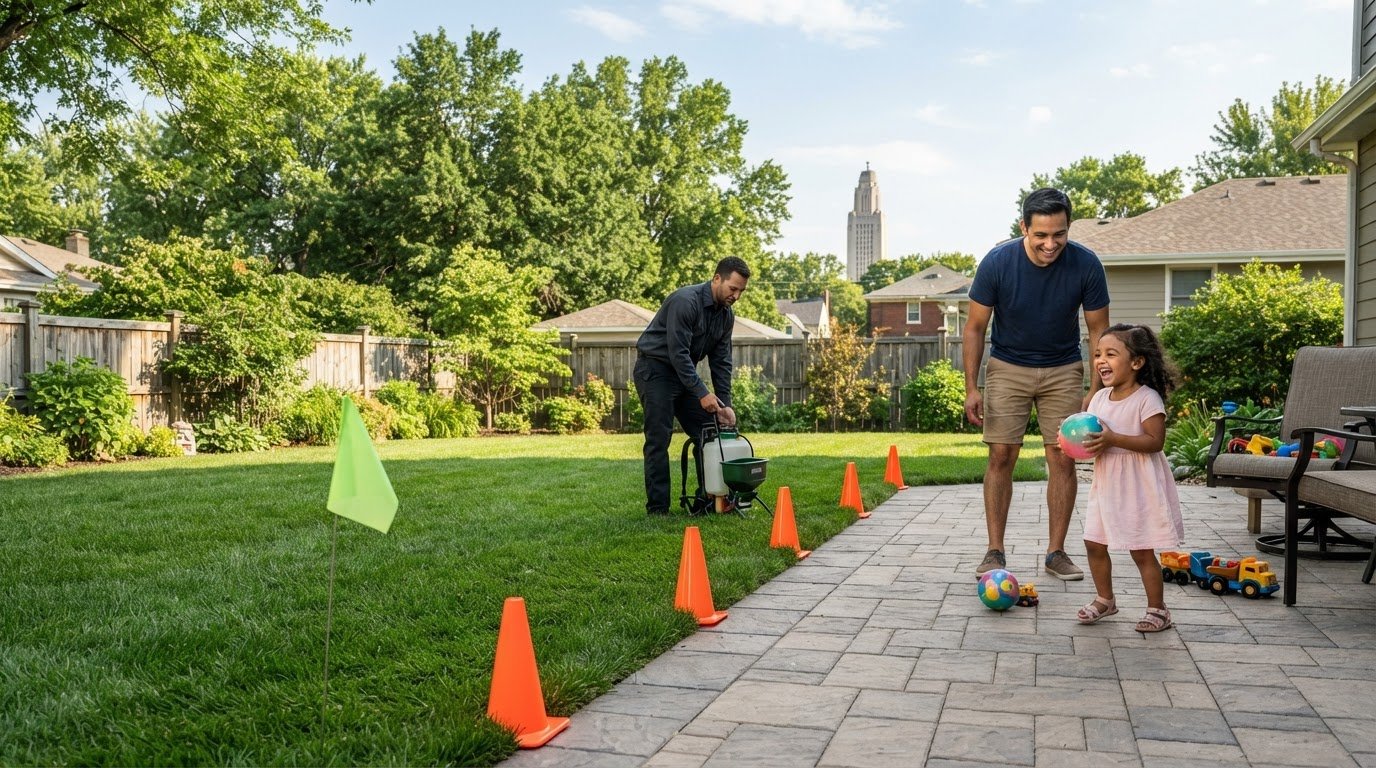
Safety is a primary concern for families with young children and pets. Professional applications use precise measurements and commercial-grade products that, when applied correctly, offer peace of mind. Our team provides clear "leave-behind" notes after every visit. These notes aren't just receipts; they're communication tools that let you know when it's safe to play on the grass and what we observed during our walk-through. This proactive approach removes the daily burden of lawn maintenance from your shoulders.
Equipment and Calibration Challenges
Achieving a uniform look is surprisingly difficult with standard consumer equipment. If your spreader isn't calibrated perfectly, you end up with a "striped" lawn or, worse, chemical burns from over-application. Our Lawn Care Services utilize professional-grade sprayers and calibrated spreaders that ensure every square inch receives the exact dose required. This precision provides the deep, even green that DIY methods often miss. Liquid applications also offer better leaf coverage, ensuring the "weed" part of the program actually works.
The Value of Expert Eyes
A professional program isn't just about spreading product; it's about active monitoring. Our technicians act as a second set of eyes for your property, spotting signs of grubs or fungus before they can destroy your investment. We often suggest landscape bed weed control to complement your turf care, preventing unsightly growth from creeping into your mulch from the grass line. For a deeper dive into these strategies, check out our Professional Lawn Weed Control in Lincoln, Nebraska guide to see how we manage the unique challenges of our local climate.
Tackling Lincoln’s Toughest Weeds
In Lincoln, we deal with the "Big Three": crabgrass, dandelions, and creeping Charlie. These aren't just eyesores; they're opportunistic invaders that thrive where your grass is weak. A successful weed and feed program Lincoln NE depends on more than just chemicals; it requires a healthy foundation. While dandelions are easy to spot with their bright yellow heads, others are more deceptive, creeping through the thatch and stealing moisture before your grass can get a drink.
Many homeowners don't realize that Lincoln’s heavy clay soil is a primary reason weeds keep returning. Our local soil is notorious for its density, and without intervention, it becomes a literal wall that blocks water and oxygen. When soil is compacted, grass roots struggle to breathe and absorb nutrients. Weeds, however, often have specialized roots that can penetrate this hard ground. This is where aeration and overseeding come into play. By pulling cores of soil, we reduce compaction and create space for new, thick grass to grow, leaving no "real estate" for weed seeds to take root.
The Battle Against Creeping Charlie and Clover
Creeping Charlie and clover are particularly stubborn. They have waxy leaves that cause standard, granular store-bought products to simply slide off. These "creepers" require specialized post-emergent liquid treatments that can penetrate their protective coating. While spring is about prevention, fall is the most effective time to target these perennials. During autumn, these weeds are busy pulling nutrients down into their roots for winter, making them more susceptible to herbicides. We often recommend combining these treatments with our aeration services to strengthen the turf's natural defenses and fill in bare spots where clover loves to hide.
Managing Grassy Weeds and Crabgrass
Crabgrass is a master at pushing through compacted soil along driveways and sidewalks. While pre-emergents are your first line of defense, your mowing habits play a crucial role too. Cutting your grass too short stresses the plant and allows sunlight to reach the soil surface, which triggers weed germination. Maintaining a higher mowing height shades the soil and keeps it cooler. If you're tired of managing these details yourself, our Weekly Lawn Mowing Lincoln NE team can ensure your grass stays at the optimal height for weed suppression.
If these tough weeds are taking over your yard and you're ready for a thick, worry-free lawn, contact our local team today for a tailored treatment plan.
The Yardworx 6-Step Approach to a Healthy Lincoln Lawn
Choosing a weed and feed program Lincoln NE families can trust means looking for a strategy that evolves with the seasons. Our 6-Step Fertilizing Program isn't a static set of dates; it's a living plan that we adjust based on Nebraska’s 2026 weather patterns. You can relax while we manage the logistics, knowing that your lawn is receiving professional care tailored to our specific environment. This hands-off experience allows you to enjoy a thick, vibrant yard without the stress of monitoring soil temperatures or handling heavy bags of product. We take pride in being your diligent expert, ensuring every application is timed for maximum impact.
Healthy turf is your first line of defense, but sometimes nature needs a little extra help. We often integrate pest control into our broader property care strategy to protect your family from mosquitoes and ticks. This holistic view of your outdoor space ensures that your lawn isn't just beautiful to look at, but also a safe and comfortable place for your kids and pets to play. By managing both the nutrients and the environment, we create a sanctuary where you can spend your weekends making memories instead of managing chores.
Step-by-Step Breakdown of the Program
The journey begins in early spring with a pre-emergent barrier that halts crabgrass before it starts. As we move into the warmer months, we focus on nutrient density to help your turf withstand the summer heat. A critical component of our mid-season care is grub control. These pests can quietly destroy a root system in weeks, so we incorporate preventative treatments to keep your lawn's foundation strong. By the time fall arrives, we transition to recovery and strengthening, finishing with a winterizer that prepares the grass for the cold months ahead. This methodical progression ensures a vital, healthy yard that stays green longer and recovers faster every spring.
Why a Local Lincoln Partner Matters
There's a distinct advantage to working with a team that lives and works in the same Lincoln climate as you do. We see the same sudden storms and feel the same humidity spikes, allowing us to pivot our applications in real-time. Our commitment to your property doesn't end when the grass stops growing. Many of our neighbors rely on us for snow removal during our harsh winters or professional Christmas light installation to brighten the holiday season. This year-round presence fosters long-term trust and ensures your home is always the pride of the neighborhood. If you're ready to see the difference a professional touch can make, get your free estimate for the 6-Step Program today.
Enjoy the Lush, Healthy Lawn You Deserve
Achieving a thick, weed-free lawn in Nebraska doesn't have to be a source of stress. Success starts with moving away from one-size-fits-all products and embracing our comprehensive 6-Step Fertilizing Program, which respects local soil temperatures and our unique climate. By focusing on root health and precise timing, you can finally eliminate tough invaders like creeping Charlie and crabgrass. This strategic approach transforms your outdoor space into a vital, healthy sanctuary that enhances your home's beauty and your own peace of mind.
We take pride in being a locally owned and operated Lincoln partner, dedicated to providing the A+ neighborly service you deserve. You shouldn't have to spend your weekends wrestling with heavy bags or guessing at application timing. Investing in a professional weed and feed program Lincoln NE families trust ensures your yard remains a safe, vibrant space for everyone to enjoy. It's time to relax while we handle the heavy lifting and logistics. Request Your Free Lawn Care Quote from Yardworx today and take the first step toward a worry-free yard you'll be proud of all year long.
Common Questions About Lawn Care in Lincoln
Is professional weed and feed safe for my pets and children?
Professional treatments are safe for your family once the application has completely dried. We recommend keeping pets and children off the lawn for at least a few hours or until any liquid spray is no longer wet to the touch. Our technicians provide clear instructions after every visit so you know exactly when it's safe to resume your outdoor activities. This ensures your lawn remains a healthy sanctuary for play and relaxation.
When is the best time to apply weed and feed in Lincoln, Nebraska?
The best time to start a weed and feed program Lincoln NE depends on soil temperatures rather than the calendar. We look for a consistent soil temperature of 55°F at a four-inch depth, which typically occurs in late March or early April in Southeast Nebraska. This specific window is critical for stopping crabgrass seeds before they germinate. Starting at this time provides your grass with the early nutrients needed to recover from winter.
How long should I wait to mow after a weed and feed application?
You should generally wait 24 to 48 hours before mowing your lawn after an application. This waiting period allows the liquid weed control to be fully absorbed by the leaves of the unwanted plants. If you mow too soon, you risk cutting off the treated foliage before the herbicide can travel to the roots. Keeping your grass a bit taller during this time also helps shade the soil and supports overall turf health.
Does your program include crabgrass prevention?
Yes, our 6-Step Fertilizing Program includes a dedicated pre-emergent treatment designed specifically to stop crabgrass. We apply this during the first two steps of the season to create a protective barrier in the soil. Because one crabgrass plant can produce 150,000 seeds, this prevention is the most effective way to manage grassy weeds. We monitor Lincoln’s weather patterns to ensure these applications happen before the first seeds begin to sprout.
Do I need to water in the fertilizer after it is applied?
Most granular fertilizers require watering to move the nutrients into the soil where roots can reach them. If we apply a granular "feed" treatment, we recommend a light watering within 24 hours if rain isn't in the forecast. However, if the application includes a liquid weed control component, you should wait for the product to dry completely before turning on your sprinklers. Our team will always leave specific watering instructions for your property after each visit.
What happens if it rains right after a weed control treatment?
If it rains immediately after a liquid weed control treatment, the effectiveness may be reduced. Most professional herbicides need about an hour of dry time to become "rainfast" and begin absorbing into the weed leaves. If a heavy downpour occurs shortly after our visit, we will monitor the results and provide a follow-up application if necessary. Conversely, a light rain is actually beneficial for our granular fertilizer steps as it helps activate the nutrients.
Why does my lawn still have weeds after using a store-bought product?
Store-bought products often fail because they lack the concentration of professional-grade ingredients and are difficult to time correctly. Generic bags also struggle to penetrate Lincoln’s heavy clay soil, which can block nutrient uptake. Many DIY enthusiasts also miss the critical germination windows for specific Nebraska weeds. Our professional program uses calibrated equipment and targeted liquid applications that provide much better coverage and absorption than standard granular products found at local big-box retailers.
Can I start a 6-step fertilizing program in the middle of the summer?
You can certainly start our 6-Step Fertilizing Program in the middle of the summer. While you may have missed the early spring prevention window, summer applications are vital for protecting your lawn against heat stress and pests like grubs. We will assess your lawn's current condition and adjust the remaining steps to focus on recovery and health. This helps stabilize your turf so it's prepared for a successful overseeding or winterization phase later in the year.