
Did you know that simply raising your mowing height to 2.5 inches can slash crabgrass infestations from 80% to less than 15%? According to research from the University of Nebraska-Lincoln, the secret to a pristine yard often lies in these small, expert adjustments. It's incredibly frustrating to watch lime-green, sprawling patches ruin your curb appeal just as the weather gets nice. We understand the pressure of Nebraska's unpredictable spring and the confusion of wondering if you've missed the right window while researching how to get rid of crabgrass Lincoln NE homeowners face every year.
This article provides the master plan you need to permanently eliminate these invaders using local soil data and professional timing. We'll walk through the Double-Defense strategy, which combines precise soil temperature monitoring with high-mowing cultural practices. You'll also learn the essential steps of a professional 6-step fertilizing program and how to use tools like the UNL Mesonet to stop seeds before they even sprout. By the end, you'll have a clear, stress-free path to a thick, healthy lawn that naturally crowds out invaders and restores your peace of mind.
Identifying Crabgrass in Your Lincoln Lawn
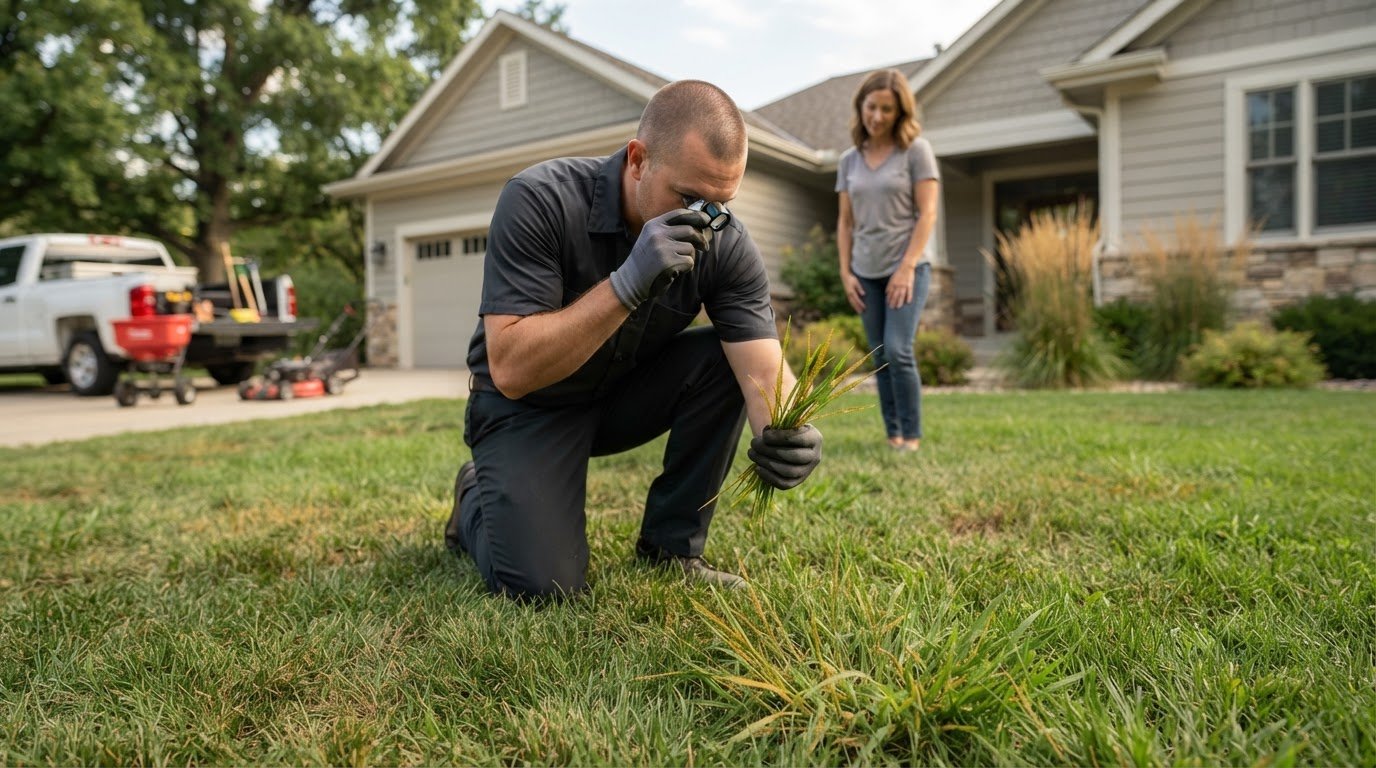
Before you can master how to get rid of crabgrass Lincoln NE yards often struggle with, you have to know exactly what you're looking at. Crabgrass (Digitaria) is a resilient summer annual that doesn't just grow; it conquers. While your desirable lawn grasses prefer the mild days of spring, this weed waits for the scorching heat of a Nebraska July to take over. You'll recognize it by its distinct lime-green color and wide, coarse blades that stand out against the darker, finer texture of your turf. It grows in a low, sprawling "star" pattern that resembles the legs of a crab, eventually choking out the grass you actually want.
The life cycle of this weed is a relentless cycle of survival. It begins as a tiny seed waiting in the soil for temperatures to rise. Once the Lancaster County soil consistently hits 55 degrees, germination begins. It spends the summer building a massive root system and spreading its blades wide to soak up the sun. By late summer and early fall, a single plant can drop up to 150,000 seeds into your soil. These seeds are hardy enough to survive the harshest Nebraska winters, simply waiting for next spring to repeat the process.
Crabgrass vs. Tall Fescue: Don't Kill the Wrong Grass
Crabgrass is a prostrate-growing summer annual that spreads horizontally across the soil surface. Many homeowners in Lincoln mistake young tall fescue or quackgrass for crabgrass because they all have wider blades than Kentucky bluegrass. However, you can use the "tug test" to be sure. If you pull on a clump and it feels like a single, deeply rooted plant that stands upright, it's likely fescue. Crabgrass stems originate from a central hub and branch out like spokes on a wheel; they are much easier to pull when they're young because their root systems are shallower but wider.
Why Crabgrass 'Escapes' Occur in Nebraska
Even if you've invested in professional lawn treatments, you might still see a few "escapes" popping up along your driveway or sidewalk. Lincoln's heavy clay soil can become incredibly compacted in high-traffic areas, which stresses your grass and creates thin spots. These bare patches are an open invitation for seeds to reach the soil and find sunlight. Additionally, the extreme heat radiating off concrete surfaces can break down pre-emergent barriers faster than in the middle of the lawn. Understanding how to get rid of crabgrass Lincoln NE requires acknowledging that a healthy, thick lawn is your best defense, but even the best programs face challenges from Nebraska's intense weather shifts.
The Spring Prevention Window: Precision Timing for Lincoln
In Lincoln, the magic number for lawn health is 50 degrees Fahrenheit at a 2-inch depth for several consecutive days. If you wait until the calendar says April 1st, you might already be too late. Nebraska springs are notoriously fickle; one year we have snow in April, and the next, we're in short sleeves by mid-March. To truly master how to get rid of crabgrass Lincoln NE homeowners must look at the ground rather than the wall calendar. Germination is a biological process triggered by warmth, not a date on a schedule.
Our local Lancaster County clay soil is dense and holds onto heat differently than the sandy soils found further west. Once this clay warms up, it stays warm, which can accelerate the germination of dormant seeds. We recommend using the UNL Mesonet for real-time soil temperature data to ensure you hit the narrow window before the first sprout appears. This precision is what separates a professional result from a DIY attempt that might miss the mark by just a few days. If the timing of the weather and the application feels like too much to juggle, you can request a consultation with our team to handle the logistics for you.
Applying the product is only half the battle. Pre-emergent herbicides require activation to work effectively. Without approximately half an inch of water within 24 hours of application, the granules sit on the surface where they can't reach the target seeds. If the wind picks up or the sun stays intense, the chemical barrier breaks down before it ever creates that protective shield. This "watering in" step is the most common point of failure for home treatments.
How to Apply Pre-Emergent Correctly
Following a structured process ensures your barrier remains intact throughout the growing season. First, monitor your soil temperatures at a 2-inch depth starting in late March. Once you hit the 50-degree mark, apply your chosen product uniformly across the entire lawn using a calibrated broadcast spreader. A single missed strip or a thin application area becomes a crabgrass highway by July. Finally, ensure the lawn receives 0.5 inches of moisture through rain or irrigation within 24 hours to lock the treatment into the soil surface.
Choosing the Right Product for Nebraska
The active ingredients you choose will dictate your long-term success. Prodiamine is a professional favorite for its long-lasting residual control, keeping seeds at bay for months. Dimension (Dithiopyr) is another powerful option, offering "reach back" control if you happen to miss the germination window by a few days. We use professional-grade barriers specifically because they stand up to the heavy June rains that often wash away standard retail products. For a complete look at how we structure these seasonal treatments, see our Lawn Fertilizer Program Nebraska guide.
Mid-Summer Rescue: How to Kill Crabgrass Already Growing
If you see those lime-green patches spreading across your yard in July, you're facing the mid-summer rescue phase. While the spring window is about prevention, learning how to get rid of crabgrass Lincoln NE has already established requires a different set of tools. The biggest challenge you'll face is "tillering." This is when a single plant begins to sprout secondary stems, or tillers, from its central hub. Once a plant has more than three to five tillers, it becomes significantly more resistant to standard herbicides. It's like trying to knock down a fortress instead of a single wall; the plant's maturity allows it to recover from chemical treatments that would have easily killed it weeks earlier.
To combat these mature invaders, professional-grade post-emergent herbicides like Quinclorac (often sold as Drive) are necessary. However, simply spraying the weed isn't enough. Crabgrass leaves have a waxy, water-repellent coating that causes liquid treatments to bead up and roll off. You must mix your herbicide with an adjuvant, which is a soap-like surfactant that breaks the surface tension. This allows the chemical to stick to the leaf and penetrate the plant's system. Without this additive, you're essentially just washing the weed rather than killing it.
You also have to respect the Nebraska thermometer. When temperatures in Lincoln climb above 90 degrees, your desirable grasses like Kentucky bluegrass and tall fescue enter a state of stress. Spraying chemicals during a heat wave can result in "turf burn," where the herbicide kills your lawn along with the weeds. We always recommend waiting for a cooler evening or a break in the humidity before applying any liquid treatments. This patience protects your investment and ensures the grass remains healthy enough to fill in the gaps once the weeds are gone.
The Post-Emergent Checklist
Before you head out with a sprayer, take a moment to assess the situation. Identify the growth stage of the weed; if it's a single tiller, it's vulnerable, but multi-tiller plants may need a follow-up treatment. Check the forecast for a dip in the Nebraska heat to ensure the grass can handle the application. Most importantly, ensure your lawn isn't suffering from drought stress. A thirsty lawn will absorb chemicals too quickly, leading to yellowing or permanent damage to your healthy turf.
Natural and Manual Removal
If you only have a few scattered clumps, hand-pulling is often the safest and most effective method. This is best done after a heavy rain when the soil is soft. You must be diligent about removing the entire root system and any developing seed heads to prevent next year's infestation. If you leave even a small portion of the root or a single seed head behind, the plant can regenerate or drop seeds for the following season. For larger areas where pulling isn't practical, our Lawn Weed Control Lincoln Nebraska service offers a professional alternative that saves your back and your weekend.
Cultural Controls: Mowing and Watering for a Weed-Free Lawn
While professional treatments provide a vital shield, the most sustainable way to manage how to get rid of crabgrass Lincoln NE homeowners can employ is through proper cultural care. Think of your lawn as a living defense system. When your grass is thick and tall, it creates a canopy that prevents sunlight from reaching the soil surface. Since crabgrass seeds require direct light to germinate, a dense lawn acts as a natural barrier. Combining these habits with a Weekly Lawn Mowing Lincoln NE service ensures your turf remains the dominant species in your yard.
Watering habits also play a massive role in weed suppression. Many people make the mistake of watering for ten minutes every day. This shallow moisture is exactly what crabgrass craves, as its root system is relatively close to the surface. Instead, aim for deep, infrequent watering sessions. Providing about an inch of water over one or two mornings per week encourages your desirable grass roots to grow deep into the soil to find moisture. This makes your lawn more resilient during a Nebraska drought while leaving the shallow-rooted crabgrass high and dry.
Mowing Heights for Lincoln Lawns
Resist the urge to "scalp" your lawn in early spring. Cutting your grass too short exposes the soil to the sun, which warms the ground faster and triggers earlier weed germination. We recommend maintaining a consistent height of 3.5 to 4 inches throughout the growing season. During the peak of the July heat, this extra height protects the crown of the plant and keeps the soil cool. Always follow the one-third rule; never remove more than one-third of the grass blade in a single cutting. This prevents the turf from going into shock, which would otherwise leave it vulnerable to opportunistic weeds.
The Role of Aeration and Overseeding
Lincoln's heavy clay soil naturally compacts over time, especially in high-traffic areas. This compaction starves grass roots of oxygen and water, leading to thin patches where crabgrass loves to take root. Fall Aeration and Overseeding Lincoln NE is the ultimate remedy for this. By pulling small cores of soil from the ground, we allow the earth to breathe and create space for new, high-quality seed to establish. A thick, well-aerated lawn is the best natural defense you have. It is important to remember that spring seeding often conflicts with pre-emergent applications, as the same chemicals that stop crabgrass will also stop your new grass seed. This makes fall the ideal time for rejuvenation. If you want to ensure your lawn is prepared for the next season, contact our team today to schedule your fall maintenance.
Professional Crabgrass Management with Yardworx
Our 6-Step Fertilizing Program is the definitive answer for those seeking a year-round defense strategy against invasive weeds. While we have discussed the importance of soil temperatures and cultural habits, the constant monitoring of Lancaster County soil conditions is a task most homeowners would prefer to delegate. We understand exactly how to get rid of crabgrass Lincoln NE yards face by applying professional-grade barriers that remain effective long after retail alternatives have washed away. This proactive approach allows you to step back and enjoy your outdoor space while we manage the complex logistics of chemical activation and seasonal timing.
By choosing a professional partner, you gain access to herbicides and equipment that simply aren't available at big-box stores. These professional-grade products offer a longer residual life, meaning they protect your lawn through the heavy June rains and into the scorching heat of July. Our team takes pride in being the neighborly experts who handle the "heavy lifting," providing you with a thick, vibrant lawn that serves as its own natural defense. You can relax knowing that a diligent caretaker is watching the UNL Mesonet data and your turf's health with professional precision.
Why DIY Crabgrass Control Often Fails
Many homeowners find that DIY crabgrass control is a cycle of frustration and wasted weekends. Products found at local hardware stores often feature lower concentrations of active ingredients, which leaves little room for error if your timing is off by even a few days. There is also the very real danger of over-applying chemicals; using too much post-emergent herbicide during a Nebraska heat wave can easily damage your desirable tall fescue or Kentucky bluegrass. When you factor in the cost of multiple bags of product, specialized spreaders, and the time spent researching soil data, professional prevention is almost always more cost-efficient than a desperate mid-summer rescue.
Get Started with Yardworx
Reclaiming your lawn starts with a professional evaluation of your property's unique needs. We look at everything from soil compaction levels to existing weed pressure to ensure your first Lawn Care treatment sets a strong foundation for the season. Our process is methodical and steady, ensuring you understand the path to a better yard without feeling overwhelmed by technical details. If you are ready to stop pulling weeds and start enjoying the peace of mind that comes with a well-kept environment, Request a free estimate for your Lincoln lawn today!
Enjoy a Lush, Weed-Free Lawn This Season
Reclaiming your yard from sprawling, lime-green invaders doesn't have to be a source of seasonal stress. You now have the master plan for success; it starts with watching those Lancaster County soil temperatures in the spring and continues with keeping your grass tall to shade out dormant seeds. Masterfully managing how to get rid of crabgrass Lincoln NE homeowners face requires a blend of precision timing and consistent cultural care that keeps your turf strong through the summer heat.
As a locally owned and operated expert team that has been serving Lancaster County for years, Yardworx is here to be your partner in property maintenance. Our 6-step fertilizing program is Lincoln's most reliable solution, designed specifically to thrive in our unique Nebraska climate. We handle the monitoring and the heavy lifting so you can simply relax and enjoy your beautiful outdoor space. Get a Free Quote for Professional Crabgrass Control in Lincoln and start your journey toward a thick, healthy lawn today. We look forward to helping your yard reach its full potential.
Frequently Asked Questions
When is the best time to apply crabgrass preventer in Lincoln, NE?
The ideal window for applying pre-emergent in Lincoln is from late March to mid-April. This timing is based on soil temperatures reaching 50 to 55 degrees at a 4-inch depth for several days. Since Nebraska weather varies, we recommend monitoring the UNL Mesonet for real-time Lancaster County data. Hitting this biological window is the most effective way regarding how to get rid of crabgrass Lincoln NE yards require.
Can I plant grass seed and apply crabgrass preventer at the same time?
Most pre-emergent products prevent all seeds from germinating, including your new grass seed. If you apply a standard barrier and then try to overseed, your new grass will likely fail to sprout. We generally recommend focusing on crabgrass prevention in the spring and saving your Aeration & Overseeding for the fall. This allows your new turf to establish without chemical interference during the cooler, more favorable autumn months.
Why do I still have crabgrass after applying a pre-emergent?
Even with a professional application, a few "escapes" can occur in thin spots or along hot concrete edges like driveways. If the product wasn't watered in with 0.5 inches of moisture within 24 hours, the barrier may not have activated properly. Additionally, heavy June rains can sometimes break down the chemical shield prematurely. Maintaining a thick, healthy lawn through our 6-step program is the best way to supplement your pre-emergent barrier.
Does vinegar kill crabgrass without killing my lawn?
Vinegar is a non-selective herbicide, meaning it will kill your desirable grass just as quickly as it kills the weeds. While high-concentration horticultural vinegar can burn the foliage of young plants, it often fails to kill the root system of mature crabgrass. It also provides no residual protection against future seeds. For a safe and effective lawn, it's better to use selective professional-grade products that target specific weeds without harming your turf.
What is the best herbicide to kill crabgrass in mid-summer?
Quinclorac is the most effective active ingredient for targeting crabgrass that has already sprouted in mid-summer. It works best when mixed with a methylated seed oil adjuvant to help the chemical stick to the waxy leaves. However, you should avoid spraying when Lincoln temperatures exceed 90 degrees to prevent turf burn. If the weeds have already developed multiple stems or tillers, you might need a second application to fully eliminate the infestation.
How often should I mow my lawn in Lincoln to prevent weeds?
We recommend weekly mowing to maintain a consistent height of 3.5 to 4 inches. Keeping your grass tall is a natural defense because it shades the soil and prevents crabgrass seeds from getting the sunlight they need to germinate. Always follow the one-third rule by never cutting off more than a third of the grass blade at once. This practice reduces turf stress and keeps your lawn thick enough to outcompete opportunistic invaders.
Is crabgrass common in Lancaster County clay soil?
Crabgrass thrives in Lancaster County clay soil, particularly when the ground is compacted or poorly drained. Dense clay can become very hard during Nebraska summers, which stresses the roots of cool-season grasses like fescue. This stress creates bare patches where crabgrass can easily take hold. Regular core aeration helps alleviate this compaction, allowing your grass to grow deeper roots and naturally crowd out annual weeds that prefer distressed soil conditions.
What happens if I miss the spring pre-emergent window?
If you miss the early spring window, you can still use post-emergent treatments or products containing Dithiopyr, which offers some "reach back" control for very young seedlings. It's important to act quickly before the plants begin to tiller and drop thousands of new seeds. If the infestation is widespread, transitioning into a professional 6-step fertilizing program is the best way to get your lawn back on track and prepare for a cleaner next season.