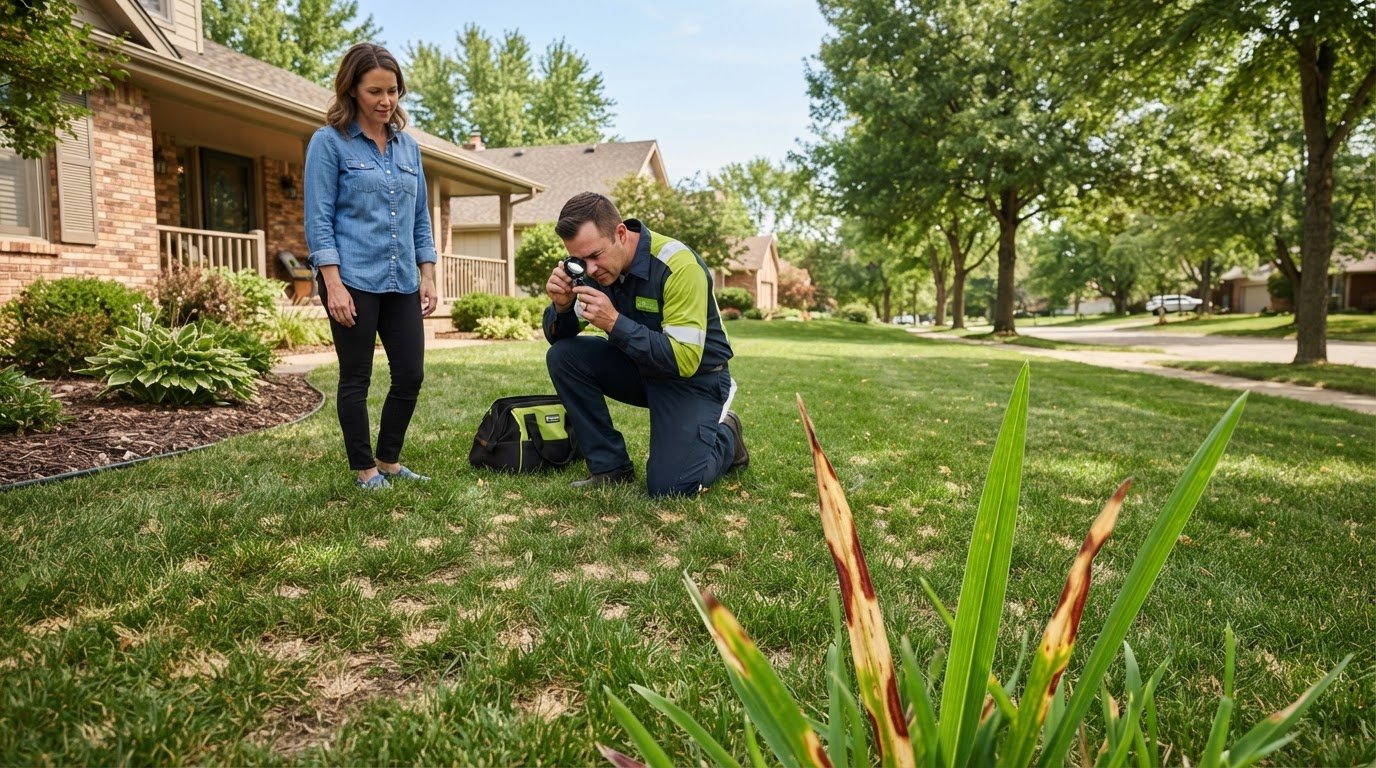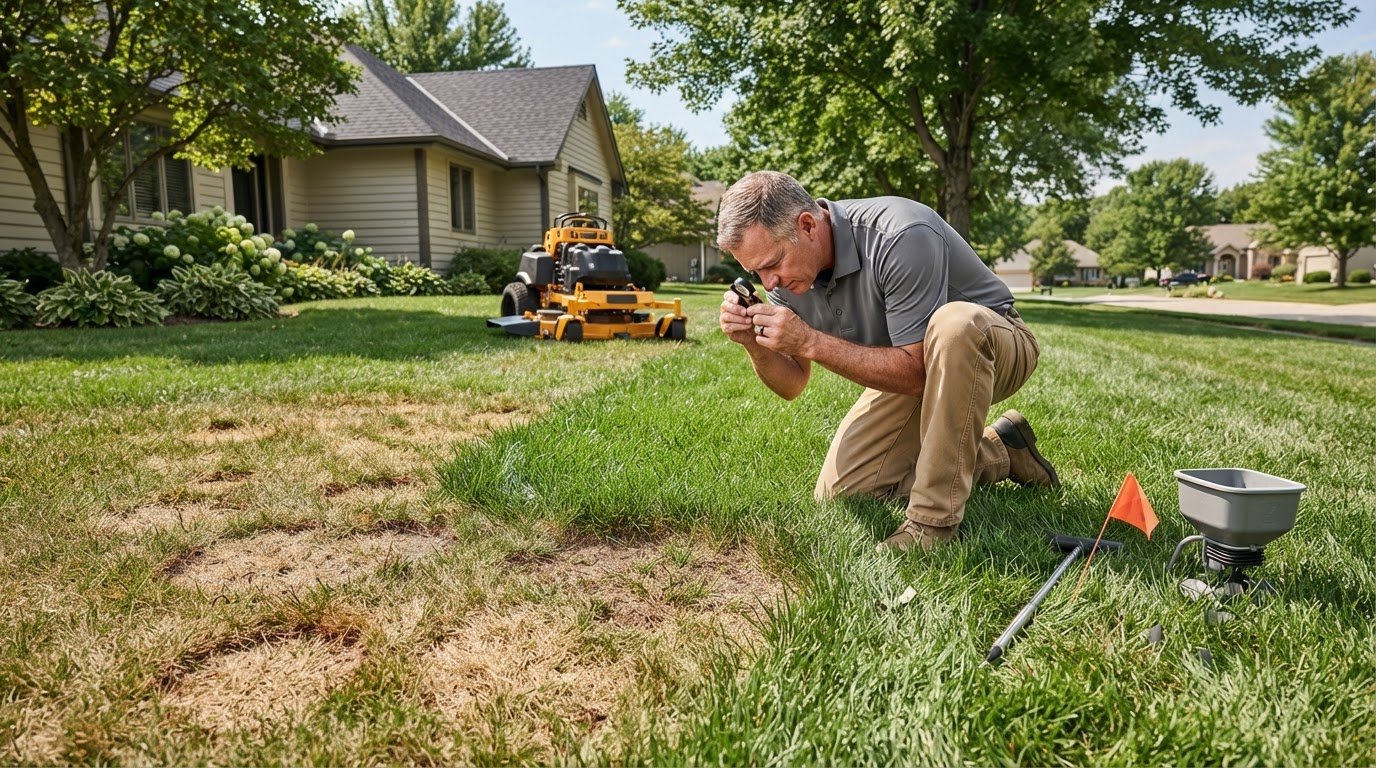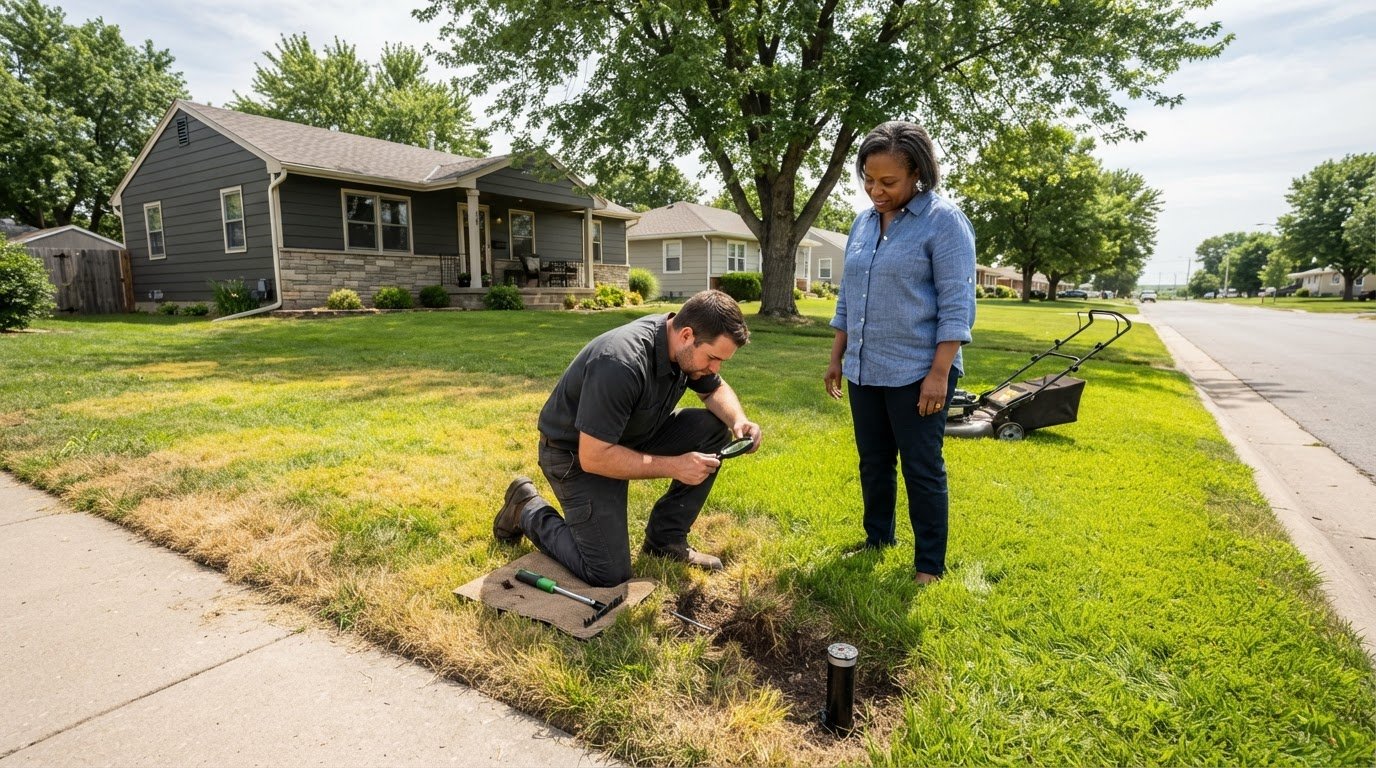

What if the first step in fixing lawn rust is helping your grass grow more vigorously, not reaching for fungicide? If you’re wondering how to fix lawn rust disease Nebraska, look for yellow-orange powder on the blades. Rusty residue on your shoes after walking through the lawn can be a clue, but discolored grass can have other causes, too.
Rust can show up in Nebraska from spring through fall when weather and slow grass growth favor the disease. Before changing your watering, mowing, or fertilizing routine, look for visible signs of rust and consider what might be affecting the lawn’s growth. In many cases, practical lawn care can help grass recover without unnecessary chemical treatment.
This guide explains how to recognize likely rust symptoms, distinguish them from other lawn problems, and adjust routine care to support healthier turf. You’ll also learn when fungicide may be worth considering and how Yardworx Lawn & Landscape’s lawn care services can support lawns in Lincoln. A measured plan helps you respond to what the lawn is actually showing.
How to identify lawn rust disease in a Nebraska lawn
A yellow or brown lawn doesn’t automatically mean rust. Lawn rust is a fungal turf disease, so look for powdery orange-yellow signs on grass blades and consider how the pattern fits the lawn’s recent growing conditions.
Quick definition: Lawn rust is a fungal disease marked by visible rust-colored spores on grass blades. Pale, thinning turf reflects the plant’s condition, but isn’t proof of rust by itself. Rust fungi produce spores, as described in this overview of Rust (fungus). Slow grass growth and humid weather can make rust more likely, but symptoms need to be assessed together.
What does lawn rust look like on grass?
Check the blades closely. Rust may appear as small orange-yellow pustules or fine rusty powder that rubs onto your fingers, shoes, or clothing when you brush against the grass. Walking through a suspect area can reveal powder transfer, though that clue alone doesn’t confirm the diagnosis.
Look at several areas, including the edges of discolored patches and nearby grass that still looks healthy. Rust-affected turf may seem pale, thin, or less vigorous, but other stresses can cause those changes. In Lincoln, lawns with Kentucky bluegrass, perennial ryegrass, or tall fescue may show different patterns. Assess the blades and the broader patch rather than relying on color alone.
How can you distinguish rust from other lawn problems?
Compare the blades with the shape and location of the affected area. Rust is more likely when orange or yellow powder appears directly on grass and transfers with a light touch. Drought stress often leaves turf broadly faded or dry-looking, without rusty powder. Mowing damage may cause ragged blade tips or a uniformly scalped appearance, especially where the cut is uneven. These are useful clues, not a diagnosis on their own.
Consider whether symptoms follow a pattern. Discoloration across an exposed, dry section may point to watering stress, while damage concentrated in a strip or low-cut area may relate to mowing. Insect activity can cause irregular thinning or weakened patches, but those signs can overlap with disease and other lawn problems. If you see chewing or other signs of pests rather than powdery pustules, pest control in Lincoln is one option to consider.
When the evidence is mixed, don’t treat color alone as confirmation. Note where the damage appears, whether powder rubs off, and how the lawn has been growing. If you’re learning how to fix lawn rust disease Nebraska lawns may develop, careful identification is the sensible first step before changing care or applying a treatment.
Why lawn rust develops in Nebraska lawns
Rust doesn’t appear simply because a lawn has a particular color or grass type. Rust fungi infect grass, while weather and growing conditions affect how readily symptoms appear. Moisture on leaf surfaces, humid air, and mild temperatures can support disease pressure. Grass that’s growing slowly may take longer to replace damaged tissue, making symptoms more noticeable.
In short: Lawn rust risk rises when susceptible grass, moisture, and conditions that limit active growth come together. None of these factors alone proves what caused a particular patch. The same lawn can respond differently as weather and care conditions change. The Purdue University Turfgrass Science rust resource also explains how disease pressure relates to turf conditions and management.
Which Nebraska weather conditions can favour lawn rust?
In Lincoln, dew can leave grass blades damp after a cool night, while humid stretches may slow drying. Mild weather can keep grass growing, but temperature swings or dry spells may slow it down. Rust is reported most often from spring through fall under mild, wet conditions, though it may also develop during sunny, dry weather after a humid period. That seasonal range is a guide, not a prediction for every yard.
Microclimates matter. A shaded section with limited airflow may stay damp longer than an open area, while slopes and sunny spots can dry at different rates. Two lawns on the same block may therefore face different conditions. Notice where symptoms emerge and whether those areas stay dewy or shaded. This context can help you understand disease pressure without treating weather as a diagnosis.
How grass type and lawn care affect rust pressure
Kentucky bluegrass is common in Nebraska lawns, and perennial ryegrass is another local example. Grass type and cultivar can influence susceptibility, so rust may be more visible in some areas than others. Even within one yard, different seed mixes or growing conditions can lead to varied responses.
Growth matters, too. Drought stress, low fertility, compacted soil, or other conditions that slow turf can limit how quickly grass grows past damaged blades. Shade and poor air circulation may add stress or prolong dampness. These factors can contribute to an outbreak, but they don’t establish a cause on their own. Rust fungi, weather, grass, and lawn care interact.
For homeowners researching how to fix lawn rust disease Nebraska, understanding these influences helps keep the response measured. Don’t assume every rusty-looking area needs more fertilizer or that every damp patch has rust. Consider recent growth, watering, shade, and the lawn’s overall condition together. Yardworx Lawn & Landscape provides lawn care in Lincoln, including mowing, fertilization, aeration, and lawn treatments, to support ongoing turf maintenance.
Which lawn rust treatments work, and when is fungicide needed?
Once rust seems possible, it can be tempting to treat the lawn immediately. A steadier approach is to assess how much turf is affected, support healthy grass growth, and watch how symptoms change. In many cases, cultural care can help grass grow new blades that look healthier, but recovery depends on disease severity, weather, and the lawn’s condition. No single approach suits every patch.
Fungicide isn’t an automatic first response. If the diagnosis is wrong, or conditions that slow grass growth remain, chemical treatment may have limited value. Use the options below to decide what makes sense before taking action.
| Option | Appropriate situation | Key limitation |
|---|---|---|
| Adjust routine care | Symptoms appear limited and turf needs support to grow actively. | Improving care doesn’t confirm rust or guarantee recovery. |
| Monitor and reassess | You’re uncertain about the diagnosis or want to see whether symptoms are changing. | Ongoing or spreading damage needs closer assessment. |
| Seek experienced assessment | Symptoms persist, worsen, or affect a broad area. | The right response depends on identifying the actual problem. |
| Consider fungicide | Rust is confirmed and the disease is severe or the lawn is especially vulnerable. | Product directions, disease confirmation, and lawn conditions matter. |
Can lawn rust improve without fungicide?
Often, a useful first step is helping turf grow under suitable conditions. Actively growing grass can produce healthy new blades, making older, affected growth less noticeable over time. Consistent mowing at an appropriate height, sensible watering, and suitable fertilization can support that growth. These measures don’t erase existing damage or guarantee that rust will fade. Recovery varies with the lawn and weather.
Watch the pattern as you adjust routine care. If symptoms stay limited and the turf remains vigorous, continued monitoring may be reasonable. If the lawn keeps thinning or affected areas expand, don’t assume cultural care alone is enough.
When should a homeowner consider fungicide or expert diagnosis?
Persistent, worsening, or widespread symptoms are good reasons to seek a reliable assessment before choosing a treatment. Rust can resemble other lawn problems, and fungicide won’t address drought stress, mowing injury, or another cause. A sound decision depends on confirming the disease and considering the grass, affected area, and current growing conditions.
If fungicide is appropriate, follow the product label carefully, including instructions for use and any stated limits. Don’t choose a product or schedule based only on a rusty-looking patch. For homeowners weighing how to fix lawn rust disease Nebraska lawns may develop, Yardworx provides lawn care and lawn treatments in Lincoln to support turf maintenance. Contact the team about your lawn’s condition.
How to fix lawn rust disease: a step-by-step Nebraska recovery plan
A calm, consistent plan is more useful than changing several things at once. Start with what you can observe, make measured adjustments to routine care, then look for changes in new growth. These steps can support a healthier lawn, but they can’t confirm rust or guarantee that symptoms will clear. If the problem continues to spread, seek a reliable diagnosis before escalating treatment.
A practical recovery sequence
- Inspect and record the affected areas. Look across several parts of the lawn, noting where symptoms appear and whether patches are expanding. Check grass blades for rusty powder, and take a photo or write down what you see so you can compare conditions later.
- Review recent lawn conditions. Consider rainfall, irrigation, mowing, shade, and how vigorously the grass has been growing. A damp, shaded section may need a different adjustment than a dry, exposed patch. Don’t apply pesticide or fertilizer simply because the lawn looks discolored. First consider what the turf needs.
- Adjust watering to the lawn’s needs. Check soil moisture and account for recent rain before running irrigation. Water deeply but infrequently when the lawn needs it, and favor early morning so blades have time to dry during the day. Avoid repeated watering that keeps foliage wet for long periods, but don’t let the grass become drought-stressed in an effort to prevent disease.
- Mow according to growth. Keep to a regular mowing routine while the grass is growing, and avoid cutting it unusually short or removing too much blade at once. If rust is present, collecting clippings can help remove affected blade material rather than spreading it around the lawn. Mowing supports routine turf care, but doesn’t eliminate the underlying fungus by itself.
- Support growth with appropriate nutrition. Fertilizer can help when the lawn needs nutrients, but more isn’t automatically better. Consider the turf’s overall condition and follow product directions rather than applying a high-nitrogen product without a clear reason. Sound lawn fertilization supports vigorous growth, though it isn’t a guaranteed rust cure.
- Reassess new growth. After making sensible care adjustments, compare the lawn’s appearance with your notes or photos. Look at newly grown blades and whether affected areas are stable, improving, or spreading. Persistent or worsening symptoms call for a closer diagnosis before you choose further treatment.
Keep the process steady. When deciding how to fix lawn rust disease Nebraska lawns may show, changing irrigation, mowing, and fertilizer all at once can make it harder to tell what’s helping. Adjust care based on observed conditions, then reassess. Yardworx provides lawn care in Lincoln, including weekly mowing, fertilization, aeration, and lawn treatments, to support ongoing turf care.
When Lincoln homeowners should get professional help for lawn rust
A few discolored blades may not call for a major intervention, but recurring patches deserve a closer look. Consider professional lawn care if symptoms keep returning, spread despite sensible maintenance, or are difficult to distinguish from drought, mowing stress, or another turf problem. A reliable diagnosis can help you avoid treating the wrong issue and make a practical plan based on the lawn’s overall condition.
What a broader lawn assessment can help uncover
Rust-like symptoms can be one visible part of a bigger lawn-care picture. Watering patterns, soil moisture, mowing habits, shade, and grass growth all offer useful context. For example, a persistently damp area may need different irrigation adjustments than a patch that repeatedly dries out. A thoughtful plan responds to observed conditions rather than assuming one cause explains every thin or discolored spot.
Yardworx provides lawn care in Lincoln for residential and commercial properties. Its maintenance services give homeowners a practical option when lawn problems are hard to sort out alone. The goal is to consider the turf’s needs as a whole, not to promise that one service will cure rust.
How routine care supports Nebraska turf after symptoms appear
Once you understand the lawn’s condition, routine care can help support steady, healthy growth. Fertilizer is one part of that picture, and the right timing and amount depend on the lawn’s needs. Yardworx’s six-step fertilizing program provides ongoing nutrient support, but fertilization isn’t a guaranteed rust prevention method and shouldn’t be applied as a reflex when symptoms appear.
If affected areas have become thin, overseeding may be worth considering as part of a broader recovery plan, depending on the turf and timing. Aeration and overseeding can support lawn renovation where conditions call for it, but they don’t directly eliminate fungal disease. Yardworx offers aeration and overseeding as part of its lawn care, with an approach guided by the lawn’s condition.
Professional help can be especially useful when symptoms are widespread, the diagnosis remains uncertain, or routine adjustments haven’t helped. Yardworx Lawn & Landscape is locally owned and operated in the Lincoln metro area, with lawn care, mowing, fertilization, aeration and overseeding, and lawn treatments to support ongoing turf maintenance. These services can address lawn needs as part of a broader plan, without promising a standalone rust cure. Contact Yardworx in Lincoln to discuss care for your lawn.
Give your lawn a steady path to recovery
Rust-like symptoms don’t have to turn into a season of guesswork. Choose a next step that fits what your lawn is showing, whether that means continuing careful routine maintenance or getting help with recurring trouble. If you’re still weighing how to fix lawn rust disease Nebraska, focus on supporting healthy turf rather than applying extra treatments without a clear reason.
Yardworx Lawn & Landscape provides lawn care in the Lincoln metro area, including weekly mowing, a six-step fertilizing program, and specialized lawn treatments. These services support ongoing turf care, not a guaranteed standalone cure for rust. A thoughtful plan can help you move forward with more confidence and less trial and error.
Contact Yardworx for help with your Lincoln lawn and take the next step toward a healthier, well-cared-for yard.
Frequently Asked Questions
Does lawn rust disease kill grass?
Lawn rust usually affects the appearance and vigor of grass more than it kills an established lawn outright. If turf is already weakened, ongoing disease pressure and other stresses can contribute to thinning. Watch for developing bare areas or a loss of lawn density rather than judging by blade color alone. Persistent thinning deserves a closer assessment, since rust may not be the only issue.
Is lawn rust harmful to people or pets?
Lawn rust is a disease of grass, not an infection that typically affects people or pets. The orange residue may transfer onto shoes or hands during yard work, so washing up after handling affected turf is a sensible precaution. If the lawn has also been treated with a pesticide or fertilizer, follow that product’s label for any instructions about people and animals entering the treated area.
Can lawn rust spread from one lawn to another?
Rust fungi produce spores that can move through the air, so spread beyond the original patch is possible. That doesn’t mean every nearby lawn will become infected; susceptible grass and favorable conditions also matter. If you’re mowing a suspect area, avoid working while the grass is wet, and clean soil and plant debris from equipment before using it elsewhere. Keep an eye on neighboring sections for new symptoms.
How long does lawn rust last in Nebraska?
There isn’t a fixed number of days. Rust may remain noticeable while conditions favor the disease and grass is growing slowly. Symptoms can become less apparent as conditions change and new blades grow. Lincoln weather can shift between humid, wet periods and drier stretches, so the course varies by yard and season. If you’re wondering how to fix lawn rust disease Nebraska lawns may develop, track symptoms and turf growth rather than relying on a set timeline.
Can I mow my lawn when it has rust disease?
Yes, you can mow when the lawn needs cutting, but avoid mowing wet grass or removing too much blade at once. Cutting overly short can add stress when turf is already struggling. Use sharp mower blades for a cleaner cut, and follow the lawn’s usual mowing needs rather than mowing repeatedly to remove visible color. Mowing helps maintain the turf, but it isn’t a stand-alone disease treatment.
Should I remove grass clippings from a lawn with rust?
Bagging clippings while rust is present can remove some affected grass blades from the lawn. This may be especially practical if rusty residue is visible across the area you’ve just mowed. Clippings alone don’t resolve the conditions that allowed symptoms to develop, so continue sensible lawn care and monitor new growth. If the turf keeps thinning or symptoms spread, seek a more confident diagnosis before choosing another treatment.