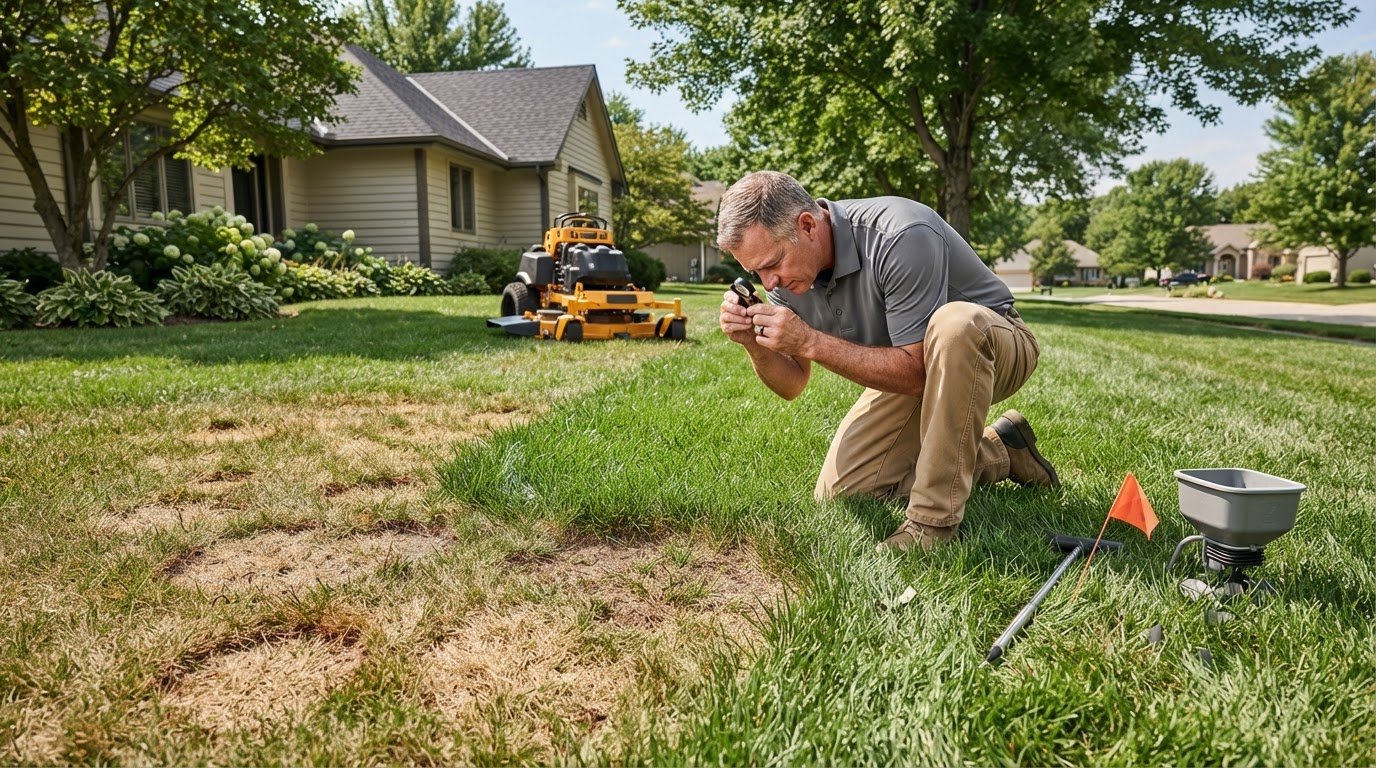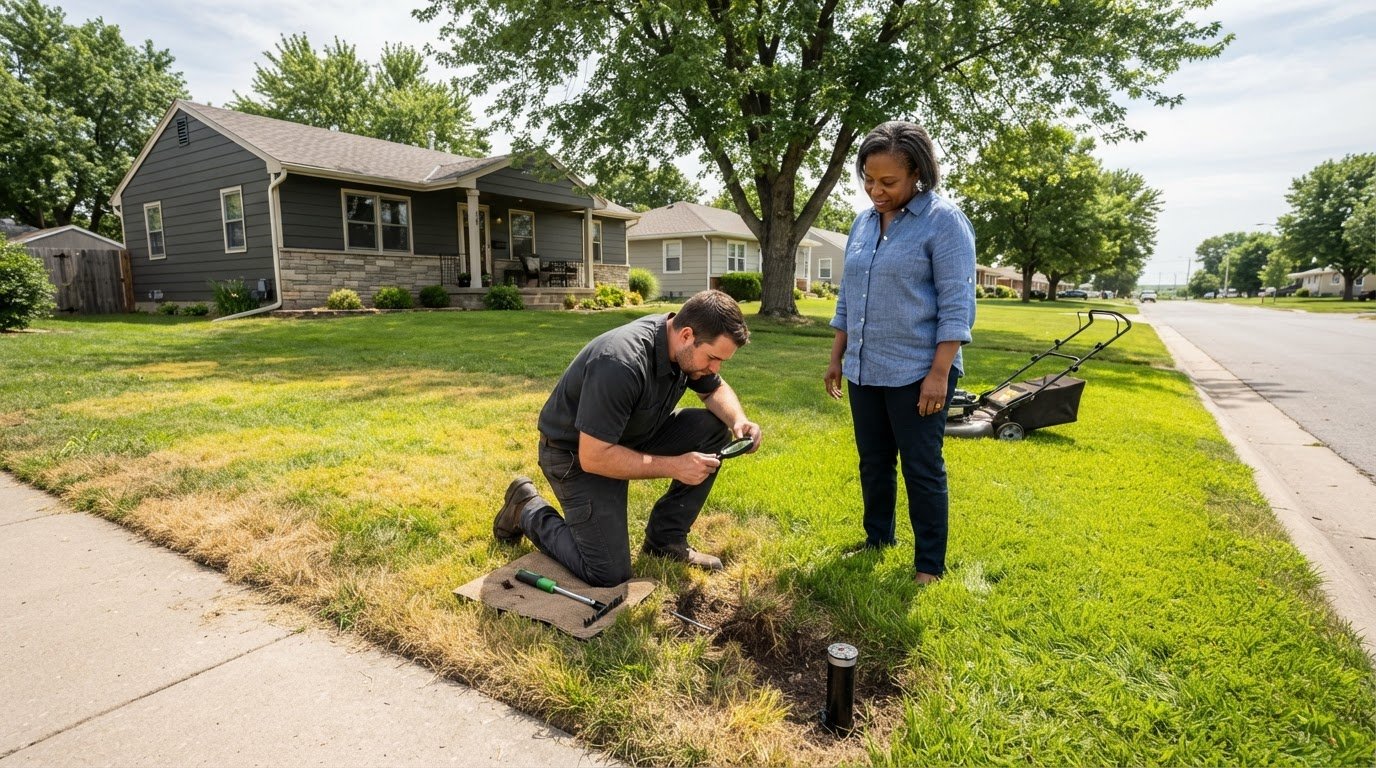

Could those pale circles in your lawn be dollar spot, or are they a sign of another turf problem? It can be hard to tell at a glance, especially when you’re concerned the damage may spread. Dollar spot fungus control Lincoln homeowners can rely on starts with careful identification, not guesswork.
Dollar spot often appears as small, bleached-tan circles that can join into larger patches. On individual grass blades, look for narrow lesions with reddish-brown edges. Other lawn problems can look similar, so check the blades and growing conditions before choosing a treatment.
In Lincoln, warm temperatures, humid conditions, and grass that stays wet for long periods can encourage dollar spot from late spring through early fall. The steps below explain what to look for, which lawn conditions may be contributing, and how routine care can support turf recovery. You’ll also find practical ways to review mowing, watering, and fertilizing before deciding whether you need more help. A clear diagnosis and a consistent plan can make lawn care feel more manageable.
How to Recognize Dollar Spot in a Lincoln Lawn
Dollar spot is a fungal disease of turfgrass that can leave scattered, bleached-looking patches across a lawn. Early spots may be small and easy to mistake for drought stress, worn grass, or another turf problem. The disease is associated with the fungus Clarireedia ; the overview of Dollar spot fungus describes its symptoms and affected turfgrasses.
Look for straw-colored or tan circles roughly the size of a silver dollar. At first, patches may be scattered across the lawn. Additional spots can appear, or existing ones may expand and become more noticeable. Color and size are useful clues, but they don’t confirm the cause.
Visible symptoms can suggest dollar spot, but a closer diagnosis is needed to distinguish it from look-alike lawn problems.
What dollar spot looks like on grass blades
Examine grass blades at the edge of a pale patch. Infected blades may have tan or straw-colored lesions with reddish-brown margins. Some lesions narrow in the middle, creating an hourglass-like shape. These details can be difficult to see in a photo of the whole lawn, but they’re more informative than patch color alone.
Take close-up photos of affected blades and nearby healthy grass under similar lighting. Include a wider view to show how the patches are distributed across the lawn. Check more than one blade: shadows, dry grass, and camera exposure can all make pale areas look different.
Where dollar spot may appear across Lincoln lawns
Dollar spot may start as scattered, small patches rather than one continuous area. If conditions remain favorable, more spots can appear and separate patches may merge into irregular areas. A changing pattern is worth noting, but spreading discoloration alone doesn’t confirm a fungal disease.
Symptoms can look different depending on grass species, mowing height, weather, and routine care. A closely cut lawn may show patches differently from taller turf, while lighting and moisture can change how bleached an area appears. Compare affected and healthy sections at the same time of day, and note whether the spots are changing.
Record when you first noticed the patches, where they appear, and whether blade-level lesions are present. This can help you distinguish a passing color change from a persistent pattern and make a more informed decision about next steps. If symptoms remain unclear or continue to spread, disease-aware lawn care can put them in context with the turf’s overall condition.
For separate outdoor pest concerns, Yardworx also offers pest control in Lincoln. Pest issues and turf diseases require different approaches. Careful identification is the starting point for dollar spot fungus control Lincoln homeowners can approach without guesswork.
Why Dollar Spot Develops: Lincoln Weather, Moisture, and Turf Conditions
Dollar spot develops through an interaction between a disease-causing fungus, susceptible turfgrass, and conditions that allow infection to take hold. The fungus can be present without obvious symptoms. Changes in moisture, weather, or turf health may make disease more likely to appear. That’s why a pale patch isn’t proof of a fungal problem or, by itself, a reason to apply a treatment.
Prolonged moisture on grass blades, warm and humid weather, and turf under stress can combine to favor dollar spot.
How moisture and weather can increase disease pressure
Grass blades that stay wet for extended periods create more favorable conditions for fungal activity than blades that dry quickly. Heavy dew, humid air, and watering that leaves foliage wet into the day can all prolong leaf wetness. A damp morning doesn’t necessarily mean disease will develop; the risk depends on several conditions coming together with susceptible grass.
For Lincoln lawns, dollar spot is generally a concern from late spring through early fall, when warm weather can coincide with humidity and persistent moisture. Conditions vary, so the season alone can’t confirm an outbreak. Purdue University Extension discusses how moisture and cultural practices relate to dollar spot management. For local lawn decisions, University of Nebraska-Lincoln Extension guidance also emphasizes sound turf-care practices and integrated disease management rather than relying automatically on fungicides.
How turf stress and maintenance influence vulnerability
Stress can leave grass less able to maintain healthy growth, but no single maintenance issue explains every case. A lawn may face several pressures at once, including uneven moisture, close mowing, or inadequate nutrition. These factors can affect turf resilience, while disease still depends on the fungus and favorable conditions. Treat maintenance as one part of the picture, not a diagnosis on its own.
Nitrogen supports growth, and research guidance identifies insufficient nitrogen as a factor associated with greater dollar spot susceptibility. Balanced fertility can help turf sustain healthy growth, but adding fertilizer without considering the lawn’s needs isn’t a reliable shortcut. A consistent nutrient plan is one part of broader lawn care.
- Notice whether dampness lingers, especially in shaded or poorly ventilated parts of the lawn.
- Consider whether watering leaves blades wet for long periods. Early-morning watering gives foliage time to dry.
- Keep mowing and fertility practices suited to the turf instead of trying to correct every pale area with extra fertilizer.
- Track symptom changes alongside weather and routine care before deciding on a treatment.
These observations help put symptoms in context and support more thoughtful dollar spot fungus control Lincoln homeowners can use. If the pattern persists, professional lawn care can help assess the concern alongside the turf’s overall condition.
Dollar Spot or Another Lawn Problem? Compare Symptoms Before Treating
Several lawn problems can leave turf looking pale or brown, so color alone isn’t enough to choose a treatment. Compare the patch pattern, individual grass blades, and conditions around the affected area. These clues can point to possibilities, but they don’t confirm a diagnosis. Drought stress, for example, can resemble disease from a distance, and different turf diseases may cause overlapping discoloration.
Compare dollar spot with drought stress and other turf diseases
Use this guide to organize what you see, not to diagnose from one symptom. Check several clues before deciding what to do.
Possible cause:
Dollar spot
Patch pattern:
Often scattered, small spots that may become larger or merge.
Blade clues:
Tan lesions with reddish-brown margins may be visible on individual blades.
Site clues:
Consider recent humidity and how long grass stays wet.
Possible cause:
Drought or heat stress
Patch pattern:
Dry-looking areas may follow uneven soil moisture or irrigation coverage rather than appear as distinct disease spots.
Blade clues:
The dollar spot-style lesions described above may be absent.
Site clues:
Check whether the area is dry, exposed, or missed by watering.
Possible cause:
Another turf disease, including brown patch
Patch pattern:
Appearance can vary with the disease and lawn conditions.
Blade clues:
Symptoms may overlap with other causes, so color alone isn’t decisive.
Site clues:
Weather and moisture can inform an assessment, but don’t establish the cause.
These are comparison clues, not hard rules. Soil, grass type, mowing, and weather affect what symptoms look like, and a lawn can have more than one issue at a time. Nebraska turf guidance encourages integrated disease management, so consider care conditions alongside visible symptoms before choosing a treatment.
When a lawn symptom needs a closer assessment
Take another look if affected areas keep spreading, return, or don’t match a clear pattern. Photograph the same locations from above and close to the blades, and include a healthy section for comparison. Note recent watering and weather, too. A consistent record makes changes easier to see and turns a vague concern into useful information.
Choosing a treatment before identifying the cause can waste effort or leave the real problem unaddressed. A closer assessment considers blade symptoms, patch distribution, moisture, and the lawn’s maintenance history together. If the cause remains unclear, Lincoln lawn care services can help put the symptoms in context with the lawn’s overall health.
For dollar spot fungus control Lincoln homeowners can approach with less guesswork, treat symptom comparison as a first step, not a final verdict. Careful identification helps make the next decision practical and suited to the conditions in your yard.
A Practical Dollar Spot Control Plan for Lincoln Homeowners
A steady plan helps you respond to possible dollar spot without rushing into a treatment that may not fit the problem. Start with what you can observe, make measured care adjustments, and review the lawn before deciding whether more help is needed. These steps support turf health, but they aren’t a guaranteed cure for disease.
- Document the symptoms. Note where patches appear and whether their edges or overall size change. Take a wide photo and close-ups of affected grass blades, then repeat the photos from similar angles and in similar lighting. This record can help distinguish a continuing problem from temporary discoloration.
- Assess the conditions. Consider how long the grass stays wet, whether irrigation reaches the area evenly, and whether the site is shaded or has limited airflow. Record recent watering and mowing, too. These details help put symptoms in context, though no single condition confirms dollar spot.
- Adjust routine care carefully. If practical, water early in the day so grass blades have time to dry, rather than leaving foliage wet overnight. Water deeply and less often, taking the soil and weather into account. Mow consistently with sharp blades, and avoid cutting off excessive grass length. For many cool-season lawns, a mowing height of 3 to 4 inches supports healthier turf.
- Review progress before escalating. Compare photos and note whether patches are stable, spreading, or recurring. Grass may need time to produce healthy growth, so don’t judge recovery by whether old damaged blades immediately regain their color. If symptoms persist or become widespread, seek experienced lawn-care guidance.
What to adjust in everyday lawn care
Make one or two practical changes at a time so you can see how the lawn responds. Avoid adding extra nitrogen as a quick fix. Insufficient nitrogen can make turf more susceptible to dollar spot, but fertilizer needs depend on the lawn. Follow a locally appropriate fertility plan rather than guessing at an application. Balanced care can support turf without promising to eliminate disease.
When professional disease treatment may make sense
Recurring, spreading, or widespread symptoms deserve a closer look, especially if they don’t fit a clear pattern. Treatment choices depend on accurate identification and site conditions. Fungicides aren’t automatically necessary for home lawns. If one is used, follow its product label carefully, including directions for application and use. Don’t select a product or rate based on patch color alone.
For dollar spot fungus control Lincoln homeowners can approach with a clear process, professional lawn care can help when symptoms persist or the cause is uncertain. Yardworx provides lawn care and specialized lawn treatments, with attention to the turf’s broader health rather than treating every pale patch the same way. Discuss your lawn concerns with Yardworx to take a practical next step.
Professional Dollar Spot Control in Lincoln by Yardworx
Persistent lawn symptoms can be frustrating, especially when it’s unclear whether the cause is dollar spot or another turf issue. Yardworx Lawn & Landscape provides lawn care and specialized lawn treatments for residential and commercial properties in Lincoln. A thoughtful next step is to consider the symptoms and property conditions, then connect those observations to appropriate care. No single treatment fits every lawn, and not every pale patch needs fungicide.
How ongoing lawn care supports turf resilience
Consistent mowing, sound watering habits, and attentive seasonal care help maintain attractive, healthy turf. These practices support overall lawn condition, but they don’t guarantee disease prevention or replace a disease-specific assessment. Routine maintenance and dollar spot treatment are different: general care supports the grass, while any disease-related recommendation should reflect the suspected cause and the property’s conditions.
Yardworx’s six-step fertilizing program is part of broader turf-care support, not a dollar spot cure. Fertility should be considered in light of the lawn’s needs, not used as a substitute for identifying symptoms. Insect concerns are different as well. Lincoln pest control addresses outdoor pest concerns, while lawn disease calls for attention to turf symptoms and growing conditions.
What to share when requesting help
A few details can make a lawn-care conversation more useful. Note when you first noticed symptoms, whether they have spread or changed, and what has been happening with mowing, irrigation, and fertilizing. If different areas look different, point them out separately rather than treating the whole lawn as one uniform problem.
Photos can show both the overall pattern and individual affected areas. Take a wide view of the lawn, then close-ups of the grass, and include nearby turf that looks healthy for comparison. Note when the images were taken and whether conditions had been wet or dry. These observations don’t confirm a diagnosis on their own, but they provide useful context for considering what the lawn may need.
Yardworx serves residential and commercial properties in Lincoln with lawn-care support for a range of turf concerns. If you’re looking for dollar spot fungus control Lincoln and symptoms are recurring, spreading, or difficult to identify, professional lawn care can help you consider a practical plan. Contact Yardworx about lawn care to discuss what you’re seeing and take a considered next step toward healthier turf.
Give Your Lincoln Lawn a Confident Next Step
A healthier lawn starts with decisions that fit what’s happening in your yard. If symptoms are unclear or keep returning, you don’t have to guess or apply treatments without a plan. Yardworx is a locally owned and operated business serving the Lincoln metro area, providing lawn care and specialized lawn treatments for local properties.
Thoughtful dollar spot fungus control Lincoln homeowners can feel confident about begins with understanding the lawn’s needs. Share what you’ve noticed and consider the next steps with a disease-aware approach, whether that means refining everyday care or considering a specialized lawn treatment. Steady, attentive care helps you work toward a healthier outdoor space.
Contact Yardworx to discuss your Lincoln lawn and take the next step toward turf you can enjoy with greater peace of mind.
Frequently Asked Questions
Can dollar spot fungus kill an entire lawn?
Dollar spot usually damages grass blades rather than killing an entire established lawn. If it persists alongside other stresses, however, turf can thin and leave bare areas that take longer to fill in. Don’t assume widespread decline is all dollar spot: drought, other diseases, or maintenance problems may also be involved. If large sections are deteriorating, a closer assessment can help identify what’s affecting the grass and which recovery steps make sense.
How long does a lawn take to recover after dollar spot control?
There’s no fixed recovery timeline because it depends on the extent of damage, grass growth, weather, and care conditions. Affected blades won’t turn green again; the lawn’s appearance improves as healthy new growth fills in and damaged blades are gradually mowed away. Look for a positive change in the turf’s overall density, not just the color of old leaves. If improvement stalls or new patches appear, revisit the diagnosis and care plan.
Is dollar spot harmful to children or pets?
Dollar spot is a disease of turfgrass, not a pest that targets people or pets. If a fungicide or other lawn treatment is used, follow its label for handling and for when people and animals can return to treated areas. Products can have different instructions. Keep children and pets away during application, and afterward as directed on the specific product label.
Can I mow my lawn while dollar spot is present?
Yes, you can generally continue mowing if the grass is dry and the lawn isn’t under severe stress. Keep to a consistent mowing height and avoid removing too much blade length at once, since scalping can add stress. If the lawn is wet, wait until it dries to reduce clumping and uneven cuts. Clean mowing equipment when practical, especially after working through visibly affected areas.
What happens if dollar spot symptoms return after treatment?
Returning symptoms don’t automatically mean a treatment failed. The original diagnosis may need another look, or conditions that favor disease may still be present. Compare new patches with earlier photos, note where they appear, and review recent lawn care. Before applying another product, confirm that it’s appropriate and follow its label, including any limits on repeat applications. Repeated symptoms are a good reason to seek experienced lawn-care guidance.
Can new grass seed fill areas damaged by dollar spot?
Seed can help fill thin or bare spots, but it won’t address the cause of active lawn damage. First make sure the affected area is no longer deteriorating and consider whether another problem contributed to the thinning. Choose seed suited to the existing turf and local growing conditions, then follow care directions that help it establish. Overseeding may be useful as part of recovery, but timing and preparation matter.
When should I contact a lawn-care professional about dollar spot?
Contact a lawn-care professional if patches keep spreading, return after care changes, or don’t match a clear pattern. Bring photos, note when symptoms began, and describe recent mowing, watering, and treatments. This context can help focus the assessment and avoid choosing a response based on color alone. For dollar spot fungus control Lincoln homeowners can approach with less guesswork, Yardworx Lawn & Landscape provides lawn care and specialized lawn treatments to support the lawn’s broader care needs.