
What if the brown spots in your lawn aren’t brown patch at all? In Nebraska, hot, humid summer weather can favor this disease, but dry soil, insects, and other turf problems can also leave grass brown or thin. Brown patch lawn disease treatment Nebraska homeowners consider should start with identifying the likely cause, not automatically reaching for fungicide.
It’s understandable to worry when damage seems to spread quickly, especially if it returns each summer. The pattern of the damage, recent weather, watering, and lawn-care habits can help you choose a sensible next step. This guide explains how to recognize signs consistent with brown patch, what other common problems may look like, and how to reduce conditions that encourage disease.
You’ll also learn when fungicide may warrant further consideration and why it’s important to follow product labels and local guidance. For Lincoln-area lawns, irrigation maintenance and broader turf care can help you address the conditions affecting your lawn. Yardworx Lawn & Landscape provides lawn care and specialized lawn treatments for Lincoln residential and commercial properties.
Brown Patch Lawn Disease in Nebraska: What the Symptoms Can Tell You
Brown patch is a fungal turf disease caused by Rhizoctonia solani. It can damage grass blades and create discolored areas, but a brown spot alone doesn’t confirm the disease. The pattern, condition of individual blades, grass type, recent weather, and lawn-care practices all help put symptoms in context. In eastern Nebraska, brown patch is a familiar concern, particularly in tall fescue lawns, but other problems can produce a similar appearance.
What does brown patch look like on a Nebraska lawn?
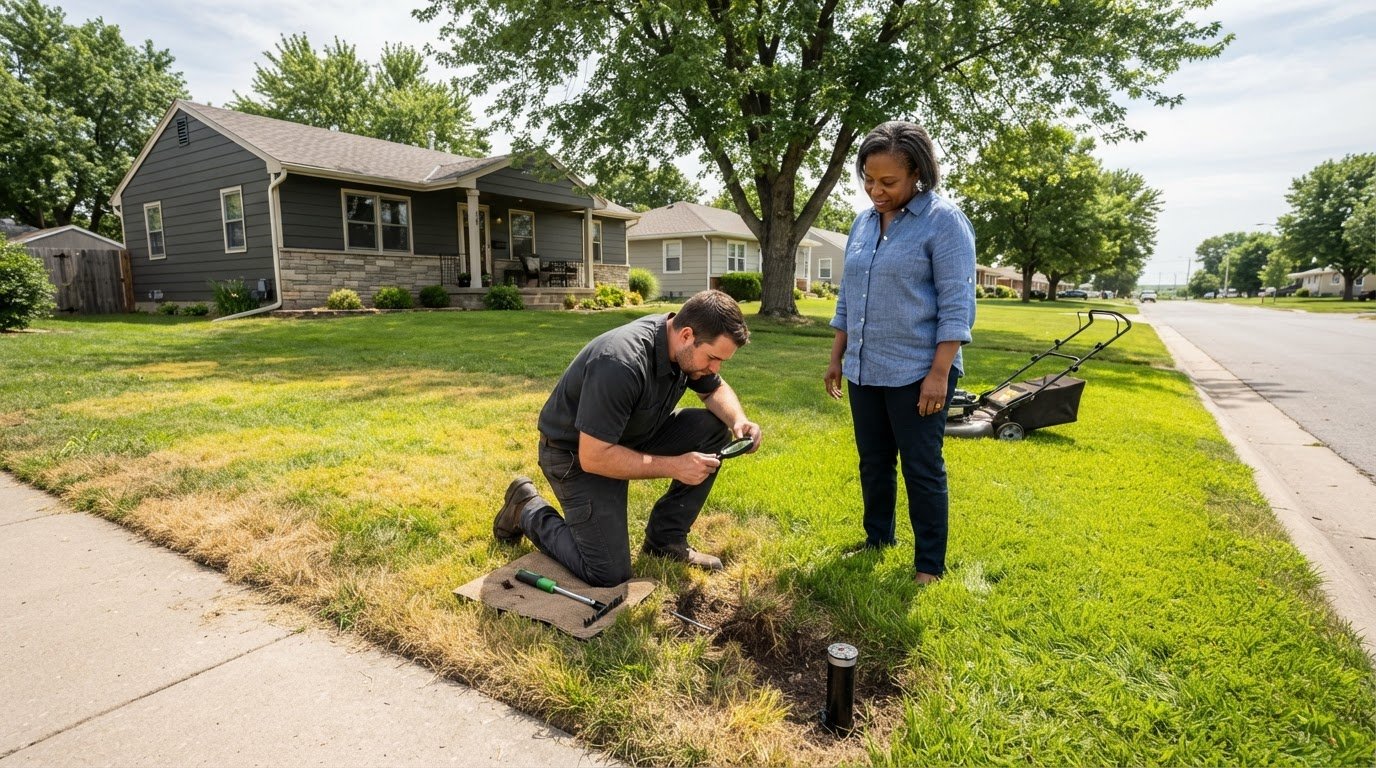
Look for irregular or roughly circular areas where grass appears brown, tan, or thin. Under favorable conditions, affected blades may develop tan lesions with darker margins, though signs can vary. A rough circle is a clue, not a diagnosis: patches may blend together, appear uneven, or look different depending on the turf species and site conditions. The Brown Patch overview on Wikipedia offers additional background on the disease and its symptoms.
Inspect both the center and edge of a discolored area. Check for spots or lesions on individual blades, thinning, and differences between affected grass and nearby healthy turf. Note when the damage appeared and whether it changes after rain, irrigation, or mowing. These observations can help distinguish a disease pattern from damage that follows a dry strip, sprinkler coverage, or a recent lawn-product application.
Which lawn problems can look like brown patch?
Drought stress often follows places that dry faster, such as sunny slopes or areas with shallow soil. Irrigation trouble may create repeating dry bands, missed corners, or uneven patches that match sprinkler coverage. Fertilizer injury can appear after a spill or uneven application, sometimes in a more defined area. These patterns aren’t definitive, but they offer useful clues alongside blade condition and the timing of recent lawn care.
Before choosing treatment, walk the lawn and make a few observations:
- Check whether affected areas follow sprinkler patterns or appear across different watering zones.
- Look closely at grass blades for lesions or general drying, and compare them with healthy turf nearby.
- Recall recent watering, fertilizer applications, mowing, and changes in weather.
- Watch whether the patches expand or remain in the same locations.
Warm, humid Nebraska summer conditions can favor brown patch, but weather alone can’t confirm what’s affecting a particular lawn. Avoid applying fungicide based only on color or shape. Start by matching the visible symptoms with site conditions and recent care. For Lincoln properties, Yardworx provides lawn treatment services as part of its lawn-care offerings. Considering the whole lawn helps you avoid assuming every brown area is fungal.
Why Brown Patch Develops: Nebraska Weather, Grass, and Lawn Conditions
Brown patch doesn’t develop because of one hot afternoon or a single watering mistake. Disease pressure reflects a mix of weather, moisture around the grass, turf type, and everyday lawn care. In Nebraska, warm, humid summer stretches can create favorable conditions, but muggy weather alone doesn’t prove brown patch is present. Consider it alongside the lawn’s condition and care history.
How moisture and summer conditions influence disease pressure
Warm, humid weather can keep grass damp for longer, creating more favorable conditions for fungal disease. Brown patch is a familiar summer concern in eastern Nebraska, but no single weather event confirms it. Pay attention to how long grass stays wet, especially in areas that dry slowly. Overnight dew, rain, and irrigation can all contribute to moisture on leaves, though none alone establishes the cause of damaged grass.
Watering time and drainage are useful things to review. If irrigation runs late in the day, blades may remain wet into the evening; morning watering gives turf more time to dry. Low spots, compacted soil, or blocked sprinkler heads may also create uneven moisture. These are factors to assess, not automatic explanations. Lincoln yards vary in sun exposure, soil, slope, and irrigation coverage, so focus on the conditions where damage appears.
Why grass type and lawn care matter
Tall fescue is particularly associated with brown patch in Nebraska. The same weather doesn’t affect every lawn in the same way: grass type, growth, and how quickly a site dries can all shape disease pressure. Dense turf, shaded areas, and limited airflow may hold moisture longer. A sunny, open section of the same property may dry faster, so conditions can vary across the lawn.
Review the routines that influence turf growth as well as moisture. Heavy summer nitrogen applications can encourage lush growth when conditions already favor disease, while mowing with dull blades can leave grass more vulnerable to stress. Note where and when the lawn stays wet, how irrigation is distributed, and whether fertilizer or mowing practices may be contributing. Those details help you make a measured plan. Consistent seasonal lawn care supports overall turf health, but it isn’t a guaranteed disease cure.
- Notice which areas stay damp after nearby turf has dried.
- Check whether sprinkler coverage is even and whether water collects in low spots.
- Keep track of recent fertilizer applications, mowing, rainfall, and irrigation timing.
- Consider grass type and shade when comparing affected areas with healthier turf.
These observations are useful whether you’re adjusting watering or considering treatment. If the cause remains unclear, Yardworx’s lawn care and specialized treatments can support care for Lincoln lawns. Discuss your lawn’s conditions with Yardworx and share what you’ve observed.
Brown Patch Treatment: Care vs. Fungicide
Brown-looking grass doesn’t automatically need fungicide. The right response depends on whether brown patch is actually present, how much turf is affected, the conditions around it, and whether treatment is appropriate. Color alone isn’t enough to make that decision. Choose treatment based on a sound diagnosis and the product label, not the appearance of a brown spot by itself.
Start with steps that reduce avoidable stress and moisture on grass. These habits support healthier turf, but they aren’t a guaranteed cure for active disease. If damage continues or the cause remains uncertain, review the broader conditions before deciding what to do next.
What cultural changes can help reduce disease pressure?
Review how and when the lawn is watered. Morning irrigation gives grass more time to dry during the day, while unnecessary evening watering can leave blades wet overnight. Check for pooling or uneven sprinkler coverage, too. Avoid heavy nitrogen applications during summer, when lush growth may add stress under disease-favorable conditions. These adjustments can reduce contributing pressures, though they won’t necessarily restore grass already damaged by disease.
Good mowing habits matter as well. Mow when turf is dry where practical, use sharp blades, and avoid removing too much grass at once. If an area stays damp because of dense growth or poor air movement, consider whether routine lawn care can help address the conditions without creating additional stress. Aim for steady, appropriate care rather than a drastic change based on one discolored area.
When is fungicide worth considering?
Fungicide may be worth considering when brown patch is reasonably confirmed and conditions, timing, and turf damage make treatment appropriate. It isn’t a substitute for correcting irrigation or other contributing care issues, and it may not help damage caused by drought, fertilizer injury, or another problem. For brown patch lawn disease treatment Nebraska homeowners are considering, consult current Nebraska Extension guidance and read the specific product label before making a chemical decision.
Labels explain where and how a product may be used, along with application directions and precautions. Follow them exactly; don’t borrow a rate or schedule from advice intended for a different product or situation. If the diagnosis is uncertain, pause before applying anything. A measured assessment is safer than treating a lawn simply because its color looks concerning.
- Adjust irrigation to avoid unnecessary prolonged leaf wetness.
- Review summer fertilizer timing and avoid adding stress without a clear reason.
- Follow sound mowing practices and keep mower blades sharp.
- Consider fungicide only when the diagnosis and current guidance support it.
Yardworx’s ongoing lawn care services support overall turf health while you address the conditions affecting your property. Contact Yardworx about your lawn to discuss a practical next step.
Responding to Suspected Brown Patch in Nebraska Lawns
A steady response can help you avoid treating the wrong problem or adding unnecessary stress to your lawn. If you suspect brown patch, work through a few observations before deciding what action to take. A short record of symptoms and recent care can also make it easier to explain what’s happening and choose a useful next step if damage keeps spreading.
A practical first-response checklist
- Observe the affected area. Photograph the patch from the same spot each time, and note when you first noticed it. Look for changes in its size and shape rather than relying on memory.
- Document what you know. Record the grass type if you know it, which areas are affected, and whether the damage appears near a sprinkler, slope, shaded spot, or low area.
- Review recent conditions. Note rain and irrigation, mowing, fertilization, drainage, and any lawn treatments. These details can help distinguish a disease pattern from care-related stress.
- Adjust care thoughtfully. Correct an obvious irrigation issue or avoid unnecessary stress, but don’t apply several products in quick succession while the cause is uncertain.
- Reassess the pattern. Compare new observations with your photos. If damage continues to expand, returns, or remains difficult to explain, seek a broader view of the turf conditions instead of relying on repeated guesswork.
This record doesn’t replace diagnosis, but it gives you a clearer basis for deciding what to do. Before treating, make sure the suspected cause, lawn conditions, and next step line up.
How to support turf recovery after damage
Recovery depends on how much healthy turf remains, the conditions affecting the area, and whether the original problem has been identified accurately. Keep care steady while you assess the lawn. Avoid assuming every thin or brown area needs new seed immediately, since timing, turf type, and ongoing stress can affect whether overseeding is appropriate.
Once conditions are suitable, overseeding may be one part of repairing thin turf. It’s a renovation step, not a treatment for unresolved disease or a guarantee that damaged grass will recover. Yardworx provides aeration and overseeding to support lawn renovation when it fits the turf’s needs and timing. Ongoing lawn care can also address broader conditions without promising a disease-specific cure.
Consider professional help if patches keep expanding, similar damage appears in new areas, or your observations don’t point to a clear cause. Yardworx provides lawn care and specialized treatments for Lincoln properties, helping you choose care that fits your lawn’s needs. Contact Yardworx to discuss your lawn’s condition.
How Yardworx Supports Healthier Lawns in Lincoln, Nebraska
Brown spots can leave you unsure whether to wait, adjust care, or seek help. A useful next step is to look at the lawn as a whole. Yardworx Lawn & Landscape provides ongoing lawn care and specialized lawn treatments for residential and commercial properties in Lincoln. That broader care can support turf needs and address contributing conditions, but it isn’t a promise that a particular treatment will cure brown patch. A sensible plan starts with what the lawn is showing.
What ongoing lawn care can contribute
Routine care keeps attention on the lawn beyond a single discolored patch. Yardworx’s six-step fertilizing program provides general lawn nutrition; it isn’t a brown patch treatment. Consider fertilizer needs in light of turf condition and season, rather than adding it automatically to stressed or damaged grass. The program is one part of broader lawn care, with the goal of supporting overall turf health rather than promising a disease-specific result.
Watering systems also affect how evenly a lawn receives moisture. If some areas remain dry while others stay wet, Yardworx’s irrigation maintenance can help address system needs and support more consistent watering. If your concern involves insects rather than suspected fungus, Yardworx also provides Lincoln pest control services. Identifying the kind of problem matters, since insect damage and turf disease call for different responses.
Choose a useful next step for your lawn
Before discussing your lawn, gather the details you’ve observed. A few clear notes can help keep the next step grounded in the property’s actual condition.
- Share when the discoloration began and whether its shape or size has changed.
- Note the grass type, if known, and which parts of the yard are affected.
- Describe recent rain, irrigation timing, mowing, fertilizing, and other lawn treatments.
- Mention whether the area is shaded, slow to dry, or located near a sprinkler or low spot.
These observations don’t confirm brown patch on their own, but they offer helpful context for deciding what kind of lawn care may be appropriate. The right response depends on the lawn’s condition and a sound understanding of the problem. Yardworx’s lawn care and specialized treatments can support a plan based on your property’s needs without promising a disease-specific outcome.
For Lincoln-area lawn support, talk with Yardworx about your lawn. A clear account of what you’ve noticed is a practical place to begin.
Give Your Lawn a Clear Path Forward
The next season is a chance to use what you’ve learned about your lawn to shape a more informed care plan. Keep track of recurring trouble spots and changes in watering or routine, so you can spot patterns over time instead of reacting to each brown area in isolation. A thoughtful approach to brown patch lawn disease treatment Nebraska begins with understanding the turf’s needs and choosing care that fits its condition.
Yardworx is locally owned and operated in the Lincoln metro area. Its lawn care, specialized treatments, fertilizing, and irrigation maintenance can support broader turf health. The right next step depends on the lawn, so you don’t have to guess your way through recurring damage alone.
Talk with Yardworx about a practical plan for your lawn. With a clearer picture of what your turf needs, you can move forward with greater confidence and care for your lawn with purpose.
Frequently Asked Questions
Can brown patch go away on its own?
Visible symptoms may stop worsening as weather and moisture conditions change, but that doesn’t mean damaged grass has filled back in. Reduced disease activity and restored turf coverage are different things. In a Lincoln yard, compare the same areas over time and check irrigation coverage, drainage, and other possible causes before assuming the problem has resolved. Recovery depends on the grass species, the extent of damage, and ongoing weather.
Does brown patch kill grass?
It can cause serious damage, but the outcome varies with the turf, disease pressure, and how long conditions remain favorable. Some affected areas may retain enough healthy grass to fill in, while more severely damaged spots can remain thin or bare. Before planning repairs or reseeding, confirm the likely cause and check how much healthy turf remains. A brown patch diagnosis alone can’t predict whether a particular area will recover.
Can brown patch spread to another part of my lawn?
Brown patch can show up in multiple areas when susceptible turf and favorable conditions occur, but a new brown spot isn’t automatically the same disease. Compare the grass, symptom pattern, and site conditions in each location. As a practical precaution, avoid carrying wet clippings or equipment from affected areas to healthy turf when possible. For specific cleanup or sanitation steps, follow current Nebraska Extension guidance rather than relying on guesswork.
Is brown patch harmful to pets or people?
Brown patch is a turf disease, not a diagnosis of illness in people or pets. The presence of brown grass alone doesn’t explain a health concern. If a lawn treatment product has been applied, follow its label precautions for people, pets, handling, and when it’s appropriate to re-enter the treated area. If someone or a pet has symptoms or a possible exposure concern, seek advice from a medical professional or veterinarian.
Does brown patch affect every grass type the same way?
No. Susceptibility and visible symptoms can differ with turf species and site conditions. Tall fescue is a relevant Nebraska example, but identifying the grass in your own yard can still be difficult, especially in mixed lawns. If possible, note the grass type before assessing the damaged area. Don’t diagnose brown patch from patch shape alone, since different turf and growing conditions can change how damage appears.
Why are brown spots still appearing after I changed my watering?
Watering is only one possible factor. New spots may have a different cause, existing damage may remain visible, or disease pressure may continue despite an irrigation adjustment. Review sprinkler coverage, drainage, recent weather, mowing, and previous lawn treatments to build a fuller picture. Avoid repeating fungicide applications based only on appearance. If damage keeps expanding, arrange a careful assessment of symptoms and lawn conditions.