
You've spent your Saturday morning watering the lawn, yet by Tuesday, the grass looks parched and thin. When the Nebraska rains finally arrive, you notice water pooling on the surface instead of soaking deep into the roots. It's frustrating to invest time and money into your yard only to see it struggle against our state's notoriously heavy clay soil. Determining the best time to aerate lawn Nebraska properties is the first step to fixing these common issues. You aren't alone in feeling like your soil is a brick that refuses to breathe.
This guide will show you exactly how to break through that compaction and restore your property's health. We'll walk through the ideal seasonal windows for 2026, the specific benefits of core aeration for our local climate, and how to maximize your results with overseeding. By the time you finish reading, you'll have a clear plan to transform your yard into the lush, green sanctuary your family deserves. We'll help you move past the guesswork so you can simply relax and enjoy a vibrant, healthy outdoor space.
Why Nebraska Soil Demands Regular Core Aeration
Core aeration is the process of removing small cylinders of soil, or "plugs," from your turf. This simple act creates pathways for oxygen, water, and nutrients to reach the root zone. A professional Lawn aerator uses hollow tines to pull these plugs out, rather than just pushing them aside. This is vital because Nebraska's heavy clay and silt content naturally compacts over time. When soil is squeezed tight, your grass literally suffocates because it can't access the basic elements it needs to survive. Understanding the best time to aerate lawn Nebraska soil is essential for keeping your yard vibrant throughout the year.
You might see "spike" aerators at the hardware store, but these are often counterproductive in Lincoln. Spikes compress the soil around the hole they make, which actually increases compaction in our dense clay. Core aeration is the only effective way to relieve pressure and give your lawn room to grow. By choosing a core method, you ensure that every drop of water and every ounce of nutrient from your fertilizing program actually does its job. It's about protecting your investment and making sure your hard work pays off in a thicker, healthier yard.
The High Clay Content of Lincoln Lawns
Our local soil is rich in clay, which provides great minerals but creates a physical barrier when it's dry. It turns into a surface as hard as a sidewalk, making it nearly impossible for roots to expand. Hollow-tine equipment breaks up this "concrete" structure, allowing the ground to expand and breathe. When we remove those plugs, we're essentially hitting a reset button on your soil's density. The surrounding soil relaxes into the gaps, which naturally softens the entire yard. This process also encourages natural microbes to break down thatch, the layer of dead organic matter that sits on top of your soil. Without regular care, thatch builds up and prevents moisture from reaching the roots.
Visible Signs Your Lawn is Gasping for Air
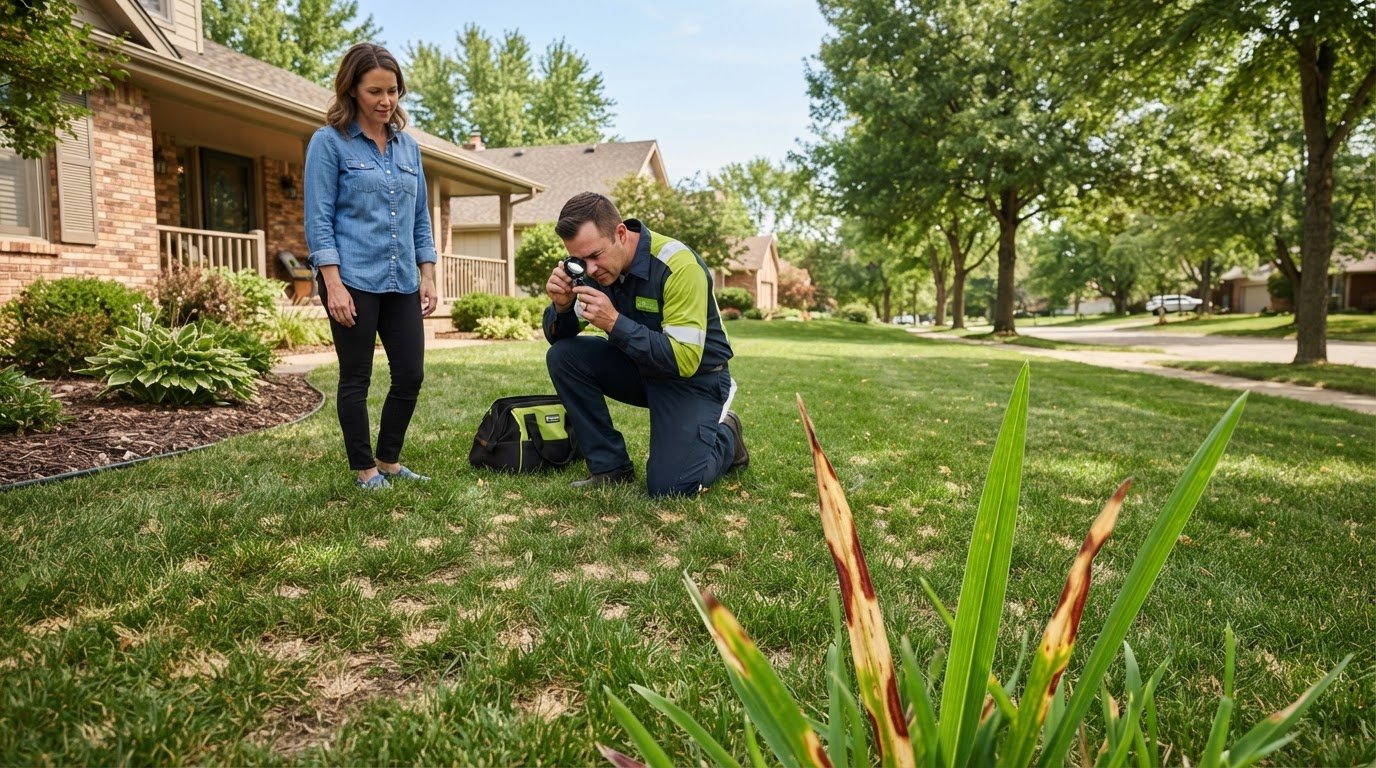
Identifying compaction isn't always obvious at first, but your lawn will give you clues. You might notice grass looking thin along the path your dog runs or where the kids play. Watch your yard after a typical Nebraska thunderstorm. If water puddles for hours instead of draining, your soil is likely too tight to absorb moisture. You can also check the areas near your driveway and sidewalks. If the ground feels like rock and you can't easily push a screwdriver into it, your roots are struggling. Recognizing these signs early helps you prepare for the best time to aerate lawn Nebraska weather allows. Timing this service correctly ensures your grass has the strength to recover before the harsh winter or summer heat sets in. Planning ahead means you can sit back and watch your yard transform while the professionals handle the heavy lifting.
The Best Time to Aerate Lawn Nebraska: Fall vs. Spring
Finding the best time to aerate lawn Nebraska yards requires looking at the thermometer rather than just the calendar. While the general recommendation for our region spans from late August through the end of October, the peak "Golden Window" is typically late August through mid-September. This period is magical for Nebraska turf. The air begins to cool, but the soil remains warm from the summer sun, creating a perfect environment for root recovery. Choosing the right month ensures your grass has enough time to establish itself before the first frost, which typically hits Lincoln in mid-to-late October.
If you wait too long into the season, the grass enters dormancy before the aeration holes can be utilized by new root growth. According to this Kansas State University guide to aeration, timing is critical because the turf needs to be actively growing to benefit from the increased oxygen and water flow. By hitting that early fall window, you're giving your lawn the best possible chance to thicken up before the snow flies.
The Case for Fall Aeration (August - September)
Fall is the superior choice for our local climate. During these months, your lawn isn't fighting off blistering 90-degree days or competing with aggressive summer weeds. Instead, it can focus all its energy on building a deep, resilient root system. This preparation is vital for surviving Nebraska’s harsh winter months. We often recommend pairing this service with aeration and overseeding. The fresh holes provide the perfect seed-to-soil contact, leading to a much thicker lawn come spring. It's a proactive way to ensure your yard remains a place of leisure rather than a source of stress.
When is Spring Aeration Acceptable?
While fall is preferred, spring aeration is a helpful secondary option if your soil is severely compacted. This window typically opens in early April and runs through the end of May. It's a good choice if you missed the fall window and your lawn is struggling to absorb any water. However, there are a few trade-offs to consider. Aeration creates open spots where crabgrass seeds love to germinate, so timing is everything. You must complete the service before applying pre-emergent weed control to avoid breaking the protective seal on your soil. Additionally, spring-aerated lawns often require more frequent watering as the summer heat approaches to keep the exposed roots from drying out. If you're unsure which window fits your schedule, you can consult with a local expert to check your soil's current density.
How to Determine if Your Lawn Needs Aeration Now
Most Lincoln lawns benefit from annual core aeration due to our high clay content. Our local weather doesn't help much. The cycle of heavy spring rains followed by extreme July heat essentially bakes the soil into a hard crust. If you notice your lawn lacks the vigor it had in previous seasons, or if it stays brown longer than your neighbor's, compaction is likely the culprit. When the soil is too tight, even the best lawn care routine won't produce the results you want. Identifying the best time to aerate lawn Nebraska properties often starts with observing these subtle signs of decline.
You may also notice that your lawn feels spongy underfoot or that water runs off into the street rather than soaking in. These are red flags that the soil structure has collapsed. Without regular intervention, the grass roots will remain shallow, making the turf much more susceptible to drought and disease. Taking a proactive approach ensures your yard stays resilient throughout the changing seasons.
The Screwdriver Test: A Simple Home Diagnostic
You don't need expensive equipment to diagnose compaction. Wait until a day or two after a good rain or a deep watering session when the soil is moist. Take a standard flathead screwdriver and try to push it into the ground in several different spots around your yard. If you can't easily push it in at least six inches, your soil is too dense for roots to thrive. High resistance indicates that your grass is struggling to find the oxygen it needs. The Screwdriver Test is the easiest way for Lincoln homeowners to check soil health.
Thatch Management for Nebraska Turf
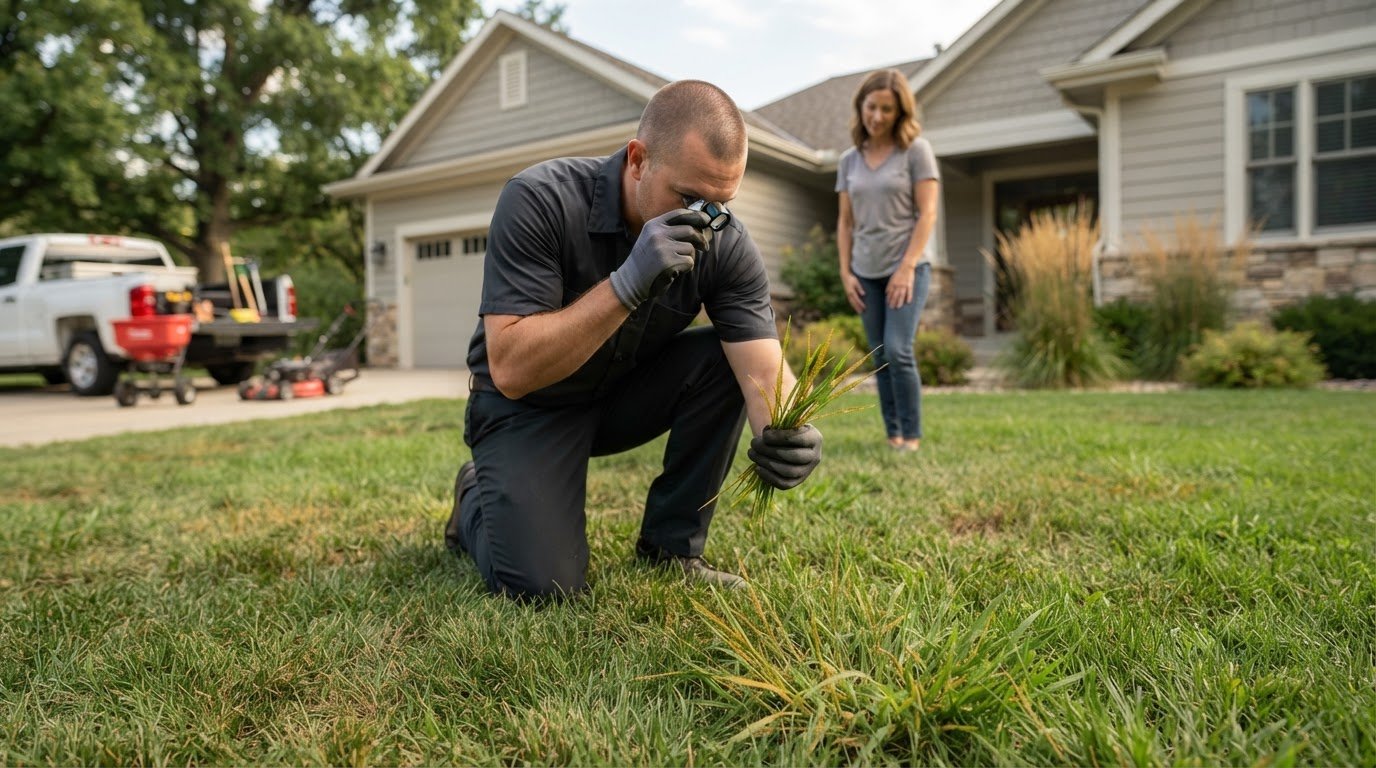
Thatch is a layer of living and dead organic matter that sits between the green grass blades and the soil surface. A little bit of thatch is healthy, but once it exceeds half an inch, it becomes a barrier. You can measure this by cutting a small wedge out of your lawn with a spade and looking at the profile. Thick thatch prevents water from reaching the soil and provides a breeding ground for pests and diseases common in our area. Core aeration physically punches through this layer, pulling up plugs and allowing microbes to break down the debris naturally. This simple intervention protects your property from the long-term damage that heavy thatch can cause, keeping your outdoor space healthy and vibrant.
Preparing Your Property for Professional Aeration
Preparing your property ensures our team can focus on what matters: restoring your lawn's health. Once you've identified the best time to aerate lawn Nebraska weather provides, a few simple steps will set us up for success. Start by giving your grass a slightly shorter trim than usual. Mowing down to about 2 or 2.5 inches allows the hollow tines to reach the soil directly without being cushioned by long grass blades. This small adjustment helps us pull the deepest cores possible, which is exactly what your yard needs to overcome Lincoln's heavy clay.
After the service, you'll see small soil plugs scattered across your lawn. It’s tempting to rake these up, but they're packed with beneficial nutrients and microbes. Let them sit. They'll naturally break down and disappear back into the turf within a week or two, especially after a few mowing cycles. This recycling process returns organic matter to the soil, further improving the vitality of your yard. It's a hands-off way for you to contribute to a thicker, greener lawn.
Flagging Your Sprinkler System
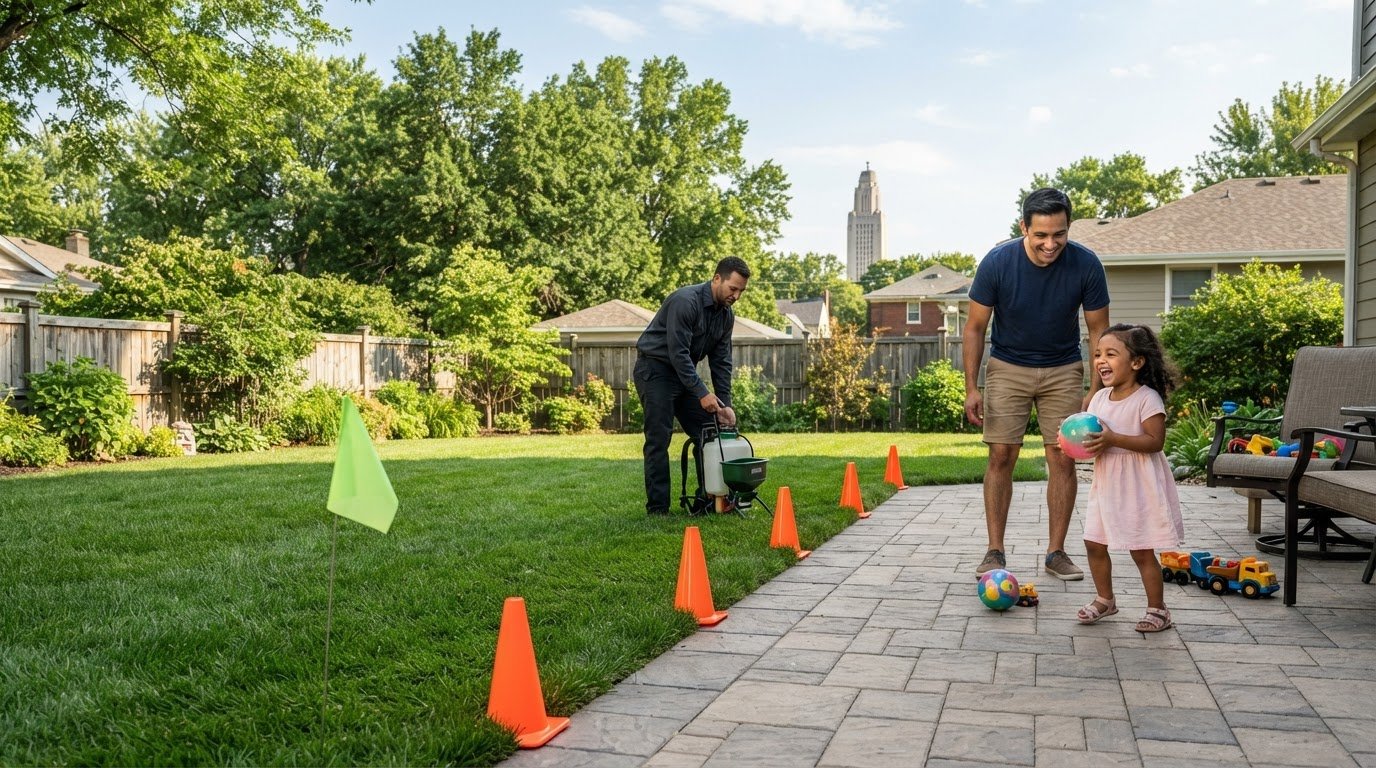
Marking your underground obstacles is a non-negotiable step for protecting your property. Aeration tines can easily damage sprinkler heads, shallow irrigation lines, or hidden utility cables if they aren't clearly visible. We recommend using bright utility flags or simple plastic markers to highlight every head in your system. If you haven't run your system lately, a quick irrigation maintenance check is a smart move to ensure everything is functioning correctly before we arrive. This simple act of flagging gives our team the confidence to move efficiently across your property while keeping your equipment safe.
The Importance of Pre-Service Watering
Watering your lawn is the most critical preparation task. Aerating dry, sun-baked Nebraska clay is nearly impossible and can even damage professional equipment. We look for a "Goldilocks" moisture level: the soil should be moist and soft, but not muddy or saturated. Following the 1-inch rule is your best bet. Water your lawn deeply about 24 to 48 hours before your scheduled appointment. This moisture acts as a lubricant, allowing the aerator to pull deeper, more effective cores. Preparing for the best time to aerate lawn Nebraska soil means ensuring the ground is ready to receive the treatment. If you're ready to see the difference professional care makes, schedule your aeration service today to secure your spot in our fall schedule.
Maximizing Results: Aeration, Overseeding, and Fertilization
Aeration is the secret ingredient that transforms a standard lawn into a neighborhood showpiece. While the mechanical process of removing cores relieves compaction, its true power lies in how it prepares the ground for other essential treatments. When you target the best time to aerate lawn Nebraska weather provides, you're creating thousands of tiny nurseries for new grass seed. This strategy is a core part of our 6-step fertilizing program, ensuring that every application of nutrients and seed reaches its full potential. It's about working with nature to build a thick, resilient turf that can stand up to whatever the Lincoln climate throws its way.
The Yardworx approach focuses on a comprehensive strategy that removes the daily burden of lawn maintenance from your shoulders. We don't just punch holes in the ground; we create a foundation for long-term health. Planning your service around the best time to aerate lawn Nebraska homeowners prefer, typically the early fall, allows these three treatments to work in perfect harmony. By combining professional core aeration with high-quality seed and precisely timed fertilization, we ensure your property gets exactly what it needs at the right moment. This holistic method saves you time and ensures you get the maximum return on your investment in your outdoor space.
Why Overseeding and Aeration Go Hand-in-Hand
Overseeding without aeration is often a wasted effort on our heavy clay soil. Without those open channels, new seeds struggle to find the soil contact they need to germinate, often drying out on top of the thatch layer. Core aeration provides protected spots where seeds can take root away from the wind and hungry birds. A thicker lawn is your best defense against local weeds, as healthy grass naturally crowds out unwanted invaders. For Lincoln lawns, we typically recommend a blend of Tall Fescue for its drought resistance or Kentucky Bluegrass for its lush feel. You can learn more about this process in our pillar guide, Aeration and Overseeding Lincoln NE: The Complete 2026 Homeowner’s Guide.
The Role of Fall Fertilization
Feeding your lawn in the fall is perhaps the most important application of the year. When you fertilize immediately after aeration, the nutrients fall directly into the root zone through the newly created holes. This deep feeding encourages the root system to expand and store energy for the coming winter. These nutrients build "winter hardiness," allowing your grass to survive the freezing temperatures and bounce back faster in the spring. It’s a simple, methodical way to ensure your yard stays protected and vibrant. If you're ready to give your lawn the care it deserves, Schedule your Fall aeration and overseeding with Yardworx today and enjoy the peace of mind that comes with a professionally managed yard.
Start Your Journey to a Vibrant Nebraska Lawn
A healthy yard is more than just a visual boost; it's a place for your family to relax and enjoy the outdoors. By understanding the best time to aerate lawn Nebraska properties, you've already taken a vital step toward overcoming our state's challenging clay soil. Remember that early fall offers the perfect synergy of warm soil and cool air for root recovery. When you combine our professional core aeration with overseeding and our comprehensive 6-step fertilization program, you're giving your grass the foundation it needs to thrive through every season.
As locally owned Lincoln experts, we take pride in using professional-grade equipment to handle the heavy lifting for you. You don't have to struggle with renting machinery or guessing the right timing. Our team is here to ensure your property remains a source of pride and peace of mind without the daily burden of maintenance. Let's work together to transform your turf into a lush, vibrant sanctuary.
Get a Free Estimate for Aeration & Overseeding in Lincoln
Your lawn is an investment in your home's beauty and your own leisure time. We're ready to help you protect it.
Frequently Asked Questions
Is it better to aerate my Nebraska lawn in the spring or fall?
Fall is the superior choice for Nebraska lawns because it allows roots to recover without the stress of summer heat. The best time to aerate lawn Nebraska soil is between late August and mid-September when soil is warm but air is cooling. This window avoids the heavy weed pressure of spring. While spring aeration is possible in April, it often requires more watering and careful timing with pre-emergent applications to prevent crabgrass.
How often should I aerate my lawn in Lincoln, NE?
Most lawns in Lincoln require aeration once every year to combat our heavy clay soil. Clay compacts easily under foot traffic and lawn mower weight, which eventually suffocates the grass roots. If your yard sees significant activity from children or pets, you might consider aerating in both the spring and fall. Regular service ensures that water and nutrients from your fertilizing program can always reach the root zone effectively.
Do I need to pick up the soil plugs after aeration?
You should leave the soil plugs on your lawn to decompose naturally. These cores are rich in beneficial microbes and organic matter that your turf needs. They typically break down within one to two weeks through normal rain and mowing cycles. Raking them up removes valuable nutrients and leaves the aeration holes exposed. Let them disappear on their own while they continue to nourish your soil from the surface.
Can I aerate my lawn myself or should I hire a professional?
While you can rent an aerator, hiring a professional is often more efficient and effective. Professional equipment, like the hollow-tine aerators we use, pulls deeper and more consistent cores than many rental units. You also avoid the physical burden of transporting and operating heavy machinery. We handle the logistics and the hard work, so you can simply relax and enjoy the results of a professionally managed yard.
What happens if I aerate my lawn at the wrong time?
Aerating at the wrong time can leave your grass vulnerable to extreme weather or weed infestations. If you aerate during the peak of a hot Nebraska summer, the exposed roots can dry out and die. If you wait too late in the fall, the grass won't have time to recover before winter dormancy. Knowing the best time to aerate lawn Nebraska yards helps you avoid breaking the protective barrier of your spring weed control.
How much water does my lawn need after it has been aerated and seeded?
Your watering schedule should shift to light, frequent applications after aeration and overseeding. You want to keep the top layer of soil and the new seeds moist without creating puddles. Watering for 10 to 15 minutes once or twice a day is usually sufficient until the new grass reaches mowing height. Once the lawn is established, you can return to deeper, less frequent watering to encourage those roots to grow deep into the soil.
Will aeration damage my underground sprinkler system?
Aeration can damage underground components if they aren't properly identified before the service begins. The metal tines penetrate several inches into the earth, which can easily puncture shallow irrigation lines or strike sprinkler heads. We ask all homeowners to mark their heads and lines with utility flags or bright markers. This simple preparation allows our team to navigate your property safely while protecting your investment in your irrigation system.
Should I mow my lawn before the aeration service?
You should mow your lawn slightly shorter than usual before your aeration appointment. Setting your mower to a height of 2 to 2.5 inches helps the aerator tines make direct contact with the soil. Long grass can cushion the machine and prevent it from pulling deep, high-quality cores. A fresh trim also makes it easier for you to see and flag your sprinkler heads, ensuring a smooth and effective service for your property.