
If you’re searching “how to kill crabgrass Nebraska lawn,” you’re likely trying to stop it spreading without damaging the grass, plants, or people you want to protect. The right approach depends on confirming the weed and whether it has started growing. In many cases, preventing crabgrass before it sprouts is more effective than trying to remove established plants.
In Lincoln, pre-emergent timing generally falls in early to mid-April, but soil temperature is a better guide than the calendar. Once crabgrass is visible, treatment choices depend on how young the plants are and what the product label allows. This guide explains how to identify crabgrass, choose an approach for Nebraska conditions, and support the lawn’s recovery.
You’ll also find label-first precautions for children, pets, desirable turf, and nearby plants. Practical steps such as proper mowing and fall aeration and overseeding can help thin areas fill in, leaving less open ground for future weeds.
How to Identify Crabgrass in a Nebraska Lawn Before Treating It
Before deciding how to kill crabgrass Nebraska lawn owners first need to confirm what’s growing. Crabgrass is a warm-season annual: it sprouts as conditions warm, spreads outward along the ground, then dies after frost. Young plants can blend into the lawn, but mature ones often form coarse, low patches that crowd desirable turf. Identifying the plant correctly helps you avoid treating healthy grass by mistake.
For a visual overview of crabgrass and its relatives, see crabgrass (Digitaria). The video below offers another look at crabgrass control. Use the product label and Nebraska-specific guidance when choosing a treatment.
What does crabgrass look like in a lawn?
Look for lighter green color, wider blades, and stems that spread outward rather than growing upright in a tight clump. Large crabgrass has hairs on its leaf blades and sheaths; smooth crabgrass lacks those hairs. Color and shape alone aren’t conclusive. Mowing can flatten plants, and age and growing conditions can change how coarse or noticeable they appear.
Compare the suspect plant with the grass around it. Kentucky bluegrass usually has boat-shaped leaf tips and spreads through underground stems, while tall fescue tends to grow in bunches with relatively coarse blades. Crabgrass commonly forms a low, open, star-like patch. If the plant doesn’t clearly fit, pause before applying a selective herbicide and verify the identification.
When does crabgrass appear in Nebraska?
Crabgrass germinates as soil and air conditions warm in spring, then grows actively during the warmer months. In Nebraska, check sunny lawn edges, thin areas, compacted ground, and disturbed spots where turf cover is sparse. These conditions leave more open soil for seedlings to establish. For seasonal timing in Lincoln, consult current recommendations from Nebraska Extension rather than relying on a fixed calendar date.
Quick identification checklist:
- Is the plant spreading low and outward from a central point?
- Are its blades wider or coarser than the surrounding turf?
- Does it appear in a sunny, thin, compacted, or recently disturbed area?
- Can you distinguish it from upright or bunch-forming lawn grass?
Identify crabgrass early, before mature plants can set seed and add to next season’s weed pressure. If you’re uncertain, take a clear close-up of the leaves and stems and compare it with a trusted turf-identification resource. Confirming the plant first can help protect desirable grass and guide a more appropriate treatment choice.
When to Treat Crabgrass in Nebraska: Prevention Versus Killing Visible Plants
Crabgrass control involves two different tasks: preventing seeds from germinating and treating plants that are already growing. A pre-emergent product won’t remove established crabgrass, while a post-emergent product won’t prevent every new seed from sprouting. Matching treatment to the weed’s stage makes your plan more practical and helps protect desirable turf.
Crabgrass prevention stops germination; treatment of visible weeds targets plants that have already emerged. Keep that distinction in mind as you decide how to kill crabgrass Nebraska lawn conditions may bring each season.
When should Nebraska homeowners prevent crabgrass?
Use soil conditions, not a national calendar date, to guide pre-emergent timing. University of Nebraska-Lincoln guidance places the key threshold at soil temperatures reaching 55°F at a 4-inch depth for several consecutive days. In Lincoln, the preventive window is generally early to mid-April, but spring conditions vary. Check current regional Extension guidance and soil-temperature readings before planning an application.
Apply before crabgrass germinates, and follow the selected product’s label for timing, suitable turf, watering, and any restrictions. A single application may not provide season-long control. A second application around mid-June is recommended for late-germinating crabgrass if the product label permits it.
Can you kill crabgrass after it has appeared?
Yes. Post-emergent products are designed for visible weeds, but timing and plant maturity affect results. UNL turfgrass guidance indicates these treatments work on young crabgrass with fewer than five tillers. Larger, mature, or seed-producing plants can be harder to control, so don’t assume a product intended for seedlings will perform the same way later in the season.
Read the label before treating. It identifies which lawn grasses the product can be used on, when and how to apply it, and whether repeat applications are allowed. It also provides precautions for people, pets, nearby plants, and re-entry. Don’t exceed label directions or apply a product simply because crabgrass is visible.
If crabgrass has emerged, identify its growth stage and choose a labeled post-emergent treatment suited to your turf. If it hasn’t emerged, focus on prevention and local soil conditions. For homeowners who prefer consistent seasonal care, professional lawn care in Lincoln can help support an ongoing turf-care plan.
Which Crabgrass Control Method Fits Your Lawn Without Harming Turf?
The right method depends on how much crabgrass is present, how mature it is, and what desirable grass surrounds it. Hand removal can work for a few isolated plants, while a labeled selective herbicide may be more practical for a broader infestation. Spot treatment can limit the area treated, but still requires careful application. No method is universally safe for every lawn: using the wrong product or applying it incorrectly can injure turf and nearby plants.
If you’re deciding how to kill crabgrass Nebraska lawn conditions call for, start by matching the method to the weed and the grass you want to keep. Confirm the identification, then read the full product label before applying anything.
When does pulling crabgrass by hand make sense?
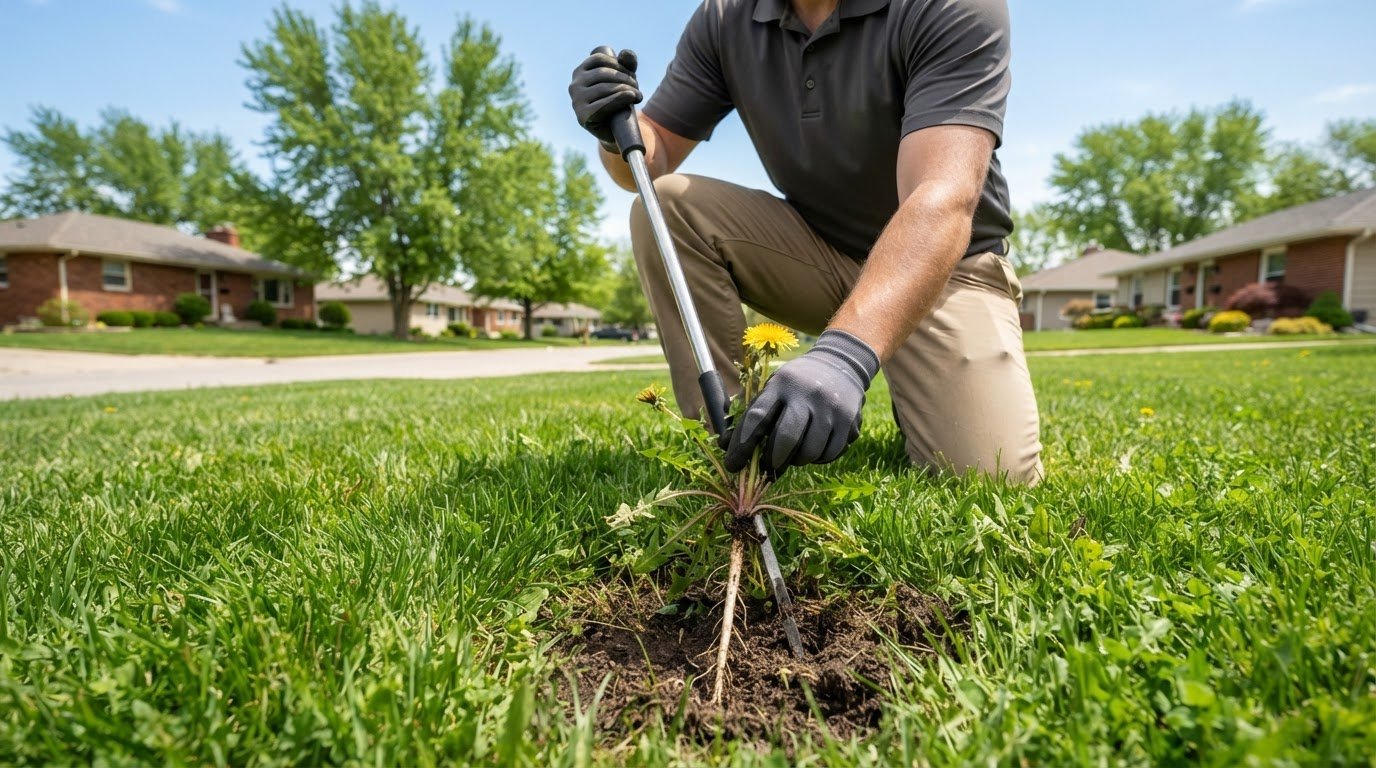
For a small, isolated patch, pulling can be a straightforward option, especially before seed heads form. Loosen the soil around the plant and remove the roots where practical. Collect the pulled plants rather than leaving them on the lawn, particularly if they may have seeds. Once removed, fill the bare spot with suitable grass seed when conditions are right. Exposed soil can give new weeds room to establish.
How can herbicide use reduce the risk of lawn damage?
Check that the product is labeled for both the identified weed and your lawn’s turf species. Selective products are designed to target certain weeds in specified turf types, but they can still harm grass if used outside label directions. Nonselective products can injure or kill desirable lawn grass they contact, so keep them away from turf and nearby plants unless the label specifically allows the intended use.
Before treating, review the label for application conditions, protective measures, re-entry instructions, and any limits on repeat applications. Apply only as directed. Avoid spraying in conditions that could move product beyond the target area, and don’t assume a spot treatment is harmless simply because it covers less ground.
Choose deliberately: pull a few plants, use a labeled selective treatment where appropriate, or spot-treat only when the product label supports that use. For a consistent approach to overall turf care, explore lawn care services in Lincoln as part of your plan to keep the lawn healthy and filled in.
How to Treat Crabgrass in a Nebraska Lawn: A Practical Action Plan
A clear plan can help you treat crabgrass without turning a small patch into a larger turf problem. Before choosing a product, confirm what’s growing and identify the grass you want to protect. Then use the label to guide application and follow-up.
- 1. Confirm the weed. Inspect the plant closely or take a clear photo of its blades and stems. If you’re not confident it’s crabgrass, verify the identification before treating. A mistaken guess can lead to an unnecessary or unsuitable application.
- 2. Check your lawn and surroundings. Identify the desirable turf species, note nearby plants, and mark the affected patches. Review weather conditions and the product label’s restrictions, including where and when the treatment can be used.
- 3. Choose the approach. For a few small plants, consider hand removal before they set seed. For a larger or established patch, select a product labeled for the weed and your turf type. Don’t assume a product suitable for one lawn grass is suitable for another.
- 4. Prepare to apply carefully. Follow the label’s directions for application conditions, protective measures, and keeping treatment on target. Take care around desirable grass and nearby plants. Don’t apply more than directed or substitute a different use for the one stated on the label.
- 5. Record what you treated. Note the location and date, or take a quick photo. Marking the patch makes it easier to compare later and distinguish surviving plants from new seedlings or bare areas.
How should you assess treatment results?
Wait the amount of time specified on the product label before judging the result. Then inspect the treated area for surviving crabgrass, fresh seedlings, and gaps where turf is missing. These are different issues: surviving plants may need a label-approved next step, while new seedlings may reflect later germination. Bare spots need attention as the lawn recovers, or they can remain open to future weeds.
Don’t repeat an application early or use a stronger amount unless the label specifically permits it. If follow-up is allowed, observe the label’s interval and application limits. For seasonal context beyond a single patch, review lawn care in Lincoln. Yardworx Lawn & Landscape provides lawn care to help you build a consistent care plan for your property.
Help Your Nebraska Lawn Recover and Make Crabgrass Less Likely to Return
After crabgrass control, focus on helping desirable turf fill open spaces. A dense lawn can leave less bare soil for weed seedlings to establish, though good care doesn’t guarantee crabgrass won’t return. Mowing at a suitable height, watering thoughtfully, and addressing compacted or thin areas all support healthier turf over time.
How do you repair bare spots after crabgrass control?
Choose a repair approach based on your grass type, the season, and the size of the bare area. Small gaps may need only suitable seed and steady care, while larger or compacted patches may benefit from soil preparation. Aeration and overseeding can help establish turf in thin areas. Check current Nebraska Extension guidance for the right seeding window rather than relying on a fixed date.
Give new grass a chance to establish by following appropriate watering and mowing practices. Avoid disturbing the area unnecessarily, and keep expectations realistic: recovery takes time. These steps complement your approach to how to kill crabgrass Nebraska lawn concerns by addressing the open ground left behind after treatment.
How can ongoing lawn care support a healthier turf stand?
Keep cool-season lawn grasses tall enough to shade the soil. University of Nebraska-Lincoln guidance recommends mowing at 3.0 to 3.5 inches to help reduce crabgrass germination. Water deeply and less often rather than keeping the surface constantly damp, and adjust care to weather and soil conditions.
Fertilize according to a plan suited to the lawn instead of applying more in hopes of quick results. Consistent care can support steady turf growth without promising weed elimination. Yardworx’s lawn care services include seasonal turf care and a six-step fertilizing program. Aeration and overseeding can also support recovery where thin turf needs attention.
A healthier lawn is built through steady, season-appropriate care. Yardworx Lawn & Landscape provides weekly mowing, fertilizing, aeration and overseeding, and other lawn care for properties in Lincoln. These services can help you maintain a consistent plan for your lawn.
Build a Healthier Nebraska Lawn for the Season Ahead
Successful crabgrass control starts with confirming the weed, then matching prevention or treatment to its growth stage. Follow the product label to protect desirable turf, and give treated areas time to respond before deciding on any next step. The answer to how to kill crabgrass Nebraska lawn concerns isn’t just a single treatment. Steady mowing, appropriate watering, and repairing thin spots can help desirable grass fill open space.
Yardworx Lawn & Landscape is locally owned and operated in the Lincoln metro area, providing lawn care, lawn treatments, weekly mowing, and a six-step fertilizing program. Consistent, season-aware care can help your lawn recover and stay healthier, though no single approach can guarantee crabgrass won’t return.
Talk with Yardworx about your Nebraska lawn and take the next step toward a stronger, fuller yard. Yardworx provides lawn care and seasonal turf services for Lincoln properties.
Frequently Asked Questions
How do I kill crabgrass in my lawn without killing the grass?
Start by confirming the weed is crabgrass and identifying the desirable turf around it. If you’re researching how to kill crabgrass Nebraska lawn safely, choose only a treatment labeled for both the weed and your grass type, then follow every application and re-entry direction. Hand removal may work for a few isolated plants. Avoid broad or repeated applications based on guesswork, since the wrong product or timing can injure lawn grass.
When should I apply crabgrass preventer in Nebraska?
Apply a preventive product before crabgrass germinates, using local soil and seasonal conditions rather than a date borrowed from another region. University of Nebraska-Lincoln guidance recommends applying before soil temperatures reach 55°F at a 4-inch depth for several consecutive days. In Lincoln, the window is generally early to mid-April, but conditions vary by year. Check current Extension guidance and follow the product label. Preventers won’t kill crabgrass that’s already growing.
Can you kill crabgrass after it has grown in your lawn?
Yes, some post-emergent products are made for visible crabgrass, but results depend on the plant’s growth stage, the turf type, and application conditions. Young plants are generally more responsive than mature ones, which can be harder to control. Check the label for the listed weed and suitable lawn grasses, and follow its directions. A preventive product is intended to stop seeds from germinating, not remove plants that have already emerged.
Will crabgrass come back after treatment?
It can. Crabgrass is an annual, and new plants may emerge from seeds already in the soil or arrive from nearby areas. A treatment may address existing plants without preventing every future seedling. Combine accurate treatment with timely prevention and steady lawn care, then keep an eye on thin or bare areas. No single application guarantees permanent eradication, but helping desirable turf fill open spaces can make the lawn less inviting to weeds.
Can I pull crabgrass out by hand?
Yes, hand removal can be practical for a small number of plants, especially before they produce seed. Loosen the soil and remove as much of each plant as you can, then dispose of it carefully so seeds aren’t scattered around the lawn. For a widespread patch, pulling every plant may not be practical. Inspect the area afterward and consider suitable turf repair if removal leaves bare soil where new weeds could establish.
Is crabgrass harmful to a Nebraska lawn?
Crabgrass is an unwanted annual grass that can spread through thin areas and make a lawn look uneven. Its presence doesn’t automatically mean the whole lawn is unhealthy or needs aggressive treatment. Confirm the plant, assess how widespread it is, and choose a proportionate response. In Lincoln, as elsewhere in Nebraska, improving conditions for desirable turf with appropriate mowing, watering, and seasonal care can help reduce open ground without promising crabgrass won’t return.
What is the difference between crabgrass preventer and crabgrass killer?
A crabgrass preventer is intended to stop seeds from germinating when applied at the right time. A crabgrass killer usually refers to a post-emergent product intended for plants that are already growing. The terms aren’t interchangeable. Product labels specify the intended use, suitable turf types, and timing, so identify whether crabgrass has emerged before choosing a treatment. Follow all label directions to reduce the risk of damaging desirable grass.