
A healthier Nebraska lawn depends not only on fertilizer, but on choosing the right timing and fitting treatments into a consistent care routine. The 6 step lawn fertilization Nebraska homeowners choose should work as a coordinated seasonal plan, not six interchangeable rounds of fertilizer.
This guide explains what a six-step program does and how local conditions, grass type, soil, weather, and everyday lawn-care habits shape treatment decisions. You’ll learn why timing matters in Nebraska, what to consider when comparing programs, and how fertilization fits alongside mowing and other seasonal care. Yardworx Lawn & Landscape provides a six-step fertilizing program for residential and commercial properties in Lincoln, as well as aeration and overseeding. A consistent routine can make seasonal care easier to manage while helping you make informed choices for your lawn.
What Does a 6-Step Lawn Fertilization Program Mean in Nebraska?
A six-step lawn program is a planned sequence of treatments spaced across the growing season. Its purpose is to organize lawn care around changing conditions, rather than apply fertilizer whenever the grass looks pale. In Nebraska, the schedule should account for local seasonal patterns and the needs of the turf.
A six-step program is a scheduled series of lawn treatments across the growing season. Occasional fertilizer applications are separate treatments without that season-long sequence. Fertilizer can support turf growth, but it can’t replace mowing, appropriate watering, or attention to the soil and lawn’s condition. The types of fertilizer vary, and the right approach depends on more than the number of applications.
For a general look at how a six-step fertilizing schedule is discussed, watch this video:
Why Nebraska seasonality matters to lawn fertilization
Nebraska lawns face changing conditions through spring, summer, and fall. Cool-season grasses common in eastern Nebraska respond to seasonal temperatures, and summer heat can add stress. A fixed calendar date is therefore not a reliable fit for every lawn or year. University of Nebraska-Lincoln Extension guidance supports using local conditions to inform timing, including soil temperature when planning spring treatments.
For example, the article’s cited guidance identifies soil temperatures of 50-55°F at a 4-inch depth as a useful timing cue for early-season applications. Weather, grass type, soil, and the lawn’s current condition also affect timing. A schedule helps organize care, while flexibility keeps the plan responsive to the season.
What a six-step label does, and does not, tell you
The number tells you how many applications a program schedules, not whether every program uses the same products, timing, or purposes. The role of each step depends on the program design and the lawn’s needs. Don’t assume a treatment is included just because a plan is called “six-step.”
Instead, consider how the schedule fits your lawn and works alongside regular maintenance. Yardworx Lawn & Landscape offers a six-step fertilizing program in Lincoln, alongside lawn care services. Mowing, watering, and attention to soil conditions remain important parts of the overall routine.
How a Nebraska 6-Step Fertilization Schedule Follows the Seasons
A six-step schedule is best understood as a seasonal framework, not a set of fixed dates for every lawn. Spring growth, summer heat, and fall recovery create different demands for cool-season turf in Lincoln. The purpose and timing of applications depend on the program and local conditions, so general Nebraska guidance should not be mistaken for a description of each step in Yardworx’s program.
Treatment timing should follow turf growth, local conditions, and the product label, not a calendar date alone. This is why a well-planned program may adjust around weather and the lawn’s condition.
Early-season care and the first applications
As growth resumes in spring, observe whether the lawn is actively greening and whether it is coming out of winter evenly. University of Nebraska-Lincoln Extension guidance points to soil temperature as a useful cue for some early-season treatments. The cited guidance identifies 50-55°F at a 4-inch depth as a timing signal, though weather and site conditions affect when that point arrives. An early treatment may have a specific role in a program, but it can’t prevent every weed or lawn problem.
Midseason and late-season steps
As the season progresses, heat, rainfall, and turf growth can change what care is appropriate. Mowing too short or watering inconsistently can add stress, so fertilization should fit into a broader routine rather than be treated as a stand-alone fix. In fall, cool-season lawns enter a period of active growth and recovery, making seasonal planning important beyond spring and summer.
UNL Extension recommends mowing cool-season lawns in eastern Nebraska at 3 to 3.5 inches through summer. That practical habit supports a steadier care routine, while each treatment still needs to follow its product label. Yardworx’s six-step program gives Lincoln properties a planned fertilizing routine across the season.
Use a seasonal lawn maintenance plan to keep mowing and other care in view alongside fertilization. If you want recurring care managed for your Lincoln lawn, explore Yardworx’s six-step fertilizing program.
How to Compare Six-Step Lawn Fertilization Programs in Lincoln
A six-application count tells you how many treatments are scheduled, but not whether the plan suits your lawn. To compare programs, look for a clear schedule, an explanation of each treatment’s purpose, and a routine that can be coordinated with other lawn-care needs. These details are more useful than broad promises about results.
Use this framework to assess how a program fits your property and routine:
| What to assess | What to look for |
|---|---|
| Schedule clarity | A seasonal outline that explains when applications are generally planned and how conditions may affect timing. |
| Treatment purpose | A clear explanation of what each treatment is intended to do, without assuming every six-step program uses the same sequence. |
| Lawn assessment | Consideration of grass type, current condition, soil information, and recurring concerns on the property. |
| Communication and consistency | A routine that helps coordinate treatments with mowing and other lawn-care needs, plus useful information about the plan. |
What to assess beyond the number of applications
Application count alone can’t establish quality or suitability. A six-step plan should make its schedule and treatment purposes understandable, while allowing seasonal conditions to inform timing. Don’t treat a broad outcome claim as proof that a program fits every property. Yardworx’s fertilizing program offers Lincoln property owners a planned approach, while the lawn’s condition and care history remain important considerations.
How lawn type and soil conditions shape the decision
Kentucky bluegrass and tall fescue are common cool-season grasses in the Lincoln area, but lawns can differ in species mix, density, and stress. Soil information can also guide nutrient decisions. A soil test can show what the ground may need, rather than relying on appearance alone. When planning a routine, note relevant details such as thin patches, past treatments, mowing frequency, and watering habits.
Fertilizer is only one part of lawn recovery. If thinning or bare areas are a concern, aeration and overseeding may be relevant alongside a broader care plan. A well-matched 6 step lawn fertilization Nebraska program should make sense for the grass, soil, season, and maintenance habits of the specific property, not just look complete on paper.
How to Prepare Your Lincoln Lawn for a Fertilization Program
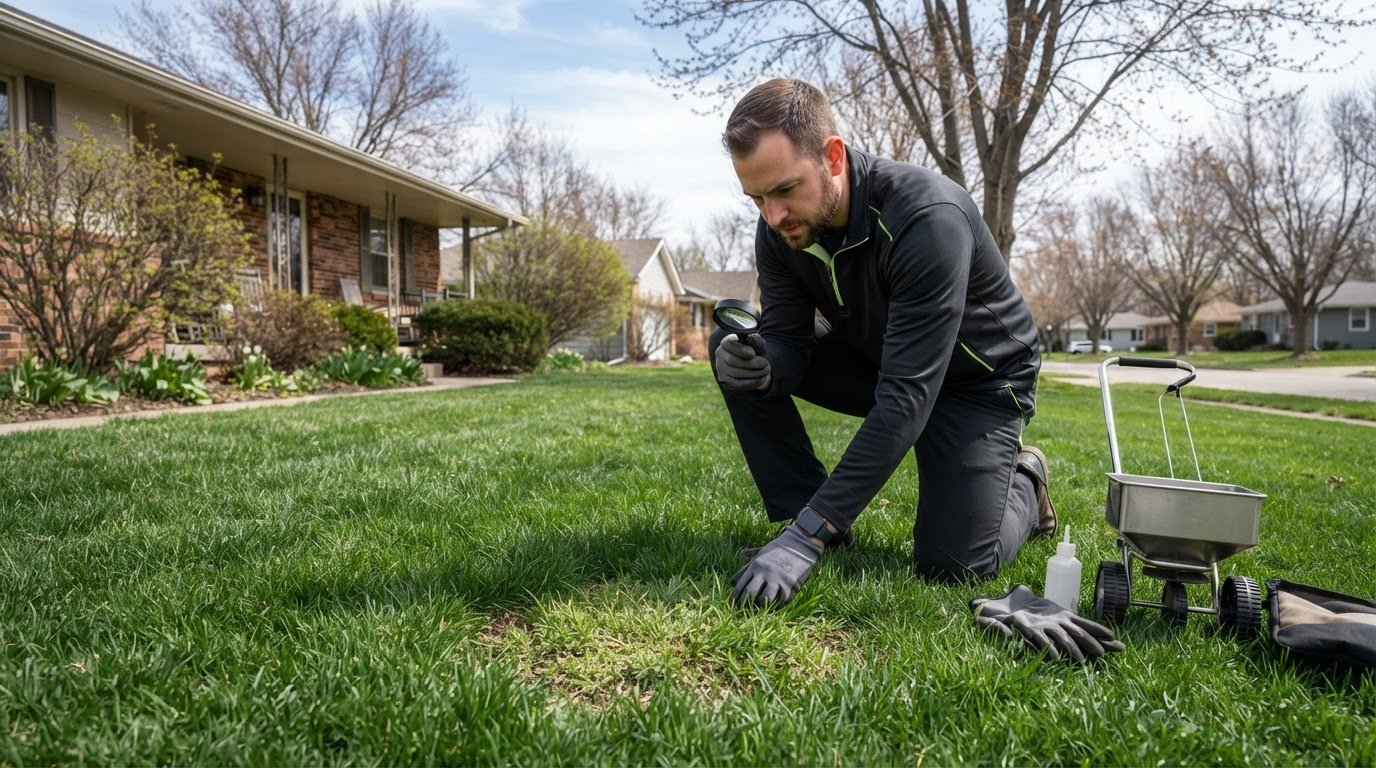
A little preparation makes it easier to plan lawn care around conditions on your property. Before the first application, walk through the yard and note changes or trouble spots. These observations offer useful context, but they aren’t a diagnosis: thin or discolored turf can have several possible causes.
What to observe before the first treatment
Look across the whole lawn, not just the most visible area. Record where conditions change and when you last seeded or treated the turf. A simple checklist can help:
- Bare patches and weeds: Note their locations and whether they’re spreading.
- Shade and thin turf: Mark areas beneath trees or beside buildings where growth looks different.
- Drainage and irrigation: Watch for standing water or spots that seem to receive less coverage.
- Recent changes: Record seeding, previous treatments, construction, or other work that may affect the lawn.
- Visible stress: Note unusual color or growth patterns without assuming they identify a pest or disease.
This snapshot keeps your lawn’s history in view as you plan a 6 step lawn fertilization Nebraska routine.
How mowing, watering, and aeration fit the plan
Mowing and irrigation are part of the lawn’s overall care, so consider your usual habits as you prepare. Follow the service instructions about mowing, watering, and access before each treatment. Weather can affect application timing, so the appropriate approach may shift with conditions. Don’t rely on a fixed waiting period that ignores service instructions or the product label.
Aeration can be part of lawn care, particularly when addressing thin turf, but it isn’t automatically required for every property. Yardworx offers aeration and overseeding alongside its fertilizing program. Keeping seasonal needs and regular upkeep together can make the routine easier to manage. Explore routine lawn care services for coordinated maintenance.
A few notes about the lawn and clear preparation instructions can help keep care organized without trying to diagnose every symptom yourself. If you’re ready to plan a fertilizing routine for your Lincoln property, contact Yardworx about lawn fertilization.
Yardworx's 6-Step Fertilizing Program for Lincoln Lawns
Yardworx Lawn & Landscape provides a six-step fertilizing program for residential and commercial properties in Lincoln. It gives lawn care a planned structure across the growing season, making recurring treatments easier to keep in view than occasional, uncoordinated applications.
The six-step format describes the program’s overall structure, not six identical treatments. Seasonal conditions affect timing, while the lawn’s grass, current condition, and maintenance history are useful context when planning care.
What to expect from a local fertilization service
Start by considering how fertilization fits into the property’s broader lawn-care routine. Before planning a program, note areas that look thin or stressed, recent seeding or treatments, and how mowing and watering are usually handled. These details help frame the lawn’s needs without treating a visible symptom as a definite diagnosis.
Seasonal timing matters in Nebraska, so a useful program takes the changing growing season into account instead of relying on the same fixed dates every year. Yardworx provides a six-step fertilizing service for Lincoln lawns, with treatments planned as part of a seasonal routine.
For homeowners, a scheduled program organizes fertilization as part of recurring lawn care. It can sit alongside mowing and other seasonal maintenance, while day-to-day practices remain important to turf care. Clear expectations about the schedule and preparation instructions help you fit treatments into your routine.
Choose a simple next step for your Nebraska lawn
A professionally managed schedule may suit homeowners who want recurring care coordinated without planning each fertilizer application themselves. It can also help property managers keep lawn maintenance on a steadier track across residential or commercial grounds. Start with the lawn’s condition and the care already happening on the property, rather than assuming every yard needs identical treatment.
Explore Yardworx lawn care services to see how fertilization can fit into broader routine maintenance. If you’re considering a 6 step lawn fertilization Nebraska program for your Lincoln property, contact Yardworx about lawn fertilization to discuss your lawn-care needs.
Build a More Consistent Lawn-Care Routine
A six-step program is a season-long plan, not six identical fertilizer applications. Timing depends on turf growth and local conditions, while lawn type, soil, and everyday care habits help determine what your property needs. Keep mowing and watering in the picture: fertilization supports lawn care but doesn’t replace it.
For homeowners and property managers considering 6 step lawn fertilization Nebraska , Yardworx Lawn & Landscape offers a six-step fertilizing program for Lincoln-area properties. The company also provides weekly mowing and aeration, so fertilization can fit into a broader lawn-care routine.
You don’t have to manage every seasonal detail alone. Talk with Yardworx about your lawn’s condition and the care you’re looking for. Contact Yardworx to discuss a healthier Lincoln lawn, and take a simple step toward a more organized season of care.
Frequently Asked Questions
What are the six steps in a lawn fertilization program?
There isn’t one universal sequence for every six-step program. The steps are scheduled lawn treatments spread across the growing season, but their timing, products, and purposes vary by program. Yardworx offers a six-step fertilizing program for Lincoln properties. Look for a clear explanation of the schedule and how it fits local conditions and your lawn’s needs.
When should I fertilize my lawn in Nebraska?
Fertilize according to turf growth, local conditions, and the product label rather than relying on fixed dates. For early-season planning, University of Nebraska-Lincoln Extension guidance uses soil temperature as a useful cue. The cited guidance identifies 50-55°F at a 4-inch depth as a signal for some early applications. In Lincoln, weather and lawn conditions can shift timing, so treat calendar windows as guides, not guarantees.
Is a six-step lawn fertilization program necessary?
No. A six-step program isn’t automatically necessary for every Nebraska lawn. The right amount of care depends on factors such as grass type, soil, lawn age, condition, and maintenance habits. A scheduled program can help organize treatments across the season, but application count alone doesn’t establish whether it suits your property. Consider your lawn’s needs and how fertilization fits with mowing and watering.
Can I fertilize my lawn myself?
Yes, homeowners can apply fertilizer themselves, provided they choose a product suited to the lawn and follow its label directions. Check the recommended application rate and timing, and avoid applying by guesswork. Soil information can help guide nutrient decisions, while careful, even application helps prevent missed or heavily treated areas. If you’d rather not manage a seasonal schedule, Yardworx offers a six-step fertilizing program for residential and commercial properties in Lincoln.
Should I water my lawn after applying fertilizer?
Follow the specific fertilizer label, since watering instructions depend on the product and application. Some products may call for watering, while others may have different directions. Don’t assume every fertilizer should be watered in immediately, and don’t substitute general advice for the label. Check the instructions before application and account for current weather and irrigation conditions as you plan lawn care.
Is lawn fertilizer safe for children and pets?
Don’t assume every lawn fertilizer has the same safety directions. Read and follow the product label, including any instructions about keeping people and pets off treated areas and when they may return. Guidance varies by product, so avoid relying on a general waiting period. If a professional treatment is used, follow the service’s specific instructions for the product applied.
How much does a six-step lawn fertilization program cost?
The price for a six-step program depends on the property and service details, so a general figure may not reflect your Lincoln lawn. Yardworx provides a six-step fertilizing program for local residential and commercial properties. To discuss the cost for your property, share the lawn-care needs you have in mind and request current program pricing from Yardworx.