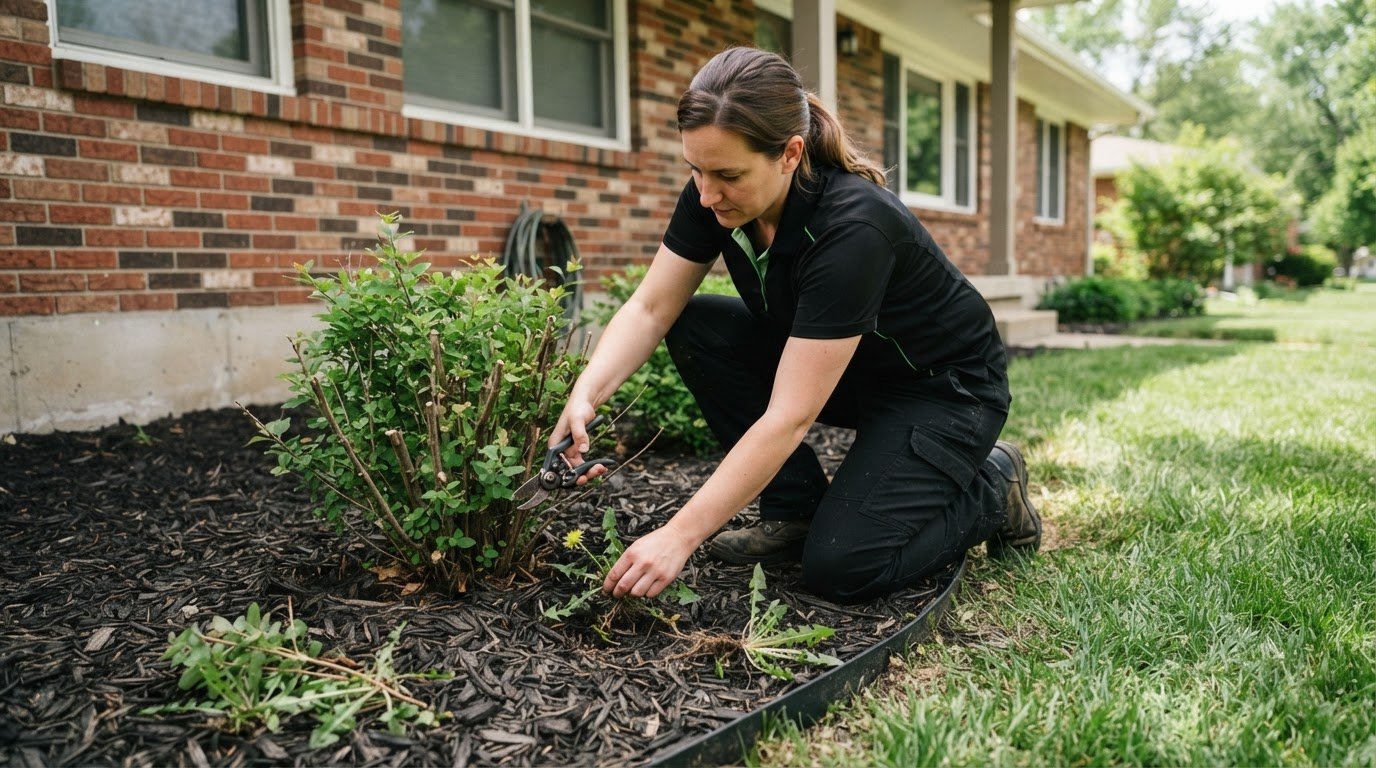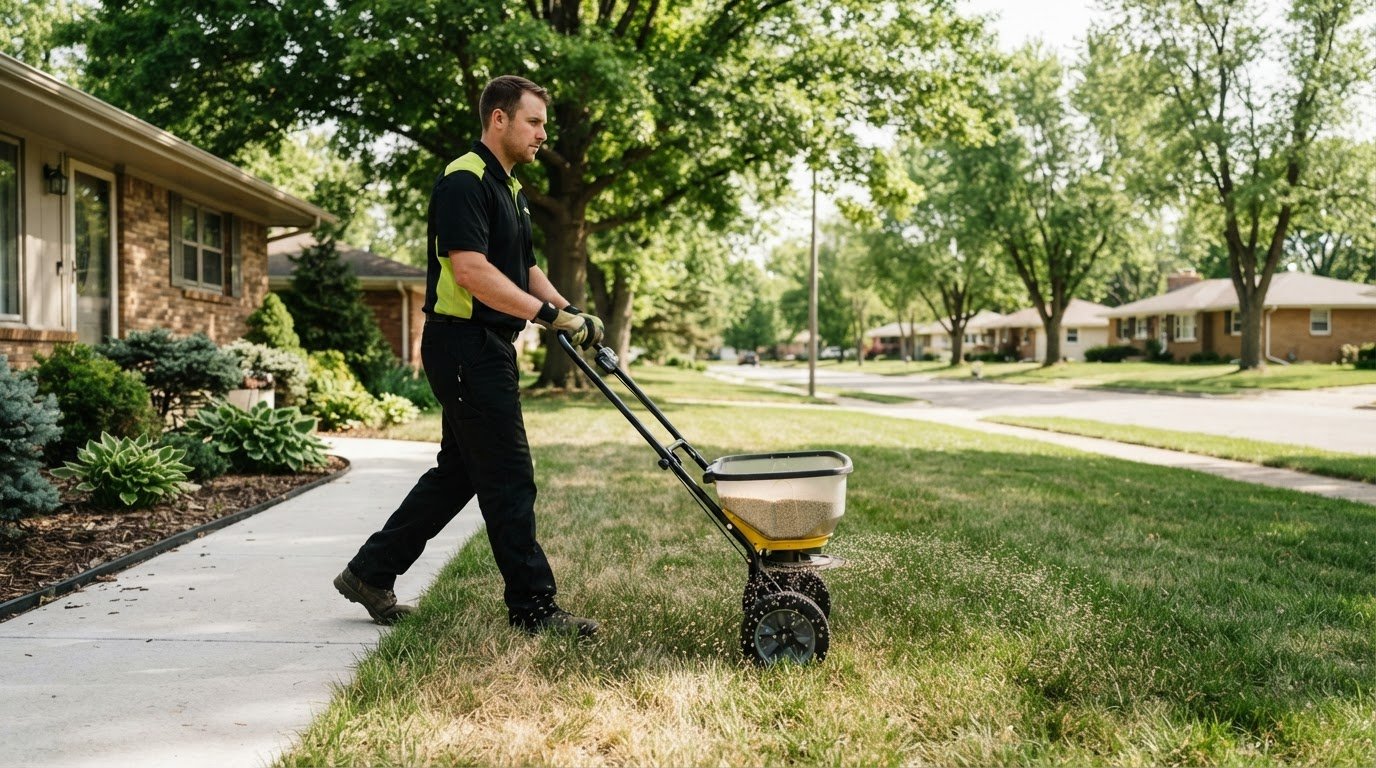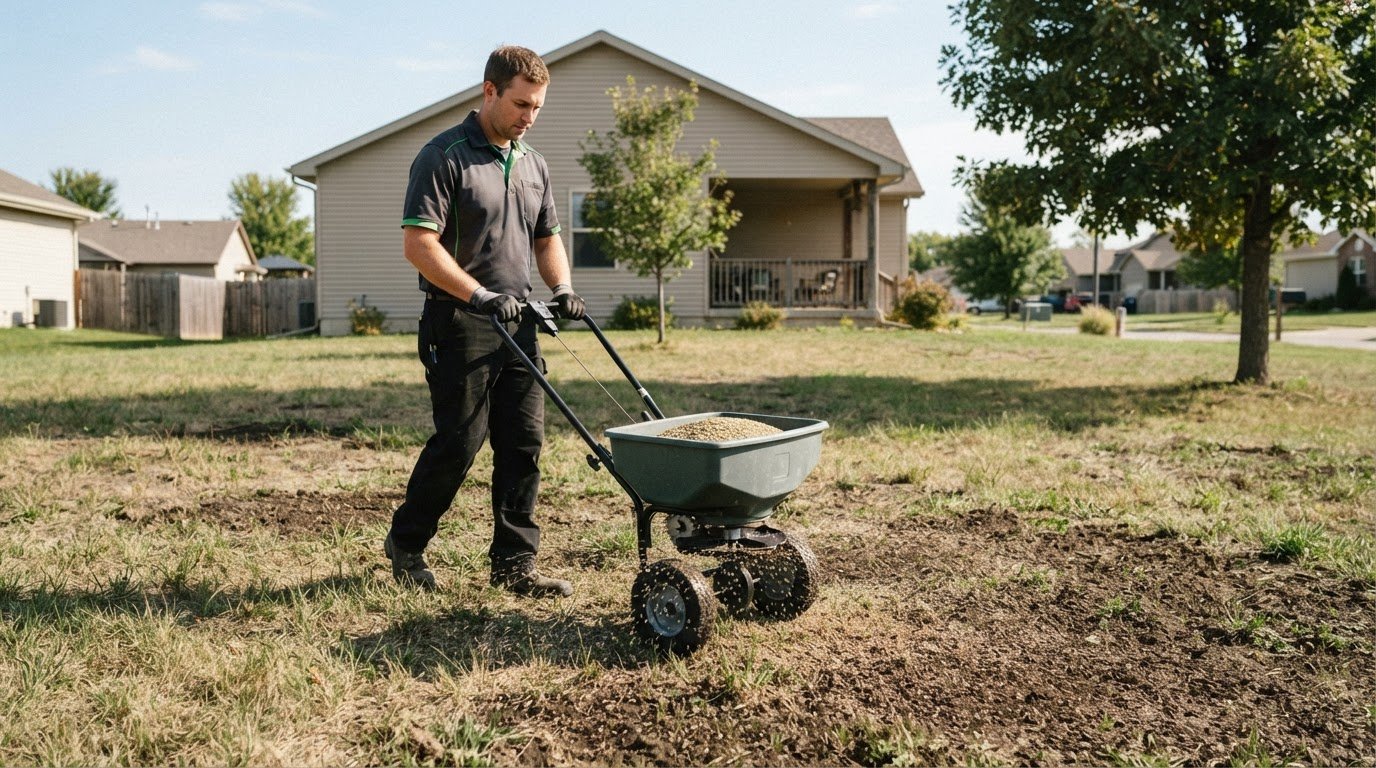

Fall is the best opportunity to help a thin Lincoln lawn fill in before summer stress returns. The benefits of overseeding in the fall in Lincoln include thicker turf, fewer open spaces for weeds, and time for new grass to build roots before the next harsh summer. In eastern Nebraska, the suggested window for overseeding cool-season grasses is August 15 to September 15.
A patchy lawn can leave you wondering whether spreading seed is enough. Preparation matters too: aeration creates openings for seed, while dethatching may help when dead grass prevents seed from reaching the soil.
This guide covers how to prepare your lawn, choose the right time to seed, and care for new grass as it establishes. You’ll also learn how to coordinate overseeding with aeration or dethatching, making it easier to plan for thicker, healthier turf in fall.
Benefits for turf density and weed suppression
- Identify thin areas before seeding. Look for bare soil, weak patches, and visible gaps between grass plants. These openings give weeds room to establish, especially where foot traffic or summer stress has weakened turf. Overseeding adds grass plants to those spaces, helping create more even coverage. In Lincoln, fall growth gives new cool-season grass time to develop roots before the next harsh summer.
- Choose a cool-season grass suited to the lawn. Kentucky bluegrass, perennial ryegrass, and tall fescue are options for fall overseeding. Kentucky bluegrass can fill a lawn through underground stems, while tall fescue grows in clumps and won’t replace dead mature plants by spreading horizontally. Matching seed to the existing grass helps create a more consistent appearance as seedlings become established.
- Use seed with strong germination potential. Choose seed with a germination percentage of at least 85%. That label figure indicates the share of seed expected to sprout under suitable conditions. A stronger starting rate can help seedlings compete for space, light, and moisture. It doesn’t mean every seed will grow in a particular yard, so even distribution and good seed-to-soil contact still matter.
- Prepare the surface for seed contact. Mow the existing lawn one or two notches lower than usual, without scalping it. Shorter grass lets seed reach the soil instead of resting on long blades. Remove loose clippings, then spread seed evenly across thin areas. A concentrated pile can crowd seedlings, while uncovered soil between scattered seeds leaves room for weeds.
- Keep moisture steady during germination. Water newly seeded areas immediately. Then keep the soil moist, not saturated, with two to three light waterings daily during the first week. Drying can interrupt growth; standing water can wash seed away or leave it poorly positioned. As seedlings develop, reduce watering frequency and increase watering depth during the second and third weeks.
- Use density to reduce weed opportunities. Established grass shades the soil and occupies space that weeds might otherwise use. Fall overseeding supports this natural competition, but it won’t remove mature weeds or guarantee a weed-free lawn. For example, filling a thin strip beside a walkway can reduce exposed soil where new weeds could take hold.
- Treat weed resistance as a separate problem. More grass can limit open space, but it cannot make resistant weeds respond to a treatment that no longer controls them. Identify the weed and its pattern before choosing a control approach. Overseeding and weed management serve different purposes: one builds turf density, while the other addresses unwanted plants. Pest control in Lincoln addresses a different lawn concern, not thin turf or weed resistance.
- Protect seedlings during early growth. Delay mowing until new grass reaches about 3 to 4 inches tall. Sharp mower blades and careful turns help avoid pulling young plants from damp soil. Wait until seedlings are established before resuming regular mowing, and keep heavy foot traffic off the newly seeded areas while they develop.
Soil health and nutrient uptake
- Assess the soil before adding amendments. A soil test can show whether pH or nutrient levels need attention before fall seeding. Use its results to guide amendments instead of applying lime or fertilizer by guesswork. For example, a nutrient shortfall and an unsuitable pH are different issues, so they call for different adjustments. Better-matched soil conditions help grass use available nutrients as it grows.
- Use test results to plan fertilizer. New grass needs access to nutrients, but adding more fertilizer doesn’t automatically improve uptake. Follow the test’s recommendations and the product label, and coordinate feeding with seeding. Fall growth gives seedlings time to develop before summer stress returns. A measured plan also helps avoid applying amendments that the soil doesn’t need.
- Address compaction through aerification. Compacted soil can restrict the movement of air and water around grass roots. Aerification removes or loosens small plugs of soil, creating channels that help moisture reach the root zone. This can make the seedbed more receptive to new seed. Learn how lawn aeration fits into preparation before planning the seeding sequence.
- Coordinate aerification before seed goes down. Aerify the lawn before overseeding so seed can settle into openings rather than resting on dense thatch or hard ground. This order also gives the soil surface time to receive seed and water. Avoid aerating newly seeded areas while seedlings establish, since the process can disturb young roots and emerging grass.
- Choose amendments for the soil, not the season alone. Fall is a useful time to improve a lawn, but the right amendment depends on the test results and soil condition. For instance, a pH adjustment addresses a different need than a nutrient application. Apply only the recommended material and amount, then distribute it evenly across the affected area.
- Calibrate the spreader before applying seed or fertilizer. Set the spreader according to the product label, then move at a steady pace across the lawn. Uneven passes can leave crowded strips beside untreated gaps. For a practical check, watch the spread pattern along a driveway edge, where missed areas or overlap are easier to notice.
- Keep new seed away from unnecessary disturbance. Once seeding is complete, maintain suitable moisture so seed can germinate and roots can begin growing. Don’t combine late aerification with the establishment period. Avoid heavy traffic over soft soil, which can compress the surface and disturb young plants.
- Plan the sequence as one soil-care project. Start with testing, then handle needed amendments and aerification before seed placement. Apply fertilizer according to the test and product directions. If you’d like help coordinating those steps for your lawn, discuss your fall soil preparation.
Timing overseeding for late summer and early fall
For cool-season lawns in Lincoln, time seeding to take advantage of warm soil, cooler air, and enough time for new grass to establish before winter. Use the steps below to plan seed choice, preparation, watering, and fall care.
-
Assessing Fall Timing and Soil Temperature
Schedule cool-season overseeding in eastern Nebraska from August 15 to September 15, when possible. Aim for soil temperatures between 50 and 65 degrees Fahrenheit; air temperatures around 60 to 75 degrees Fahrenheit also support seeding. Growth becomes less reliable when air temperatures rise above 80 degrees Fahrenheit, so avoid a hot spell. Kentucky bluegrass and tall fescue grow favorably from August to early November.
- Choose a grass that suits the existing lawn. Kentucky bluegrass, perennial ryegrass, and tall fescue are cool-season options for Lincoln lawns. Match the seed to your current grass and the areas you want to thicken. For example, tall fescue grows in clumps rather than spreading horizontally, so new plants can fill spaces left when mature plants die.
-
Timing Fescue for Germination
Seed tall fescue during the cool-season window, while soil remains warm and autumn air begins cooling. Grass seed may start germinating in 7 to 10 days when soil stays consistently moist, though weather and seed variety affect progress. Fall establishment gives roots time to grow before summer heat and drought stress return. Don’t wait until cold weather leaves seedlings too little time to develop.
- Set the overseeding rate for the grass type. For an existing lawn, use around 2 pounds of Kentucky bluegrass seed per 1,000 square feet, or 3 to 4 pounds of tall fescue seed per 1,000 square feet. These are overseeding rates, not new-lawn rates. Apply evenly with a spreader; excess seed can crowd seedlings instead of producing stronger coverage.
- Coordinate fertilizer with seeding. Overseed before fertilizing so new grass can benefit from the nutrients. Fall fertility is most useful before soil temperatures drop too low; the recommended target is about 2 to 2.5 pounds of nitrogen before then. Avoid applying a pre-emergent herbicide over new seed, because it can suppress grass seed as well as weeds.
-
Avoiding Weeds and Poor Germination
Keep the seedbed moist, not saturated, and spread seed evenly to avoid bare gaps and overcrowded patches. Avoid pre-emergent herbicides where you expect new grass to germinate. Weeds may still emerge, but dense, established turf leaves them less open space. Prolonged dryness, excess water, and seeding too late can all hinder seedlings.
- Water around active local limits. Any active watering restriction affecting a Lincoln property may limit watering times or frequency, so follow those limits while keeping the seedbed moist. During the first week, newly seeded areas generally need 2 to 3 light waterings daily. Keep each watering brief enough to moisten the soil without creating runoff or saturation.
- Adjust irrigation as seedlings develop. During the second and third weeks after seeding, water less often but more deeply. From the fourth week onward, shift toward deep, infrequent watering. This supports root development and avoids keeping the soil surface continually wet.
Coordinating overseeding with aeration and dethatching
- Inspect the lawn before choosing equipment. Look for compacted soil, thick thatch, and thin patches. Compaction can restrict water movement, while heavy thatch can keep seed from reaching soil. These conditions need different preparation, so assess areas separately. A compacted walkway edge may need aeration, while a thatch-heavy patch may need dethatching.
- Schedule aeration before spreading seed. Aeration creates openings where seed can settle and contact soil. Aerate first, then overseed while those openings remain accessible. This helps seed reach the ground instead of resting on grass blades. Avoid aerating after seedlings emerge, as equipment can disturb young plants and interrupt establishment.
- Dethatch only where the layer is obstructive. A thick mat of dead grass can block seed, water, and light from reaching the soil. Remove that barrier before overseeding instead of dethatching healthy turf without a clear need. If seed would rest on dry debris rather than soil, clear the obstruction first.
- Finish disruptive work before early fall seeding. Coordinate aeration and dethatching with the local cool-season seeding window. In eastern Nebraska, the suggested period is August 15 to September 15. Completing preparation before spreading seed leaves the lawn ready for germination, without requiring machinery to cross newly seeded ground.
- Match the seed variety to the lawn. Kentucky bluegrass, tall fescue, and perennial ryegrass are cool-season options for fall overseeding. Tall fescue grows in clumps, while Kentucky bluegrass spreads through underground stems. Choosing seed suited to the existing turf helps the new grass blend in as it grows. Don’t assume every variety responds the same way to the same conditions.
- Keep equipment off new seedlings. After seeding, avoid aeration and dethatching for 4 to 6 weeks while seedlings establish. The tines and blades can pull up young grass or disrupt roots near the surface. This pause also gives seedlings time to develop before winter dormancy slows visible growth.
- Plan spring maintenance around establishment. Assess the lawn after winter, once new growth resumes. If bare patches remain, consider whether compaction, thatch, or poor seed contact played a part before repeating disruptive work. Aerating or dethatching without identifying the cause can unnecessarily disturb established grass.
- Coordinate the full sequence around seed contact. Prepare compacted or thatch-covered areas first, overseed afterward, then protect new grass while it establishes. If a lawn has both compacted soil and heavy thatch, finish both preparation tasks before spreading seed. Following the right order helps prevent disturbing seedlings later.
Benefits of fall overseeding
In Lincoln, fall overseeding can thicken thin turf, reduce bare ground where weeds may take hold, and give new grass time to establish roots before summer heat returns. These benefits depend on good seed-to-soil contact and consistent follow-up care.
- Fill gaps before they become persistent bare spots. Spread suitable seed over thin areas so new plants can grow among established grass. More even coverage helps the lawn occupy space and shade the soil. Overseeding a worn path edge, for instance, can restore coverage where foot traffic has weakened the turf.
- Give roots time to grow before summer stress. Fall’s cooler air and warm soil support cool-season grass growth. Seedlings can establish roots before the next harsh summer, helping them handle later heat and drought better than seedlings planted too late. The advantage is time to develop, not just a quick green-up before winter.
- Reduce opportunities for weeds. Dense turf leaves less exposed soil for weeds to occupy. Overseeding won’t remove mature weeds or prevent every new weed, but filling open patches helps grass compete. Pair even seed coverage with appropriate weed management, and avoid products that suppress germination while new grass establishes.
- Match seed to the lawn’s growth habit. Kentucky bluegrass spreads through underground stems and can fill space over time. Tall fescue grows in clumps rather than spreading horizontally, so new seedlings can restore coverage where mature plants have died. Choose a variety that suits the existing lawn instead of assuming all grasses grow the same way.
- Protect new growth as it develops. Maintain suitable moisture during germination, then adjust watering as the seedlings grow. Wait until new grass reaches about 3 to 4 inches before its first mowing. Cutting too early can disturb young plants; removing more than one-third of the grass at once can also damage turf.
- Think beyond a single season. Cool-season lawns may benefit from annual fall overseeding, particularly when summer stress repeatedly leaves thin areas. A consistent approach renews turf before winter and supports spring growth. Check the lawn after summer, then focus seed on patches where coverage has declined.
- Set a realistic goal for the finished lawn. Overseeding builds density over time; it won’t instantly transform severely bare ground. An area with little established grass may need a different amount of seed and preparation than a routine touch-up. For scattered thin patches, targeted fall seeding can refresh coverage while preserving healthy turf.
- Plan the work around your lawn’s needs. Consider the grass variety, thin areas, and care needed during establishment before setting a fall plan. If you’re ready to improve turf density with fall overseeding support, choose a plan that fits the condition of your lawn.
Yardworx Lawn & Landscape: Aeration & Overseeding
Yardworx Lawn & Landscape offers Aeration & Overseeding for Lincoln lawns that need help filling thin areas or improving turf density. It’s a natural next step when you’ve identified bare patches, compacted soil, or a fall window for cool-season seed. Coordinating aeration with overseeding helps prepare the lawn for seed placement, while fall timing gives new grass an opportunity to establish before summer stress returns. Yardworx can also support ongoing lawn care through its 6-Step Fertilizing Program and Weekly Lawn Mowing Services, helping maintain the lawn as new grass grows. Contact Yardworx Lawn & Landscape to discuss aeration and overseeding for your lawn.
Make Fall Lawn Care Your Next Seasonal Habit
A fuller lawn takes steady care, not one isolated weekend. Use fall to note where turf thinned over summer and carry those observations into your next seasonal plan. Keep track of bare patches, drainage problems, and areas with frequent foot traffic to focus future work where it’s most needed.
The benefits of overseeding in the fall in Lincoln go beyond a fresh look. Consistent care can give the lawn a stronger foundation through seasonal changes, while regular checks help you address weak spots before they spread. Keep the goal practical: build healthier coverage over time and adjust care to the lawn’s condition.
When you’re ready to plan the next step for your property, contact Yardworx Lawn & Landscape. A thoughtful seasonal plan can make lawn care feel more manageable and help you move toward a greener, more even yard.
Frequently Asked Questions
Why Overseed in the Fall?
Fall overseeding gives cool-season seedlings time to establish roots before the next harsh summer. Filling thin turf also reduces open spaces weeds may occupy. It’s well suited to lawns with scattered weak patches and established grass between them. For example, a yard thinned by summer heat can gain new grass plants without replacing every healthy section. Overseeding renews existing turf; it isn’t an instant fix for large areas of bare soil.
What Types of Lawns Benefit Most From Overseeding?
Lawns with thin patches and existing cool-season grass are good candidates for overseeding. Kentucky bluegrass, perennial ryegrass, and tall fescue are suitable cool-season options for Lincoln. Adding seed to bare spots surrounded by healthy grass can help restore coverage. Areas with little established turf need a broader renovation approach, since overseeding is intended for existing lawns, not entirely new grass areas.
What Is Idiot-Proof Fall Lawn Renovation?
“Idiot-proof fall lawn renovation” is an informal way to describe a simple process followed in the right order. Identify thin areas, prepare the surface, choose a cool-season seed, spread it evenly, and maintain moisture during germination. Dividing the lawn into sections before seeding, for example, can help prevent missed strips. Results still depend on matching the seed and care to the lawn’s condition.
When Is the Best Time to Overseed a Lawn in Lincoln, Nebraska?
For cool-season lawns in eastern Nebraska, the suggested overseeding window is August 15 to September 15. This timing helps seed establish while soil remains warm and air begins cooling. A lawn overseeded near the end of that window has less time to develop before winter, so preparation and even distribution matter. Avoid choosing a date only by the calendar; temperature and the condition of the lawn also influence establishment.
What Soil Temperature Is Ideal for Fall Overseeding Cool-Season Grass?
A soil temperature of 50 to 65 degrees Fahrenheit is the suggested range for fall overseeding cool-season grass. Soil temperature matters because seed germination responds to conditions in the ground, not just the day’s air temperature. In Lincoln, a warm afternoon doesn’t necessarily mean the seedbed is consistently within this range. Consider the broader fall pattern and avoid delaying until cooling soil leaves seedlings little time to establish.
How Should You Prepare and Overseed a Lawn in Fall?
Identify thin areas and clear loose debris so seed can reach the soil. Mow the existing grass one or two notches lower than usual without scalping it, then aerate first if the ground is compacted. Spread seed evenly, water promptly, and keep the seedbed moist rather than saturated. Divide a large lawn into smaller sections to make coverage more consistent and manageable.
Is Fall Overseeding Better Than Spring Overseeding in Lincoln?
Fall is the recommended season to overseed existing cool-season lawns in Lincoln, giving new grass time to establish before the next harsh summer. Spring seeding doesn’t offer the same pre-summer establishment period. A lawn with thin areas can use fall to build coverage ahead of summer stress. The best timing also depends on grass type and lawn condition, but fall is the preferred window for cool-season turf.