
A new-build lawn doesn’t come with a one-size-fits-all care cost. Lawn care for a new construction home in Lincoln, NE, depends on the area to maintain, the condition of the turf, and which services the property needs. The price is determined by the individual property and provided after a quote request.
It’s also reasonable to wonder whether you need to be home for the first visit. That depends on whether the work requires property access or a walkthrough, so clarify access and any instructions before service begins.
For homes and businesses, a new lawn may need routine mowing, fertilizing, targeted treatments, or seasonal aeration and overseeding as it grows in. This guide explains what affects lawn care for new construction in Lincoln, NE, which services support developing turf, and how to plan ongoing care for your property.
How Much Does Lawn Care Services Cost?
A professional can help manage erosion risk by supporting continuous turf, addressing bare patches, and limiting traffic on soft soil. Aeration can relieve compaction, while healthy grass helps cover and stabilize exposed ground.
A new lawn’s establishment time depends on grass type, growing conditions, and how well roots take hold. Tall fescue generally takes 3-4 weeks to germinate, but germination isn’t full establishment; the first mowing should wait until the turf is rooted enough to remain in place.
There isn’t one set cost for lawn care on a new construction property in Lincoln, NE. The scope and price depend on lawn area, turf condition, soil compaction, access, and requested services. Yardworx provides pricing after you request a quote.
Construction can leave soil compacted or uneven, affecting water movement and root growth. A care plan should start with the lawn’s condition, then match fertilization, aeration, and mowing to its needs. Compacted ground may need aeration, while thin turf may benefit from overseeding. These services address different issues, so the property’s condition should guide the sequence.
Fertilization supports growth, but timing matters in Lincoln. The City of Lincoln recommends avoiding fertilizer applications during spring and summer and identifies fall as the best time to control broadleaf weeds when treatment is needed. A thoughtful program accounts for grass type, weeds, and the lawn’s growth stage instead of applying products without regard to conditions.
Aeration creates openings in compacted soil, helping water and air reach grass roots. The City of Lincoln recommends annual aeration for lawns with compacted or clay soil, and fall aeration while grass is actively growing. Core aeration removes small plugs of soil to ease compaction. Fertilizer alone does not open compacted soil.
Annual aeration isn’t automatically necessary across every part of a new construction lawn. Consider soil type, visible compaction, turf growth, and water movement. Fall can be suitable because cool-season grass is actively growing then. Aerating compacted sections can support root access without treating healthy, loose soil as though it had the same needs.
Costs also reflect how much work the lawn needs before routine care begins. Sparse coverage, weeds, compacted soil, and difficult access can change the scope. A larger residential lawn or commercial property may need a different maintenance plan than a small, open yard. For Lincoln properties, the lawn care plan should account for both the current turf and its ongoing mowing and treatment needs.
After grass establishes, regular mowing helps maintain an even, healthy lawn. The City of Lincoln recommends keeping lawns at least 3 inches tall and removing no more than one-third of the leaf surface at a time. Those practices help shape a mowing schedule around actual growth, rather than relying on a fixed calendar alone.
Fertilizer and weed-control program
A new construction lawn needs a program suited to its turf, soil, and weeds. Fertilizer supports grass growth, while weed control targets unwanted plants. A professional should assess thin areas, visible weeds, and grass growth before selecting treatments. This approach supports healthy turf without treating every part of the property identically.
Spring growth can make fertilizer seem like an obvious first move. However, the City of Lincoln recommends avoiding fertilizer applications during spring and summer. A seasonal plan should account for this guidance and the lawn’s condition, rather than applying nutrients simply because grass is growing. Grass clippings also return nutrients: leaving them on the lawn can provide the equivalent of one regular fertilizer application, or 1 pound of nitrogen per 1,000 square feet per year.
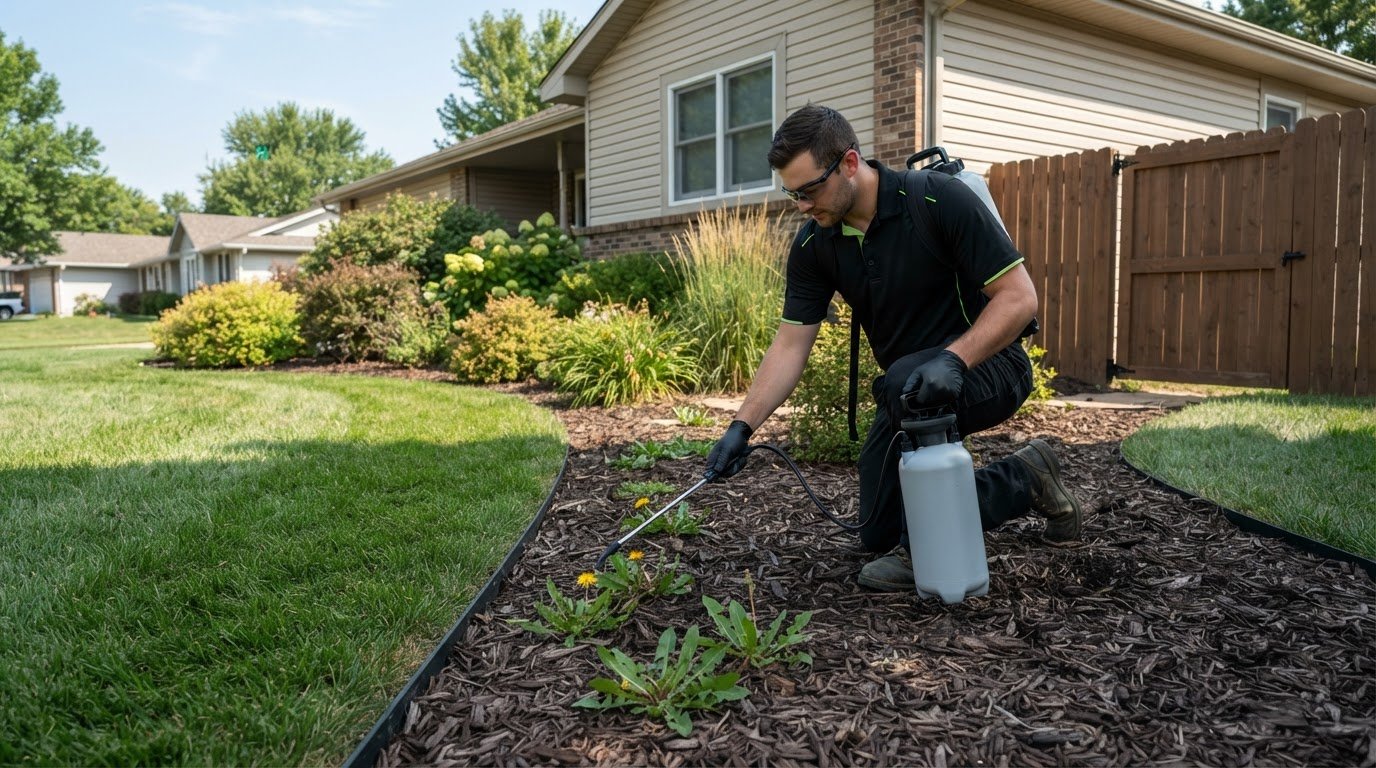
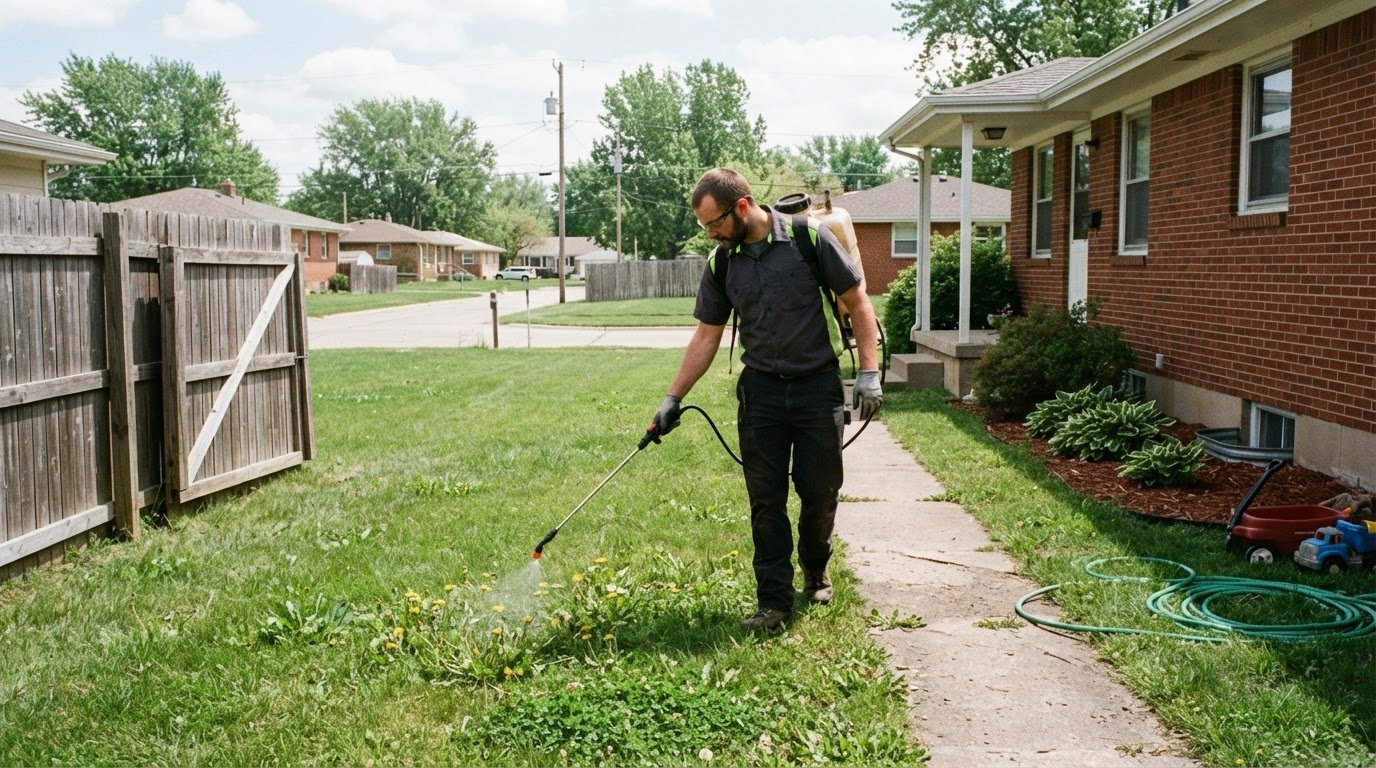
Weed control starts with identification, not blanket application. The City of Lincoln recommends identifying weeds before applying herbicides and using the least toxic available option only where needed. A broadleaf weed in one patch calls for a different assessment than widespread thinning. Consider where weeds are growing and whether nearby turf can fill gaps, then match treatment to the problem.
Timing matters for broadleaf weeds, too. The City of Lincoln recommends fall as the best time to control them when weed control is needed. A professional can assess the lawn during the growing season, identify the weeds, and plan appropriate treatment timing. This separates diagnosis from application, helping avoid unnecessary treatment when a patch is thin but not weed-dominated.
Fertilizer and weed control should fit the lawn’s development after construction. Bare areas, uneven coverage, or patches where grass is still filling in affect which treatments make sense. Applying weed control without identifying the plants can target desirable grass by mistake. Consider turf growth, weed type, and season before choosing the next step.
For residential and commercial properties, a treatment plan also needs to account for lawn use and layout. Open turf, narrow strips, and landscaped edges can face different weed pressures. Landscape bed weed control is separate from lawn treatment because weeds among ornamental plants need attention in their own areas. Keeping these zones distinct helps maintain a tidy transition between grass and planting beds.
For a property-specific fertilizer and weed-control plan, request a quote. A professional assessment can connect the lawn’s growth, weed conditions, and seasonal timing into a practical care sequence.
Landscaping installation and maintenance
For new construction homes in Lincoln, NE, lawn care can include mowing, fertilizing, weed control, aeration, and seasonal cleanup. Irrigation maintenance and landscape bed weed control can also support care for new turf and surrounding areas.
Ongoing maintenance starts with the lawn’s condition and property layout. Assess bare patches, compacted soil, grass growth, and areas beside sidewalks or planting beds. These details help shape a plan for routine mowing, treatments, and seasonal work. Lawn care is distinct from installing sod or building hardscape features, which are separate construction projects.
Mowing supports an orderly yard as new grass grows in. The City of Lincoln recommends maintaining lawns at a mowing height of at least 3 inches and removing no more than one-third of the leaf surface at a time. In spring, growth can call for mowing every 4-5 days. A schedule based on grass growth helps avoid cutting too much at once.
Seasonal maintenance includes services beyond mowing. Leaf removal clears fallen leaves from lawns, while irrigation maintenance supports an existing watering system. Landscape bed weed control addresses weeds in planting beds rather than the lawn. A property with a young lawn and established beds, for example, may need separate care for each area.
Lincoln’s seasonal changes shape the work across the year. The city’s freezing-temperature season typically begins on October 5 and may continue until April 25, while its average growing season is 162 days. These conditions make seasonal planning useful: lawn care can focus on active growth during the growing season, then shift toward cleanup and winter preparation as conditions change.
Watering and mowing practices can work together to support healthy turf. The City of Lincoln recommends watering thoroughly in the early morning and waiting until the soil is dry before watering again. It also advises checking the forecast and skipping watering when rain is expected soon. Irrigation maintenance can help keep an existing system’s components in working order.
For homes and businesses, the maintenance plan should reflect how each area is used. Open lawn may need regular mowing, while beds may need weed control and paved edges need clean, consistent borders. Seasonal services can include snow and ice removal or Christmas light installation, depending on the property’s needs. A clear scope distinguishes recurring lawn care from optional seasonal upkeep and gives each task a practical purpose.
Local lawn care expertise and customized service plans
Lincoln properties need care shaped around turf condition, irrigation, and regular use. A customized plan connects these details with seasonal lawn work.
Local Services and Service Areas
For homes and businesses in Lincoln, lawn care can include weekly mowing, seasonal maintenance, and irrigation upkeep. The right scope depends on the lawn, layout, and ongoing needs. Yardworx serves Lincoln and surrounding communities, with service plans shaped around each property’s location and access.
For watering, the City of Lincoln recommends thorough early-morning watering, then waiting until the soil dries before watering again. It also recommends checking the forecast and avoiding watering when rain is expected soon. This guidance covers watering practices, not a specific schedule of restrictions or watering days.
Customized Plans and Follow-Up
A customized plan should distinguish routine mowing from seasonal tasks and address each area separately. Open turf may need regular mowing, while an existing irrigation system may need maintenance. Keeping track of completed work, changing lawn conditions, and upcoming seasonal tasks helps guide ongoing care.
A satisfaction guarantee should clearly define what work it covers and how follow-up is handled. Keep the scope specific: mowing, irrigation maintenance, and seasonal cleanup are different services. For new construction, notes on thin turf, drainage patterns, or compacted sections can help the care plan respond to visible changes rather than repeat the same work automatically.
Preparing for the First Visit
Before the first visit, provide access details, identify areas of concern, and explain any irrigation controls or known drainage issues. Marking the mowing area helps distinguish lawn from new planting beds. For a commercial property, clarify which turf areas need regular maintenance and which are outside the service scope.
Before grass is planted, soil preparation should address grading, drainage, and compaction so water moves away from structures and turf can establish evenly. The lawn professional can assess these conditions and coordinate the lawn-care sequence around the site’s readiness. Soil grading belongs to the construction preparation stage, before ongoing mowing and maintenance begin.
For newly seeded or sodded turf, watering frequency and duration depend on soil moisture, weather, and the establishment stage. The City of Lincoln recommends using a soil-moisture sensor with an automatic irrigation system to prevent unnecessary watering. This helps tailor irrigation to actual conditions rather than applying a fixed schedule to every Lincoln lawn.
Residential and commercial lawn care in Lincoln and Lancaster County
Residential and commercial properties need different lawn-care plans, even when they share Lincoln’s climate. A home may prioritize neat turf and clear planting-bed edges. A business may need consistent lawn appearance across larger or more frequently used areas. Match the maintenance scope to how each property is used, not simply its address.
For a new residential lawn, regular mowing and seasonal care help keep the yard orderly as grass develops. The service plan can distinguish turf from landscape beds, sidewalks, and other maintained areas. It can also account for concentrated foot traffic, such as a path from the driveway to the entrance, keeping work focused on the parts of the property that need it.
Commercial properties often have different priorities. A business may need predictable mowing around entrances, visible lawn areas, and customer walkways. A larger site may also have separate lawn zones that need distinct attention. A clear scope identifies areas for routine maintenance and those needing seasonal work, such as leaf removal or snow and ice removal.
Lincoln and Lancaster County properties also need seasonal planning. Leaf removal clears fallen leaves from turf and helps maintain a tidy appearance during autumn cleanup. Snow and ice removal addresses winter access needs. These services are separate from regular mowing, so including them in a seasonal plan distinguishes recurring lawn work from weather-related service.
For residential and commercial lawn care, useful planning starts with a property walkthrough. Identify lawn boundaries, access points, landscape beds, and areas with thin or compacted turf. A narrow strip beside a building, for example, may need a different mowing approach than an open lawn. On commercial properties, account for high-visibility areas near the main entrance.
Look for a clearly described service scope, regular maintenance expectations, and a way to communicate changes. If construction continues, newly disturbed soil or access routes may affect lawn conditions. Sharing site changes helps keep the service plan aligned with the property’s current layout and separates lawn maintenance from construction work outside routine care.
In Lancaster County, the best plan is one that reflects the property’s use and seasonal needs, whether it’s a home or business. Define the maintained areas, identify priorities such as mowing or leaf removal, and keep seasonal tasks distinct. For help planning lawn care for a residential or commercial property in Lincoln, request service planning.
Yardworx Lawn & Landscape: Lawn Care
Yardworx Lawn & Landscape helps Lincoln homeowners and businesses care for new and established lawns. For lawn care for new construction in Lincoln, NE, turn to the team when new turf needs regular maintenance or compacted areas need attention.
Weekly Lawn Mowing Services maintain grass as it grows, while the 6-Step Fertilizing Program supports ongoing turf care. Aeration & Overseeding can address compacted soil and thin areas. For lawn care for new construction in Lincoln, NE, these services can be considered separately or as part of a plan shaped around the property’s condition and needs.
Describe the property, its turf condition, and your care priorities to start planning. Whether you need routine mowing or seasonal lawn care, contact Yardworx Lawn & Landscape to discuss a suitable next step.
Set Your New Lawn Up for What Comes Next
A new construction lawn changes as turf fills in, foot traffic shifts, and seasons change. The useful next step is to connect the lawn’s current condition with the maintenance you want over time. For lawn care for new construction in Lincoln, NE, consider which areas need attention first and how you want the property to look as it matures.
When requesting a quote, describe the property, current turf condition, and your priorities. Lawn area, access, and required work affect the scope and price; Yardworx provides pricing after a quote request. This gives the plan a practical starting point and helps align the work with your home or business.
Yardworx Lawn & Landscape can help you plan care around the needs of your property. Contact Yardworx Lawn & Landscape to discuss a suitable next step and move toward a well-kept lawn with confidence.
Frequently Asked Questions
Do I need to be home for my first visit?
Being home is useful if you want to walk the property with the crew, but access and clear instructions are key. Before the visit, identify lawn boundaries, gates, and areas needing special attention. Point out newly seeded sections or irrigation controls, for example. This helps the team understand the property and expected work whether you’re present or away.
Needing Cheap Yard Service?
For affordable yard care, focus on the work your property needs most instead of choosing services by price alone. Lawn area, turf condition, access, and requested tasks shape the scope. Request a quote for pricing specific to your property. You can also distinguish regular mowing from seasonal tasks, keeping the plan focused on immediate needs without adding work that doesn’t fit your yard.
Sod or Seed?
Seed is often a practical choice for covering larger areas, while sod provides an established surface sooner. The right option depends on the site, desired appearance, and how much establishment care the lawn can receive. Seed needs time to germinate and fill in; sod needs consistent attention as roots settle into the soil. For either choice, drainage and soil condition affect establishment.
Tired of unreliable lawn services?
Yardworx Lawn & Landscape offers Weekly Lawn Mowing Services and a 100% satisfaction guarantee. If an issue can’t be resolved, the charge is waived. A clear service scope helps set expectations around the areas maintained and the work included. For example, specify whether a property’s front and back lawns are both part of regular mowing, especially when access differs between them.
When can families and pets return to serviced areas?
After a fertilizer application, follow the product’s directions about when children and pets can return to the lawn. The fertilizer is safe for kids and pets when applied properly, but following the drying period matters. Keep play equipment and pet items off treated turf during that time. This guidance applies to fertilizer applications; other treatments may have their own product-specific directions.
What lawn care is needed after new construction in Lincoln, Nebraska?
After construction, a lawn may need routine mowing, fertilization, weed management, and attention to compacted or thin areas. The right sequence depends on soil and turf conditions. Areas compacted by construction traffic may need different attention from healthy, established sections. Once grass is growing, regular maintenance helps the property develop an even, usable lawn.
When is the best time to seed or sod a new construction lawn in Lincoln, NE?
For cool-season grass seed in Lincoln, the recommended window is August 15th through September 15th. Sod timing depends on site readiness, soil moisture, and weather conditions. Whichever approach is used, the ground should be ready to support establishment, and watering needs should be planned in advance. A lawn professional can align the work with the property’s soil condition and the season.
What grass types grow best in Lincoln, Nebraska, and which are best for new lawns?
Kentucky bluegrass and tall fescue are common cool-season choices to consider for Lincoln lawns. Kentucky bluegrass favors at least 6 hours of direct sunlight per day, while tall fescue does well with 6 to 8 hours. For a new lawn, the best fit depends on sun exposure, soil, and how the property is used. Those conditions matter more than selecting a grass type by name alone.