
A well-kept yard and safe THC storage address different risks. If a child may have consumed a THC product, call Poison Control at 1-800-222-1222 immediately, even if they seem fine; if symptoms seem severe, call 911 or go to an emergency room. For families considering child-safe weed control in Lincoln, NE, it’s also important to understand what professional lawn and landscape care can and can’t do to reduce risks around children.
It’s natural to want a healthy outdoor space where children can play with fewer worries. Child-resistant packaging can help limit access to THC products, but secure, locked storage out of sight and reach is an important added safeguard.
This article explains practical ways to approach weed control around children, respond to possible THC exposure, and use packaging and storage to help prevent accidental access. It also covers how professional lawn care can help maintain your property.
What child-safe weed control methods do lawn care professionals use for lawns and gardens?
Child-conscious weed control starts by treating lawn and garden-bed needs separately. A professional considers where weeds are growing, how each space is used, and which approach suits it. A weed in turf may need a different response from one among shrubs or flowers. Focused landscape-bed weed control addresses planting areas without treating the entire yard alike. The plan should also account for children’s play areas and when the family wants to use the yard after service.
Ask the service team to explain the planned work and what your family should know before children return to the treated area. Precautions depend on the treatment, so clear instructions matter more than a broad promise that any method is “child-safe.” Landscape-bed weed control can be planned separately from lawn care, particularly when weeds are concentrated around plants, borders, or walkways. The aim is a tidy yard with an approach suited to each space.
Mowing is another part of lawn care, with its own safety considerations. Keep children and pets away from the work area while a mower is operating. Operators should know their equipment, clear the area before starting, and keep hands and feet away from moving parts. Eye and hearing protection are also important.
- Mowing on hills calls for extra care to help reduce the chance of a fall.
- The mower should remain flat on the ground and never be lifted while running.
- The engine should be shut off before adjusting the mower’s height.
- After striking an object, the operator should stop, shut off the mower, and check for damage before restarting.
These steps address equipment hazards, not chemical exposure. A careful service plan treats the two concerns separately: the crew manages mower operation, while the treatment plan addresses weeds in the lawn or beds. In Lincoln, families who also want to manage outdoor pests can consider mosquito and tick control as a distinct service from weed treatment.
For a child-conscious approach, focus on the work area, the method chosen, and the instructions for that treatment. Keep children out of active mowing areas and follow the service team’s directions for treated spaces. This coordination helps families maintain their lawns and gardens while keeping outdoor routines clear and predictable.
Are any herbicides safe for children after application, and how long should they stay off the treated area?
No herbicide is universally safe for every child, yard, and application. Re-entry timing depends on the specific product and its label directions, so a fixed waiting period for every Lincoln lawn would be unreliable. Follow the instructions for the product actually applied. Don’t assume a familiar product or a dry-looking lawn means children can return.
A professional plan starts by identifying the weed and the area that needs attention. Scattered weeds in a lawn, for example, may call for a different approach from weeds among landscape plants. The product, application method, and treated surface all affect the instructions families need. Focused treatment can also avoid applying herbicide to areas that don’t need it.
Before work begins, discuss your family’s outdoor routine. Tell the service team where children play, whether they use a particular path, and which spaces need to remain accessible. A play lawn, garden border, and front walkway may each need separate planning. The team can explain the product-specific directions and when the treated area may be used again.
- Identify the exact treated area. A lawn application and a spot treatment in a garden bed may have different directions.
- Follow the product’s instructions. The label, not a generic rule of thumb, guides re-entry for that product.
- Keep children away until the stated conditions are met. Don’t substitute “it looks dry” for the product’s instructions.
- Ask for clear aftercare details. Know which areas were treated and what directions apply before children return.
Depending on the weeds and their location, some management approaches don’t use herbicides. A professional may consider mowing, removing weeds from a bed, or improving turf density as part of a broader plan. No single approach suits every situation: the right fit depends on the weed, the lawn’s condition, and whether the problem is isolated or widespread.
“Natural” or “organic” wording alone doesn’t tell a family when an area is ready for use. The specific product and its instructions still matter. If you want to plan around children’s play areas, discuss your household’s treated-area needs before service, so the work and access instructions are clear.
Alongside planning children’s access to outdoor areas, households may need to keep storage and response instructions in mind. In Minnesota, cannabis products must be stored in a vehicle’s trunk or trunk area of an SUV, unless sealed in their original, labeled dispensary packaging. Minneapolis public health guidance recommends storing cannabis products in their original child-resistant packaging with the label kept on. These directions specifically concern cannabis products: Minnesota’s guidance covers vehicle storage and an exception, while Minneapolis’s guidance specifies child-resistant packaging and labeling.
If a child consumes a THC product that is not medically certified for them, caregivers should call a medical professional or the free Poison Control Hotline immediately, even if the child has no symptoms.
What are the risks of glyphosate and other common weed killers for children and pets?
Glyphosate is an active ingredient in some weed killers, but products aren’t interchangeable. Risk depends on the exact formulation, how someone encounters it, and the amount involved. Touching a treated plant, walking across a treated lawn, and swallowing a product are different exposure situations. The product label gives directions for that formulation, not a universal safety rule for every herbicide.
Direct contact with a weed-control product can expose skin or eyes; swallowing it is a separate and more serious concern. Children may touch grass, garden borders, or toys left in a treated area. Pets may walk through treated spaces and then lick their paws. These examples show why it matters to keep people and animals away during application and follow the product’s re-entry directions.
Knowing a product contains glyphosate doesn’t tell you its full risk. A product contains other ingredients too, and its label explains how to handle it. Products aimed at weeds can have different active ingredients, uses, and directions. Don’t assume a “natural,” “ready-to-use,” or familiar product needs no precautions. The product name and label are more useful than a broad category such as weed killer.
- Identify the product. Keep its name and label available so the exact formulation can be identified.
- Limit contact. Keep children and pets away from the application area and follow the product’s stated re-entry directions.
- Prevent carryover. Don’t let pets walk through a treated space and then lick their paws.
- Respond promptly to exposure. If a child or pet has swallowed a product or feels unwell after contact, seek appropriate medical or veterinary advice and provide the product label.
Symptoms and response can vary by product and exposure route, so don’t use advice for one herbicide in place of another product’s label. Directions for a lawn product, for example, may differ from those for a concentrated weed killer. If exposure occurs, note the product name, approximate time, and whether contact involved skin, eyes, or swallowing. This information helps a medical professional or veterinarian assess the situation.
Planning also matters before treatment. Tell the service team which lawn and garden areas children and pets use most, such as a play space or a dog’s usual route. That context helps clarify treatment areas and access instructions. Discuss your yard’s treatment needs as part of arranging professional care.
Minneapolis public health guidance advises keeping cannabis products in a secure, locked place out of sight and reach of children and pets. That guidance concerns cannabis products, not weed-killer safety, so it is not a substitute for a herbicide label. Follow the herbicide’s own storage and handling directions, and keep the label available when seeking medical or veterinary advice. This distinction helps prevent applying instructions for one kind of product to a different exposure situation.
What effective nonchemical weed control methods can lawn care professionals use in Nebraska lawns?
Nonchemical weed management combines physical removal with turf and bed care. In a Nebraska lawn, the right approach depends on whether weeds are spreading through turf, clustered in a garden bed, or following a thin strip along a walkway. Professionals identify the affected area and the weed’s growth pattern first. That assessment helps match the method to the site instead of treating every weed problem alike.
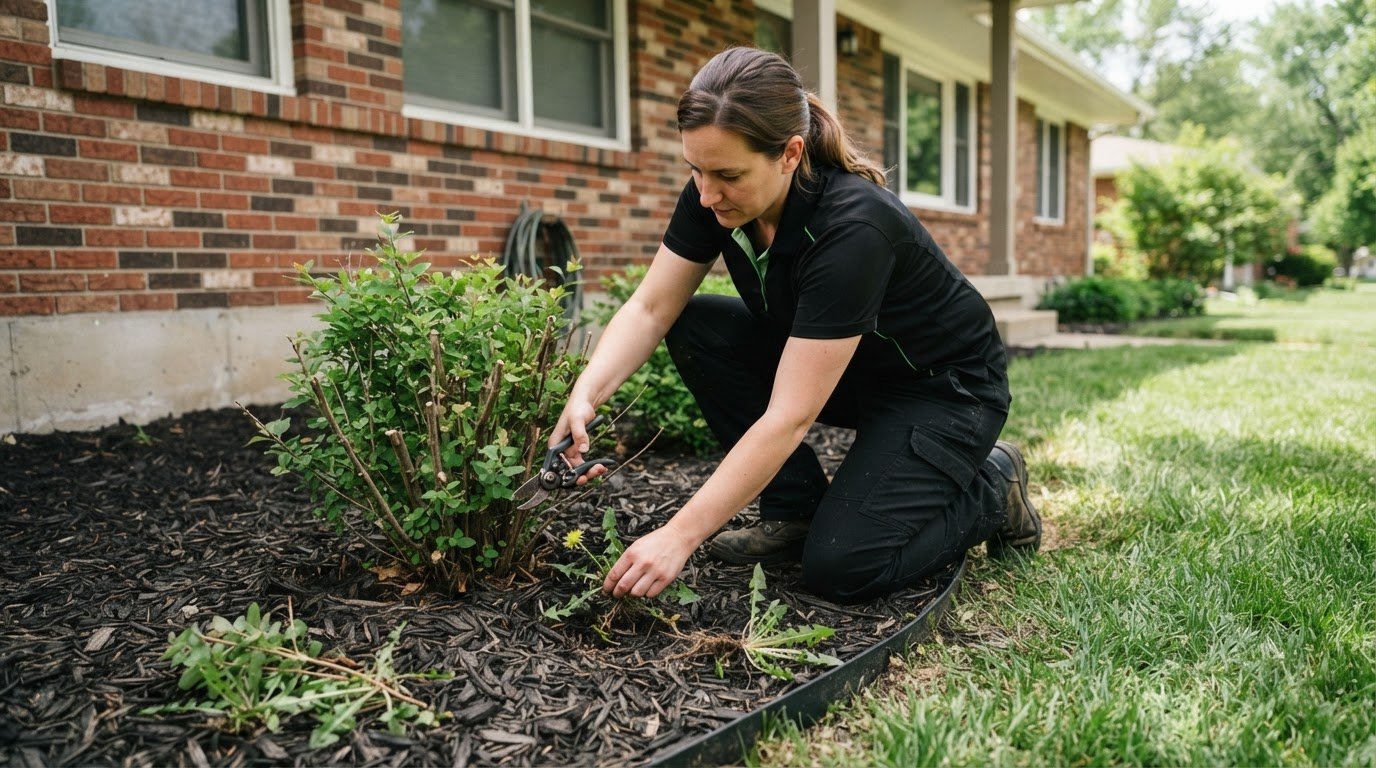
In landscape beds, hand removal can work for isolated weeds, while mulch can help limit open space where new weeds may establish. A professional may remove weeds around shrubs and flowers and refresh the bed surface as part of a maintenance plan. Place mulch without burying plant stems or covering perennial crowns. This approach suits defined beds better than broad lawn areas.
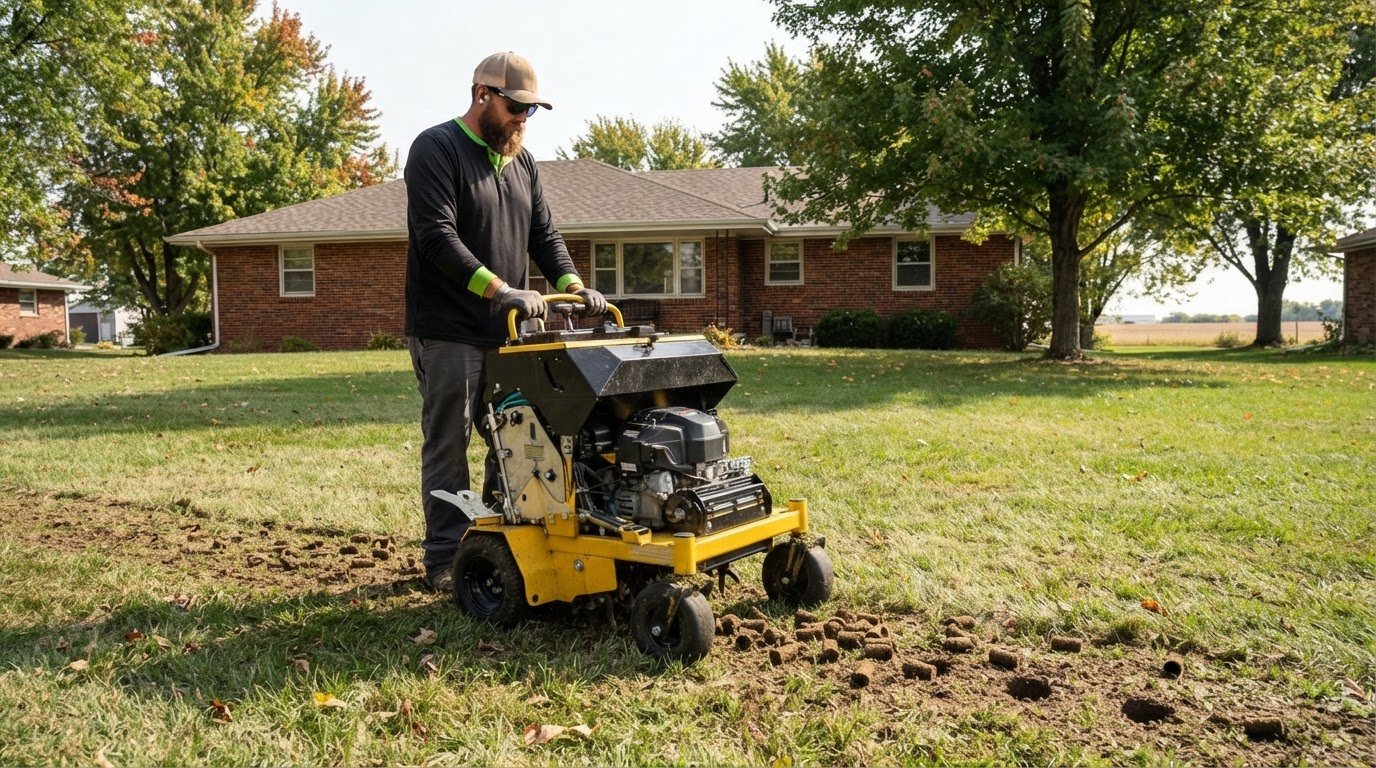
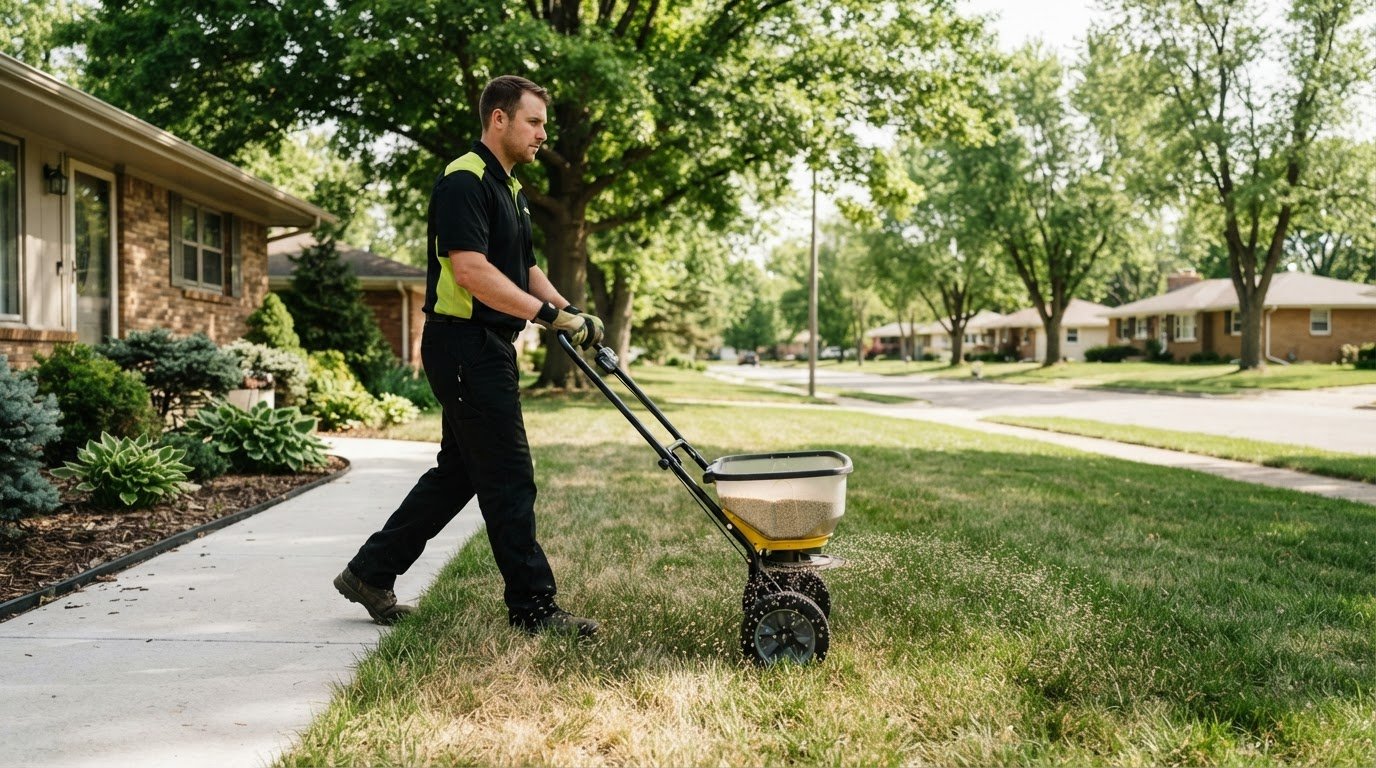
Dense, healthy grass leaves fewer bare patches for weeds to occupy. Professionals can assess whether thinning or uneven growth contributes to recurring weeds. Aeration can help address compacted soil, while overseeding adds grass to sparse areas. These practices support turf recovery, but they don’t remove weeds instantly. Their value is in helping the lawn fill in over time.
Mowing also affects how well a lawn competes with weeds. Cutting grass too short can expose more soil and stress the turf. A professional can adjust mowing practices to the grass and site conditions rather than using the same setting across every property. For example, a sunny front lawn and shaded backyard may need different care to maintain even coverage.
- In a garden bed, remove individual weeds before they spread among established plants.
- In thin turf, assess compaction and consider aeration or overseeding to support fuller grass growth.
- Along edges, distinguish weeds in the lawn from weeds rooted inside a landscape bed.
- Across the yard, adjust ongoing care to the lawn’s condition instead of relying on a single treatment.
These methods work best as a coordinated plan. Removing visible weeds without addressing bare soil can leave room for new growth. Overseeding a lawn, likewise, won’t solve weeds rooted in a mulched planting bed. Nebraska weather and each property’s condition affect when lawn care can be done and how quickly turf responds. Professionals can explain which areas need physical removal, bed care, or turf improvement.
For families seeking child-conscious weed management, nonchemical methods can reduce herbicide use in selected areas. The right mix depends on the weed, its location, and the lawn’s health. A focused plan may combine bed maintenance with aeration or overseeding, while setting realistic expectations for gradual turf improvement.
Choosing a Nebraska-approved lawn care provider
For residential weed control in Nebraska, the product label should match the intended use. A product labeled for a different site, such as a garden crop or another type of property, isn’t automatically appropriate for a home lawn. A careful provider can identify the planned product and explain how its label applies to the specific lawn or landscape area.
Start by getting clear information about the treatment. The provider should name the product, identify its active ingredient, and explain whether it is intended for residential turf or landscape beds. A product for lawn weeds, for example, may not be suitable for a flower bed. These distinctions help clarify where treatment is planned.
Good communication covers the product’s directions, not just its purpose. Before work begins, the provider should explain the treatment area and the precautions stated for the product. Your family can then plan around children’s play spaces, pets’ usual routes, and access to gates or walkways. A broad statement like “it’s safe” doesn’t replace product-specific instructions.
- Product identity: The provider names the product and active ingredient rather than relying on a vague label such as “weed spray.”
- Use area: The provider distinguishes a residential lawn from a landscape bed or another site.
- Application plan: The provider describes which areas will be treated and which will remain untreated.
- Aftercare directions: The provider shares the product’s instructions for access and re-entry after application.
- Family considerations: The provider considers places children and pets use, such as a backyard play area or dog run.
In Lincoln, a useful conversation can cover the weeds present, the grass’s condition, and the areas children use most. A few weeds in a planting bed, for instance, may call for a different plan from widespread weeds across turf. The provider should explain why the approach suits the site and what results to expect, without promising that one application will solve every weed problem.
Ask for instructions that are easy to follow after the service visit. Product names and treated locations are more useful than general assurances, especially when a caregiver or pet sitter also needs to know which areas to avoid. Clear communication makes it easier to coordinate lawn care with everyday family routines.
For a clear discussion of residential lawn treatment and family access needs, contact the lawn care team.
Yardworx Lawn & Landscape: Landscape Bed Weed Control
Yardworx Lawn & Landscape provides Landscape Bed Weed Control for weeds growing among shrubs, flowers, and other plantings. It’s a focused option when weeds are concentrated in garden beds rather than spread across the lawn. For families considering child-safe weed control in Lincoln, NE, share which outdoor areas children use and ask about the instructions for the planned treatment. Product directions guide when treated areas can be used again.
If weeds return alongside thin turf, lawn care may be part of a broader property plan. Keep the needs of planting beds and grass distinct so each area gets appropriate attention. Yardworx Lawn & Landscape can help manage weeds in landscape beds as part of keeping your yard neat.
Contact Yardworx Lawn & Landscape to discuss your landscape bed weed control needs.
Make your next lawn-care decision with confidence
Your family’s outdoor routine can guide the next step. Consider where children play, which garden beds need attention, and how lawn care can fit around regular use of the yard. If you’re looking for child-safe weed control in Lincoln, NE, share these priorities to help shape a service plan around your property’s needs.
Yardworx Lawn & Landscape offers Weekly Lawn Mowing Services, a 6-Step Fertilizing Program, and Aeration & Overseeding. These services support ongoing turf care, while Landscape Bed Weed Control addresses weeds in planting beds. Choose the help that matches the areas you want to maintain, and keep treatment instructions accessible to everyone who cares for your children or pets.
A thoughtful plan can make yard maintenance easier to coordinate with family life. Contact Yardworx Lawn & Landscape to discuss your lawn and landscape bed needs. A well-cared-for yard can be a welcoming part of your family’s routine.