
Treating your yard according to calendar dates is the quickest way to end up with scorched grass and stubborn weeds. If you've ever watched your turf turn brittle and brown during a sweltering July, or wondered whether heavy clay is choking your roots, you aren't alone. Nebraska's transition zone climate throws brutal temperature swings at cool-season grasses, making generic gardening advice unreliable. That's why following a reliable lawn maintenance checklist for Nebraska homeowners is essential to keep your turf healthy, resilient, and thriving.
With the right timing based on soil temperatures rather than the calendar, you can outsmart creeping Charlie, survive summer heat, and nurture a rich, deep-green lawn that handles freezing winters with ease. You don't have to spend your weekends second-guessing when to spread crabgrass preventer or schedule core aeration. Below, we provide a complete, season-by-season guide covering mowing heights, feeding programs, weed control, and irrigation so you can enjoy your outdoor space with total peace of mind.
Understanding Nebraska's Turf Climate: Why a Regional Lawn Checklist Matters
Nebraska sits squarely inside the central transition zone, where blistering, humid summer heat waves clash with sub-zero winter temperatures. These dramatic seasonal shifts place intense stress on residential lawns across Lincoln. Because national lawn calendars fail to account for our unpredictable weather patterns, following a localized lawn maintenance checklist for Nebraska homeowners is the most reliable way to protect your turf year after year.
To see how early planning sets your yard up for success before unpredictable weather arrives, watch this helpful walkthrough:
Cool-Season Grasses in Eastern Nebraska
Most Lincoln properties rely on hardy cool-season grasses that flourish during mild spring and autumn months. Understanding which variety covers your yard makes routine care straightforward:
- Kentucky Bluegrass: Produces a lush, self-repairing carpet that looks incredible, though it requires consistent moisture to keep from entering summer dormancy.
- Turf-Type Tall Fescue: Forms deep root systems that provide outstanding drought and heat resistance, making it an ideal choice for busy homeowners seeking low-fuss reliability.
- Perennial Ryegrass: Delivers rapid seed germination and vibrant early color, but its shallow root profile can struggle through prolonged hard winter freezes.
The Role of Soil Composition and Compaction
Lancaster County yards are built on heavy clay that easily packs tight under foot traffic and seasonal weather. This compacted layer suffocates subterranean roots by blocking oxygen, leaving grass vulnerable to sudden summer burnout. When clay hardens, vital water simply sheets off the surface rather than sinking down into the root system.
Pairing regular core aeration with seasonal irrigation maintenance relieves this subsurface pressure, opening channels for air, water, and organic nutrients to reach deep roots. Applying a targeted lawn maintenance checklist for Nebraska homeowners ensures your soil remains porous, healthy, and ready to sustain strong turf in every season.
Spring Lawn Awakening: Your Early-Season Nebraska Maintenance Checklist
Spring preparation sets the defensive foundation for your yard long before summer heat arrives. In eastern Nebraska, rushing out to work on soggy, thawing ground will compact wet soil and tear delicate grass crowns. Wait until the yard dries out completely before stepping outside with rakes and tools. Incorporating science-backed timing into a seasonal lawn maintenance checklist for Nebraska homeowners helps you cultivate lush grass while avoiding early-season missteps.
March and April: Debris Clearing and Assessment
Gently rake away winter twigs, dry leaves, and matted grass blades to encourage airflow and prevent lingering snow mold. Inspect driveway edges and walkways for salt damage and winter burn. Before you start mowing, sharpen your cutting blades. Clean, razor-sharp edges produce crisp cuts that seal quickly, shielding grass blades from fungal infections.
Pre-Emergent Weed Control and Spring Feeding
Spreading weed preventer too early wastes your investment, while waiting too long allows weed seeds to germinate. Nebraska spring weather swings wildly, making soil thermometers far more dependable than calendar dates. Apply your pre-emergent crabgrass barrier when soil temperatures at a two-inch depth consistently reach 50 to 55 degrees, typically between mid-April and early May. A handy natural benchmark is when local forsythia bushes drop their yellow blossoms. According to UNL Extension's cool-season lawn calendar, delivering a balanced slow-release nitrogen feeding in late April or early May nourishes awakening root systems without sparking excessive top growth.
Irrigation Inspection and De-Winterization
Before pressurizing your system, schedule certified irrigation maintenance to inspect your backflow valve and evaluate main line pressure. Walk each zone to spot misaligned spray heads, sunken rotors, and hidden leaks. Adjust your smart controller to run conservatively during wet spring months, which prevents waterlogged roots and fungal issues. Following a structured lawn maintenance checklist for Nebraska homeowners keeps your watering schedule dialed in as temperatures rise. If you want peace of mind without spending your weekends troubleshooting nozzles, you can always connect with our friendly specialists for a seasonal system audit.
Summer Turf Defense: Mowing Heights, Hydration, and Pest Prevention
Nebraska summers bring intense heat and dry winds that put cool-season turf under severe stress. During July and August, your primary objective shifts from pushing rapid growth to conserving moisture and protecting root crowns. Sticking to a dependable lawn maintenance checklist for Nebraska homeowners prevents common summer blunders like turf scalping, rapid moisture loss, and premature heat dormancy.
Strategic Summer Mowing Practices
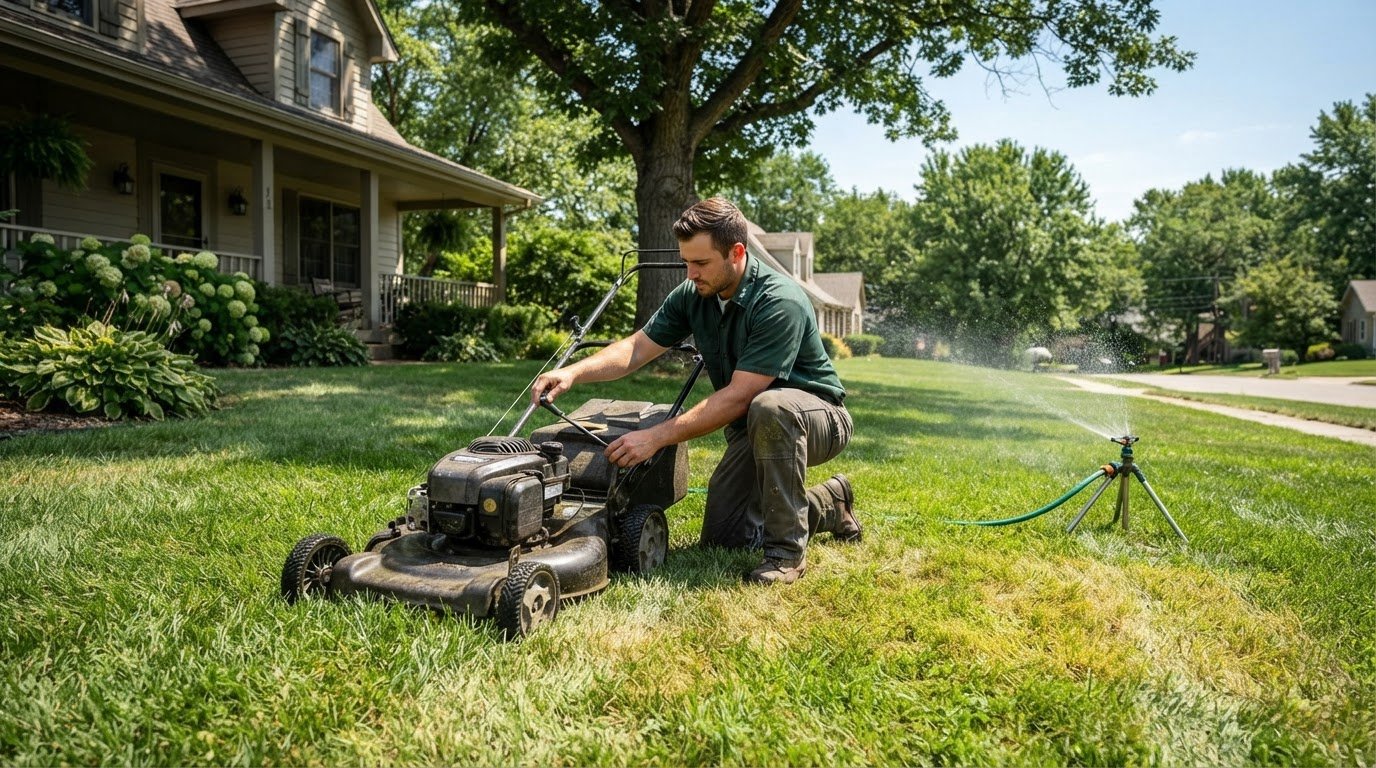
Raising your mower deck is one of the easiest ways to shield soil from baking in the summer sun. Set cutting heights to 3.5 or 4 inches. Taller grass blades shade the soil bed, slow evaporation, and support deeper root systems. Never remove more than one-third of the grass blade in a single cutting, as severe scalping shocks the plant. Mow during cooler morning or evening hours to reduce heat stress on the turf. Many residents rely on established weekly lawn mowing Lincoln NE services to maintain uniform height without sacrificing their own free time.
Efficient Summer Watering Guidelines
Cool-season grasses need about 1 to 1.5 inches of water weekly, including rainfall. Deep, infrequent irrigation encourages roots to stretch downward, whereas light daily watering leaves roots weak and near the surface. Run sprinklers between 4:00 AM and 9:00 AM to minimize evaporation and prevent nighttime fungal moisture. Because local clay soils absorb water slowly, try a cycle-and-soak schedule. Run zones for short intervals, pause to let the moisture absorb into the ground, and run them again to eliminate wasteful runoff on slopes.
Grub Monitoring and Perimeter Pest Control
Summer stress also invites destructive turf pests. White grubs chew through root zones, leaving grass feeling loose and spongy underfoot. Spreading preventative grub treatments in early summer controls larvae before they cause visible dead patches. At the same time, perimeter sprays keep mosquitoes, ticks, and fleas away from outdoor living spaces. If managing treatments feels complicated, researching guidelines for hiring a turf care professional helps ensure your treatments are applied safely and on schedule. Maintaining this lawn maintenance checklist for Nebraska homeowners keeps your property green, healthy, and bug-free all summer.
Fall Renovation and Winterization Checklist for Lancaster County Yards
Autumn is the golden window for Nebraska turf. Warm soil temperatures combined with crisp autumn days create an ideal environment for root establishment and turf recovery. Completing essential renovation tasks during this seasonal transition determines how vigorously your grass returns next spring. Including these key benchmarks in your lawn maintenance checklist for Nebraska homeowners ensures your turf heads into the deep winter freeze protected and well nourished.
Core Aeration and Overseeding Window
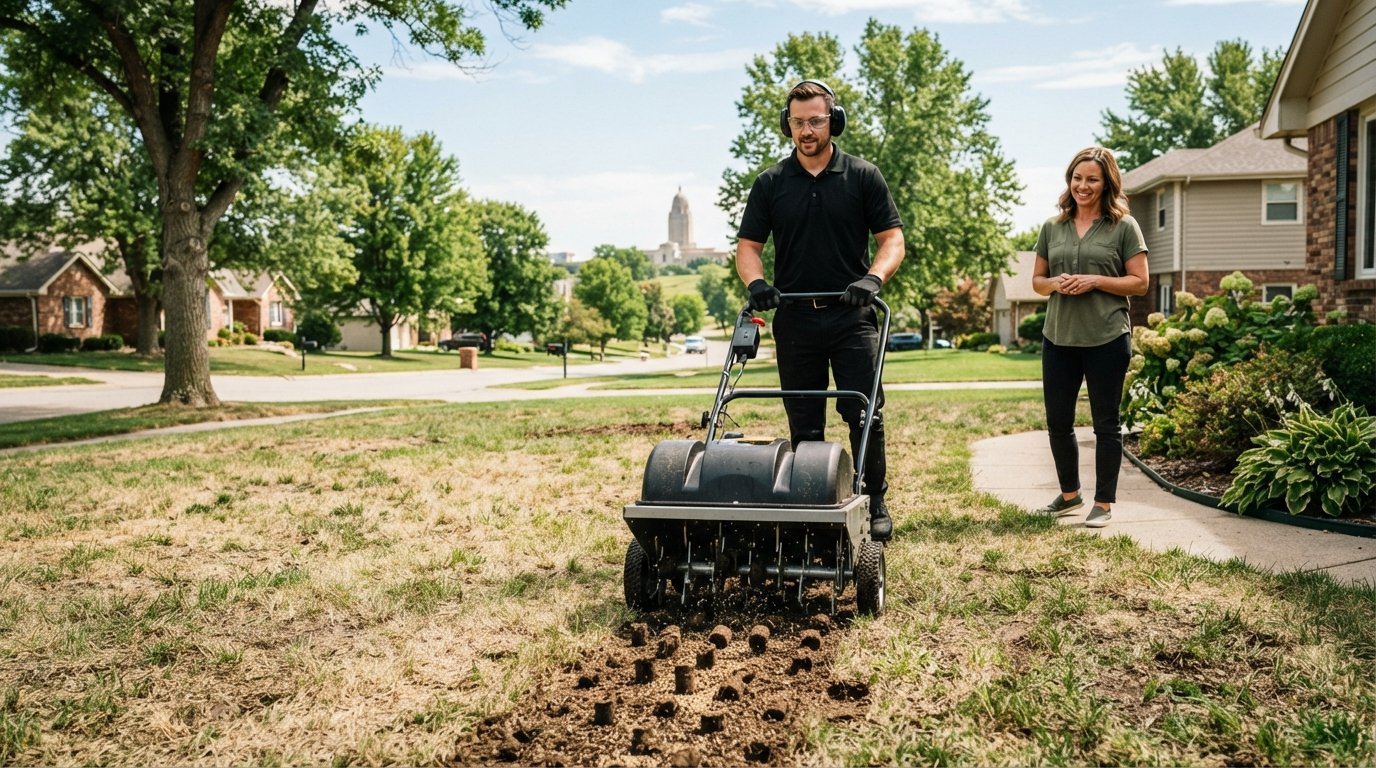
Timing overseeding properly makes all the difference. Check out our detailed walkthrough on aeration and overseeding Lincoln NE before launching your late August through mid-September lawn renovation. Pulling hollow soil plugs relieves compacted Lancaster County clay, creating direct channels for air, seed, and moisture. Spread drought-resilient turf-type tall fescue at 6 to 8 pounds per 1,000 square feet, or Kentucky bluegrass at 2 to 3 pounds. Tall fescue seeding must wrap up by mid-September so new seedlings establish strong root networks before freezing temperatures arrive. Keep the top inch of seedbed moist with light, daily misting until the seeds sprout.
Late-Season Fertilization and Broadleaf Weed Control
Fall is prime time to knock out invasive weeds like creeping Charlie and dandelions. As broadleaf perennials pull energy down into their root systems for winter storage, selective herbicide treatments travel deep into the taproots to eliminate them entirely. Between mid-September and early October, apply a nitrogen-rich feeding to boost root growth. Follow this up in late October with a winterizer fertilizer formulated with potassium. This critical feeding promotes cold tolerance and cellular strength without triggering tender, freeze-vulnerable top blades.
Winterization and Thorough Leaf Cleanup
Clear falling tree leaves promptly throughout October and November. Heavy, damp leaf blankets block sunlight and trap moisture against the turf crown, inviting snow mold infections. Follow these final seasonal steps to protect your property:
- Gradually lower your cutting deck during the final October cuts to a height of 2 to 2.5 inches to prevent blades from matting down under heavy snow loads.
- Blow out underground sprinkler lines with compressed air between October 5 and October 24, shielding expensive backflow valves and manifolds from costly freezing damage.
Checking off every fall task can feel like a full-time job. To enjoy the autumn season while ensuring your property gets pristine care, schedule your fall renovation services with Yardworx today.
When to DIY vs. Partnering with a Lincoln Turf Care Professional
Tackling yard care on your own can be deeply satisfying, especially when you step back to admire clean stripes or fresh spring growth. However, balancing work, family, and the timing requirements of a lawn maintenance checklist for Nebraska homeowners often turns a hobby into a weekend burden. Deciding which projects to take on yourself and which tasks to delegate comes down to equipment requirements, precision calibration, and your available free time.
Evaluating Equipment Costs, Calibration, and Time Commitments
Routine tasks like basic mowing and supplemental watering during dry spells fit smoothly into a homeowner's schedule. In contrast, deep core aeration requires commercial machinery that weighs hundreds of pounds, requiring heavy lifting, ramp rentals, and intense physical labor on Lancaster County clay.
Chemical applications introduce their own challenges. Inexpensive push spreaders from neighborhood hardware stores often distribute uneven fertilizer swaths, risking striped turf and severe chemical burn. Professional lawn care specialists use commercial equipment and commercial-grade formulas that protect turf crowns. In Nebraska, commercial applicators are licensed by the Nebraska Department of Agriculture, ensuring weed controls and fertilizers are applied safely and according to environmental standards.
The Long-Term Value of Comprehensive Professional Care
Partnering with a local turf specialist doesn't mean stepping away from your yard entirely; it simply gives you an expert partner. Exploring structured seasonal lawn maintenance in Lincoln, Nebraska allows you to maintain top-tier curb appeal while reclaiming your weekends for rest and relaxation.
A proven 6-step fertilizing program removes the guesswork of monitoring rapid weather shifts and soil temperatures. While you handle routine care or simply relax on your patio, dedicated professionals manage heavy core aeration, weed prevention, and irrigation checkups. Adhering to a steady lawn maintenance checklist for Nebraska homeowners provides true peace of mind, keeping your turf lush, vibrant, and resilient all year long.
Keep Your Nebraska Lawn Thriving Season After Season
Achieving a resilient, emerald yard across Lancaster County comes down to working in harmony with our shifting climate. Aligning spring pre-emergents with soil temperatures, shielding summer grass blades with taller mowing heights, and prioritizing autumn aeration will keep your turf vibrant through harsh freezes and humid heat waves. Following a structured lawn maintenance checklist for Nebraska homeowners removes the guesswork, transforming routine yard work into a reliable blueprint for long-term health.
You don't have to carry the burden of every seasonal task alone. Yardworx is locally owned and trusted by homeowners throughout Lincoln, offering a proven 6-step fertilizing program, core aeration, and dependable weekly mowing tailored to our regional clay soils. Our experienced technicians manage the hard work and calibration so you can relax on the weekends with complete peace of mind. Request your free Lincoln lawn care estimate today and enjoy a lush, beautiful yard that stays healthy all year long.
Frequently Asked Questions
When should I start my spring lawn maintenance checklist in Nebraska?
You should start your spring lawn care once the ground dries out and temperatures consistently rise, typically between late March and mid-April in Lincoln. Rushing onto soggy ground compacts wet clay soil and damages fragile turf crowns. Beginning your lawn maintenance checklist for Nebraska homeowners with light debris raking and mower tune-ups in early April sets the stage for timely weed preventer applications when soil temperatures reach 50 to 55 degrees.
How high should I cut my grass during a hot Lincoln summer?
You should set your mower deck to 3.5 or 4 inches during hot Lincoln summers. Maintaining taller grass blades shades the soil surface, cooling root zones and reducing moisture evaporation during intense heat waves. Taller turf also encourages deeper root systems in heavy clay soils and naturally outcompetes opportunistic weed seeds. Remember never to remove more than one-third of the blade height during a single mowing session.
Can I apply crabgrass preventer and grass seed at the same time in spring?
In most cases, you cannot apply standard crabgrass preventer and grass seed together because traditional pre-emergent barriers block all seed germination, killing your new grass before it sprouts. If you must patch bare areas in spring, you need a specialized pre-emergent labeled safe for seeding, or you should postpone overseeding until late summer. Fall provides superior soil temperatures and far less competition from aggressive annual weeds.
What happens if I forget to blow out my sprinkler system before winter?
Forgetting to blow out your sprinkler system causes residual water trapped in the lines, valves, and manifold to freeze and expand. Nebraska winters regularly push freezing temperatures deep into the ground, cracking underground pipes and destroying expensive backflow assemblies. Replacing ruptured backflow valves and digging up broken lines in the spring creates costly headaches that a simple blowout between early and late October easily avoids.
Is fall really the best time to aerate and overseed a Nebraska lawn?
Yes, late August through mid-September is the ideal window to aerate and overseed cool-season turf across eastern Nebraska. Warm late-summer soils encourage rapid seed germination, while cooling autumn air reduces heat stress and weed competition. Including aeration and overseeding in your fall lawn maintenance checklist for Nebraska homeowners relieves compacted clay soil and gives new seedlings ample time to develop strong, deep roots before winter arrives.
How much water does my established lawn actually need each week?
An established cool-season lawn in Nebraska requires 1 to 1.5 inches of water per week, including natural rainfall, to stay green throughout the summer. It's best to deliver this moisture across two or three deep watering sessions early in the morning rather than light daily sprinkling. Deep watering trains root systems to reach far into the soil, significantly boosting your lawn's natural resilience against drought.