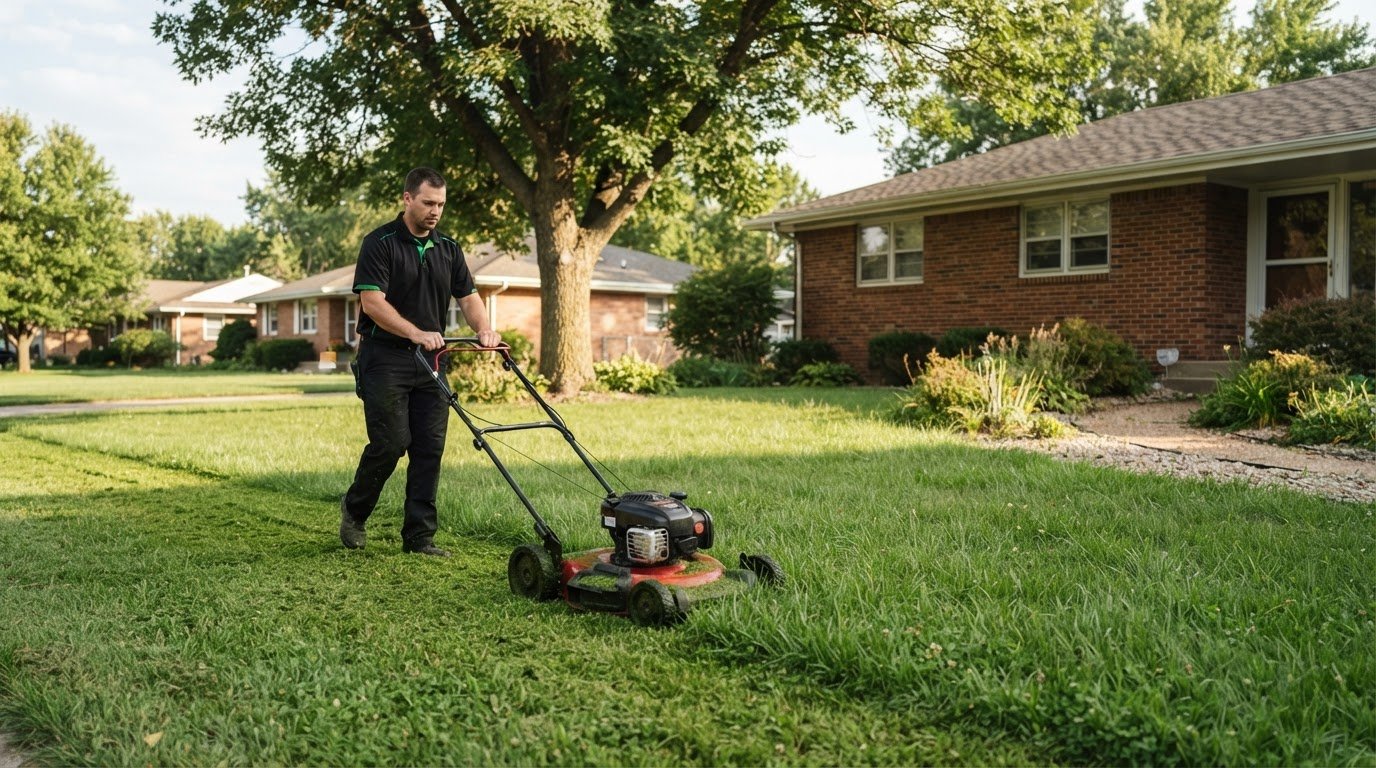

A greener lawn doesn’t have to mean more treatments. An eco-friendly lawn service in Lincoln, Nebraska can support healthy turf with careful mowing, thoughtful fertilizer timing, and practices that keep clippings on the lawn instead of washing toward storm drains. Lincoln recommends mowing at least 3 inches high and removing no more than one-third of the grass at a time.
It makes sense to want a neat, resilient yard without unnecessary inputs. Grasscycling, timely leaf removal, and watering according to soil conditions can make routine lawn care more mindful of Lincoln’s environment.
This guide explains what to look for in professional lawn care for Lincoln properties, how seasonal choices affect turf health, and how local recommendations can shape an eco-conscious plan. You’ll learn how mowing, aeration, fertilizing, and targeted treatments can fit into ongoing care, helping you choose a practical approach for a tidy, well-maintained lawn.
1. Lawn care plans tailored to local soil, grass type, and usage
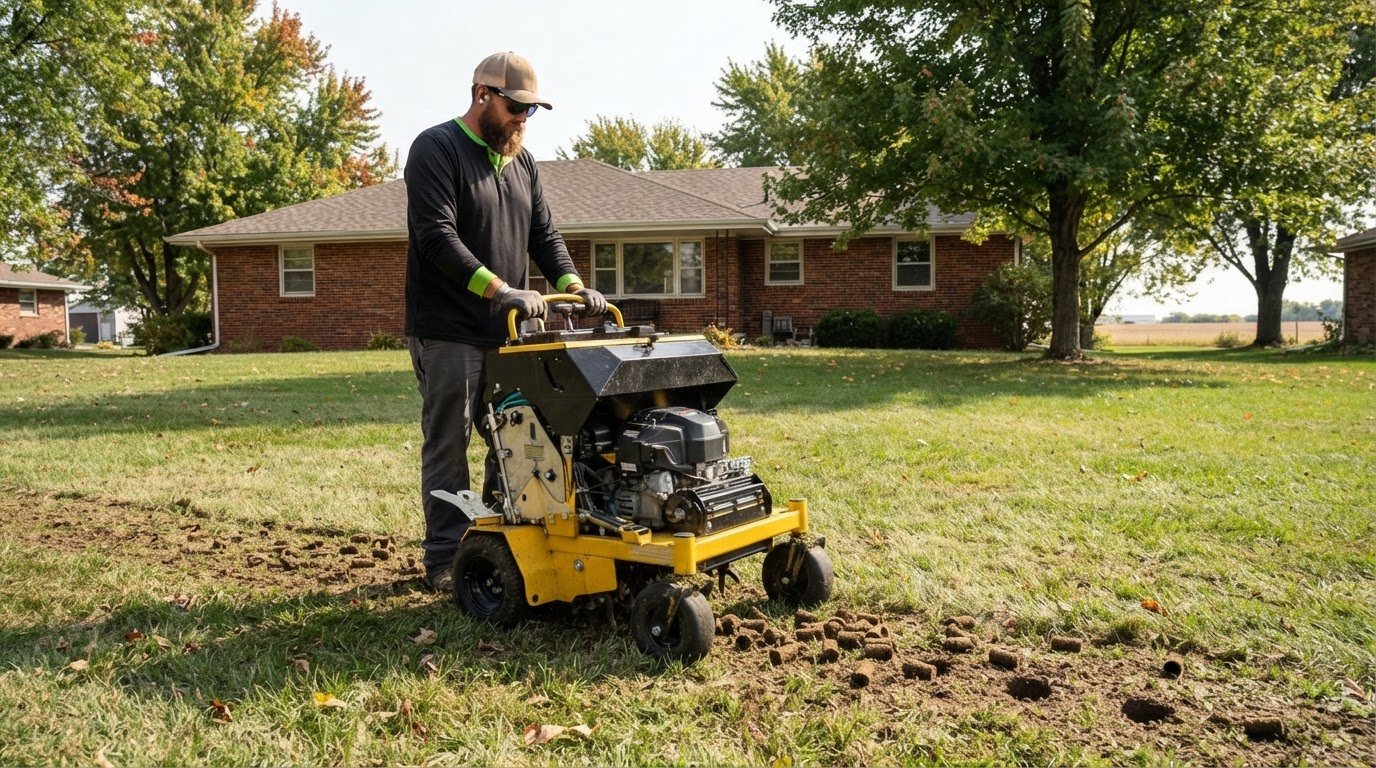
A useful lawn plan starts with the soil beneath the grass. Compacted or clay soil can restrict water movement and root growth, so Lincoln recommends annual fall aeration for lawns with these conditions. Soil type matters: a schedule suited to loose soil may not address compaction. An assessment can identify thin, heavily used, shaded, or slow-draining areas.
Grass type and daily use shape the next decisions. A sunny front yard has different needs from a shaded strip beside the house, and a play area gets more foot traffic than an ornamental patch. These differences affect mowing frequency, watering, and how much wear turf can handle. A high-traffic route may need attention to bare or compacted spots, while a shaded area needs care suited to slower growth.
Compare lawn care plans by checking whether they explain materials, application timing, weed management, and what each visit includes. Read a service guarantee for its terms: what it covers, how long it applies, and what remedy is available. Clear conditions and exclusions make a guarantee easier to assess. This helps distinguish a defined plan from broad claims that a service is “natural” or “eco-friendly.”
Drought-tolerant and native grass options depend on sunlight, soil, drainage, and how the lawn is used. A professional can assess those conditions and recommend suitable candidates, then plan seeding or overseeding and establishment care. Ask which grass type is selected and what care it needs as it establishes, since watering and mowing affect new growth. Choose based on site conditions, not the label alone.
Lincoln offers practical ways to keep yard materials in use. Yard waste can go in approved biodegradable bags, through a waste provider’s pickup, or to the city composting facility. Backyard composting workshops take place each spring and fall through the Lincoln Recycling Office with UNL Extension in Lancaster County. Timely leaf removal also helps keep leaves out of storm drains and local waterways.
Good planning includes the edges of the lawn, too. Grass clippings left on sidewalks or driveways can wash toward storm drains during rain. A mowing plan can include clearing paved surfaces after each visit. For properties where outdoor pests are also a concern, Lincoln pest control services address a separate part of seasonal yard care.
The right options depend on sunlight, soil, drainage, and how the site is used. A professional assessment can identify suitable candidates and help plan seeding or overseeding and the care needed while new grass establishes.
Mowing choices can help make routine lawn care more efficient. The City of Lincoln advises removing no more than 1/3 of the grass leaf surface at a time when mowing, so cutting height and timing matter alongside the schedule. These considerations can help homeowners compare equipment and mowing practices as part of a broader plan.
How professional lawn services manage fertilizer applications in spring and summer
In Lincoln, fertilizer timing matters as much as product choice. The city recommends avoiding fertilizer applications during spring and summer because they promote excessive top growth. A lawn care plan should account for this seasonal guidance rather than treating every visit as an automatic application. The goal is to match care to the lawn’s condition and avoid growth the grass does not need.
Before treatment, assess the turf’s color, density, weed pressure, and recent growth. These observations help determine whether the lawn needs treatment or a different intervention. Thin grass may need attention to its growing conditions, while broadleaf weeds should be identified before choosing an herbicide. A set calendar alone does not explain why a product is needed.
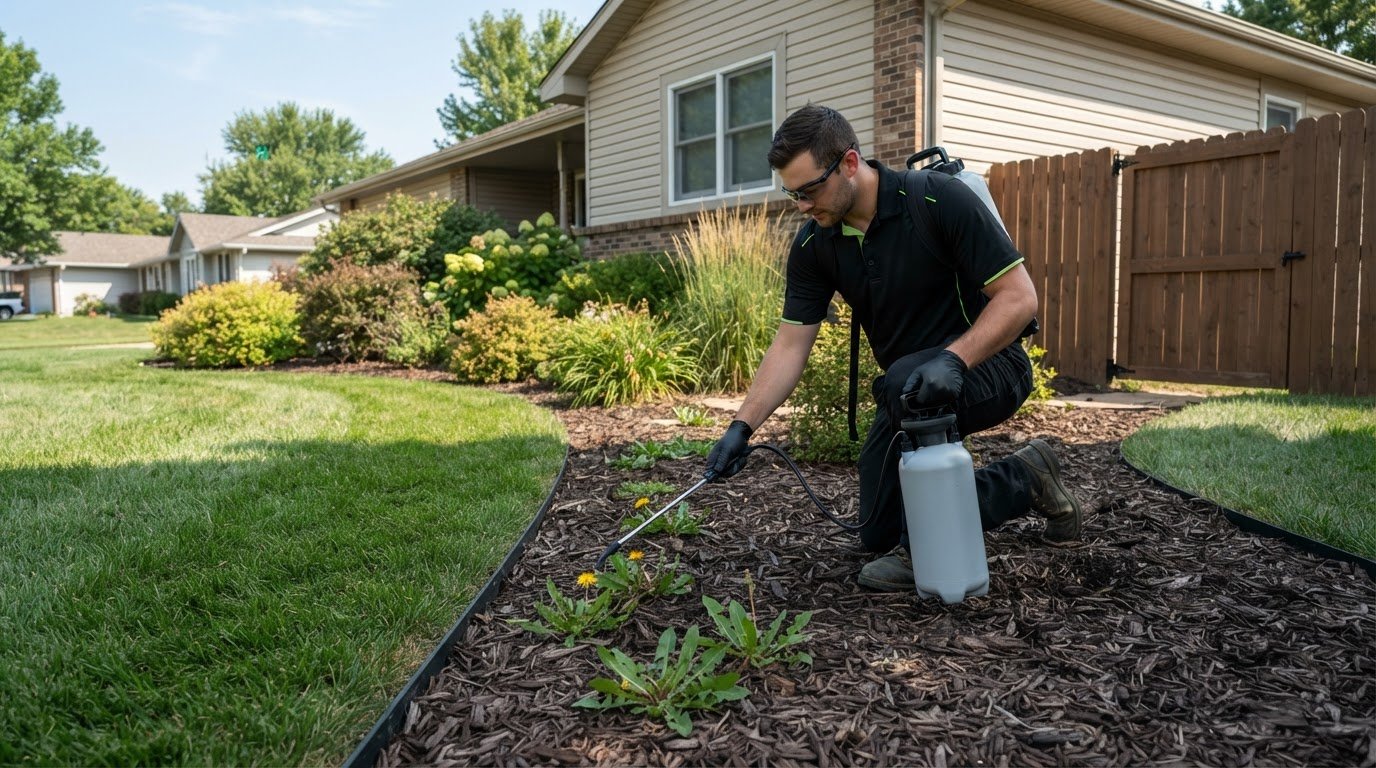
Lincoln advises identifying broadleaf weeds before using herbicide and choosing the least toxic option needed. The city also identifies horticultural vinegar and herbicidal soaps as environmentally friendly options effective on most weeds, while emphasizing spot application because they are non-selective. They can affect desirable plants as well as weeds, so precise targeting matters. Hand-pulling in moist soil is another option; remove as much of the root system as possible to discourage regrowth.
Which Lincoln lawn services use organic or low-toxicity fertilizers and weed control? Look for a professional plan that identifies weeds first, uses the least toxic needed option, and explains whether treatments are targeted or broad. Lincoln’s guidance names horticultural vinegar and herbicidal soaps for spot weed treatment, but it doesn’t identify specific providers or products.
Environmental concerns arise when lawn products are misapplied or used unnecessarily, especially if they reach areas beyond their target. Lincoln’s specific concern about spring and summer fertilizer applications is excessive top growth. Choosing a weed control product before identifying the weed can also mean treating more than necessary. Targeted application keeps treatment focused.
Seasonal care also means coordinating mowing and fertilizing. A lawn service can monitor growth between visits and adjust mowing frequency rather than treating rapid growth as a reason to add fertilizer. A seasonal fertilizing plan makes application timing clear, while mowing maintains a tidy lawn without automatically adding a treatment.
Landscape bed weed control addresses weeds in planted beds separately from turf. That distinction helps keep treatment decisions specific to the area and the plants present. If you’d like a professional to discuss seasonal care for your property, get in touch about your lawn care needs.
Lawn care advice and services for Lincoln homeowners
For Lincoln lawns, mowing choices, watering, and clipping management can reduce unnecessary inputs. The City of Lincoln recommends keeping grass at least 3 inches high and removing no more than one-third of its leaf surface per mowing. That approach avoids cutting too much at once. For example, if a lawn grows unevenly, a mowing plan can account for its faster-growing sections instead of scalping the whole yard.
Grasscycling returns clippings to the turf rather than sending them away. Lincoln’s lawn-care guidance says it can provide the equivalent of one regular fertilizer application, or 1 pound of nitrogen per 1,000 square feet per year. Clippings should be spread across the lawn, not left in thick piles. The City of Lincoln also recommends sweeping clippings from streets, sidewalks, and driveways back onto the lawn, keeping them away from storm drains.
Watering practices matter during dry periods. The City of Lincoln recommends watering thoroughly in the early morning, then waiting until the soil dries before watering again. Check the forecast and skip irrigation when rain is expected soon. Regularly check automatic systems, and consider a soil-moisture sensor to avoid watering when the ground does not need it.
Weed control starts with identification, not a blanket treatment. The City of Lincoln advises identifying broadleaf weeds before using herbicide and choosing the least toxic option needed. Hand-pulling in moist soil is another option; removing as much of the root as possible helps limit regrowth. Horticultural vinegar and herbicidal soaps can affect desirable plants, too, so Lincoln recommends applying them only to targeted weeds.
What sustainable lawn care companies in Lincoln have the best reviews? No single review score captures every homeowner’s experience. Look for specific comments about clear scheduling, careful treatment, and communication about what was applied instead of relying on a star rating alone.
Lincoln’s guidance on fertilizer and stormwater focuses on practical prevention. The City of Lincoln recommends avoiding fertilizer applications during spring and summer because they promote excessive top growth. It also recommends keeping grass clippings off paved areas, where rain can carry them toward storm drains. These are city recommendations, not a claim that every product or application is prohibited.
Do Lincoln lawn services offer native plants, pollinator gardens, or xeriscaping? These are planting and landscape-design topics, distinct from mowing and turf maintenance. Native plants and water-conscious planting can be considered for garden beds, while lawn care focuses on the grass. Lincoln’s guidance also notes that clover can benefit lawns by taking nitrogen from the air and returning it to the soil.
4. Preparing for a lawn service visit
A clear overview of your property helps a lawn professional focus the work. Describe the areas to be maintained, such as the front lawn, backyard, or narrow side strip. Note where turf meets garden beds, pavement, or a neighboring property. Clear boundaries distinguish the lawn from other parts of the landscape.
Share access details before a scheduled visit. Explain which gate leads to the backyard and provide instructions for any locked entrance. If the property has separate lawn sections, identify them by location, such as the east side of the garage. Clear directions reduce confusion and help the crew understand the work area.
Point out features that may be hard to see from the street, such as irrigation heads near a lawn edge, a shallow planting border, or a newly seeded patch. A simple property note can help the professional plan around them. Mention changes since the previous visit, too, such as a new garden bed or moved outdoor furniture.
Useful details to share include:
- Which lawn sections are included and which should remain untouched.
- Where gates, narrow passages, or access restrictions affect entry.
- Whether irrigation components, newly seeded areas, or garden borders need attention.
- What you have noticed, such as a patch that stays damp or grass thinning under a tree.
- Any recent lawn treatments and the approximate area where they were applied.
Specific observations are more useful than a general request for a greener lawn. Describe where weeds are appearing, whether thinning is limited to a shaded corner, or which area gets the most foot traffic. These details help connect visible symptoms with site conditions and distinguish a recurring issue from a change in one section.
Sharing household routines can make arrival and access smoother. If a pet uses a particular part of the yard or a vehicle usually blocks the driveway, include that in your visit notes. Share how you prefer to receive service updates, too. A concise message with the property location, access instructions, and specific concerns is easier to act on than scattered details.
For recurring care, record changes between visits instead of relying on memory. A note such as “thin strip beside the patio” gives a precise reference point. If the same area changes after rain or irrigation, mention the pattern. The professional can assess that spot during service and account for its condition in ongoing lawn care.
Keep service details and property notes together before a visit. Clear boundaries, access instructions, and examples of lawn concerns give the crew a practical starting point. Identifying a backyard gate and a problem patch beside the driveway, for example, helps focus the visit from arrival through completion.
5. What eco-friendly lawn care services are available in Lincoln, Nebraska?
Eco-conscious lawn care can combine routine mowing, soil care, targeted weed management, irrigation attention, and seasonal cleanup. Each service addresses a different need: mowing maintains turf, while aeration can help with compacted soil. A plan works best when it matches the yard’s condition instead of applying every service everywhere.
For steady upkeep, mowing can support healthier turf when cuts are suited to grass growth. An eco-friendly lawn service in Lincoln, Nebraska can also make grasscycling part of the routine, returning clippings to the lawn rather than collecting them in piles. Lincoln’s guidance says grasscycling can provide the equivalent of one regular fertilizer application, or 1 pound of nitrogen per 1,000 square feet per year.
Soil care may include fall aeration when compacted or clay soil affects the lawn. Lincoln recommends annual fall aeration for these conditions. Aeration just before spreading compost can help incorporate it into the lawn. These services address soil needs rather than relying on additional treatments to solve every visible problem.
Targeted weed management begins by identifying the plant. Lincoln advises choosing the least toxic herbicide needed and spot-applying horticultural vinegar or herbicidal soaps, which can affect desirable plants as well as weeds. For weeds that can be pulled, moist soil makes it easier to remove as much of the root system as possible. This focused approach avoids treating areas without a weed problem.
Water-conscious care can include reviewing irrigation patterns and system operation. Lincoln recommends thorough early-morning watering, waiting until the soil is dry before watering again, and skipping irrigation when rain is expected soon. Regular checks of automatic systems can reveal unnecessary watering. A soil-moisture sensor is another option the city recommends considering.
Seasonal cleanup also matters for local stormwater. Lincoln recommends timely leaf removal to help prevent leaves from clogging storm drains and polluting waterways. Yard waste can go in approved biodegradable bags, through a waste provider’s pickup, or to the city composting facility. These choices make cleanup part of a broader property care plan.
Choosing an eco-friendly lawn service in Lincoln, Nebraska starts with prioritizing the work your property needs. You might focus on soil care, precise weed management, irrigation, or consistent mowing. Share the areas that need attention and the outcome you want, so the service plan can stay focused on your lawn. Discuss an eco-conscious lawn care plan and take a clear next step toward a well-kept yard.
Eco-conscious lawn care can return clippings to the lawn through grasscycling, which provides nutrients, and use targeted weed control with the least toxic herbicide needed, such as spot-applied horticultural vinegar or herbicidal soaps.
Yardworx Lawn & Landscape: Weekly Lawn Mowing Services
Yardworx Lawn & Landscape provides weekly lawn mowing for Lincoln properties that need consistent seasonal care. Regular visits help keep grass maintained without leaving each mowing to your schedule. For an eco-conscious routine, mowing can also support grasscycling when clippings are distributed across the lawn rather than left in piles.
If your property needs broader turf care, Yardworx also offers a 6-Step Fertilizing Program and Aeration & Overseeding. The right combination depends on your lawn’s condition and the work you want handled. Weekly mowing is a practical starting point when steady upkeep is your main need.
For help planning lawn care for your property, contact Yardworx Lawn & Landscape.
Make your next lawn-care decision with confidence
The most useful next step is to decide what you want professional care to take off your hands. Consistent lawn maintenance, a healthier-looking yard, or help with a specific trouble spot can each guide the conversation. Choosing an eco-friendly lawn service in Lincoln, Nebraska starts with matching the work to your priorities, not adding treatments without a clear purpose.
Consider what you notice most on your property and what outcome would make the biggest difference to your routine. Sharing those priorities helps shape a practical starting point and keeps care focused on your yard.
Connect with Yardworx Lawn & Landscape to discuss your lawn-care needs. A well-considered plan can make caring for your Lincoln lawn feel simpler, with more time to enjoy the space.
Frequently Asked Questions
What sustainable lawn care companies in Lincoln have the best reviews?
Look for specific customer comments about clear scheduling, careful treatments, and communication about what was applied, rather than relying on a star rating alone.
Which Lincoln lawn services use organic or low-toxicity fertilizers and weed control?
Look for services that identify weeds before treatment, choose the least toxic option needed, and explain whether applications are targeted or broad. Lincoln recommends avoiding fertilizer applications during spring and summer and names horticultural vinegar and herbicidal soaps for targeted weed control.