
How to Get a Green Lawn in Nebraska: The Complete 2026 Fertilization Schedule
August 26, 2026
You step onto your porch on a Saturday morning in July, hoping to admire a lush landscape, but instead, you're greeted by brittle brown patches and a stubborn spread of crabgrass. It's exhausting to battle the intense heat while trying to decode conflicting advice on the best lawn fertilization schedule Nebraska homeowners should follow. Most neighbors feel that same frustration when their hard work doesn't result in the vibrant, healthy carpet of grass they expected for their families.
The good news is that achieving a beautiful yard doesn't have to be a guessing game. We've mapped out the exact timing for a 6-step program designed specifically for our local soil and climate. This guide provides the steps needed to transform your yard into a thick, weed-free sanctuary that stays resilient through every seasonal shift. You'll learn how to outsmart invasive weeds like Creeping Charlie and ensure your lawn remains a soft, safe place for your kids and pets to play, giving you back the leisure time you deserve.
Understanding the Nebraska "Transition Zone" Challenge
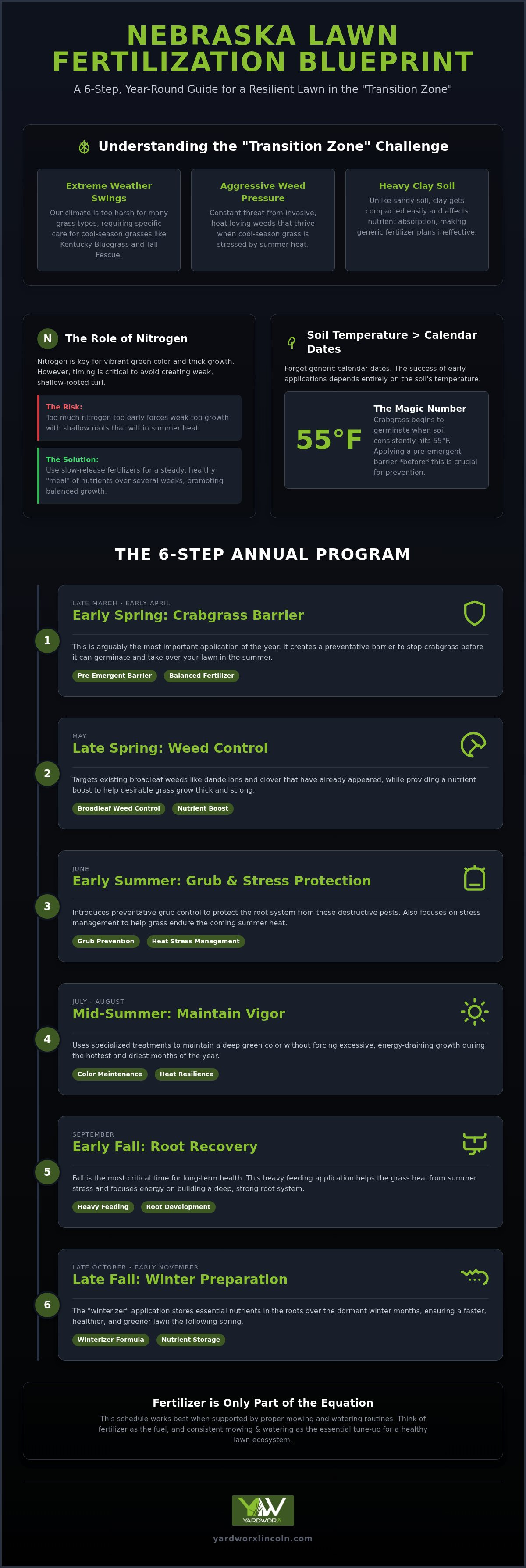
Nebraska sits in what experts call the "Transition Zone." This means our weather is often too harsh for southern grasses and too intense for many northern varieties. We primarily grow cool-season grasses like Kentucky Bluegrass and Tall Fescue, but we face constant pressure from aggressive, heat-loving weeds. Because our climate swings from freezing winters to sweltering summers, a generic "one size fits all" approach rarely works. Understanding the fundamentals of Lawn care in this specific region is the first step toward a healthier property.
Many homeowners pick up a bag of fertilizer at a big-box store and follow the dates printed on the back. These schedules often fail in Lincoln because they don't account for our heavy clay soil. Clay holds onto nutrients differently than sandy soil, and it can become compacted easily. A professional lawn fertilization schedule Nebraska residents trust focuses on building a foundation that thrives despite these local challenges. By timing applications to match the biological needs of the grass, you create a lawn that's resilient enough to stay green even when the thermometer climbs.
The Role of Nitrogen in Nebraska Turf
Nitrogen is the primary nutrient that gives your grass its deep, vibrant green color and encourages thick growth. It acts as the engine for your lawn's health. However, there's a significant risk in applying too much nitrogen too early in the spring. This "over-greening" forces the grass to focus all its energy on top growth before the root system is strong enough to support it. When the July heat hits, that lush green grass often wilts because its roots are shallow. We prefer using slow-release fertilizers. These products break down gradually, providing a steady "meal" for your lawn over several weeks rather than a sudden, overwhelming surge.
Soil Temperature vs. Calendar Dates
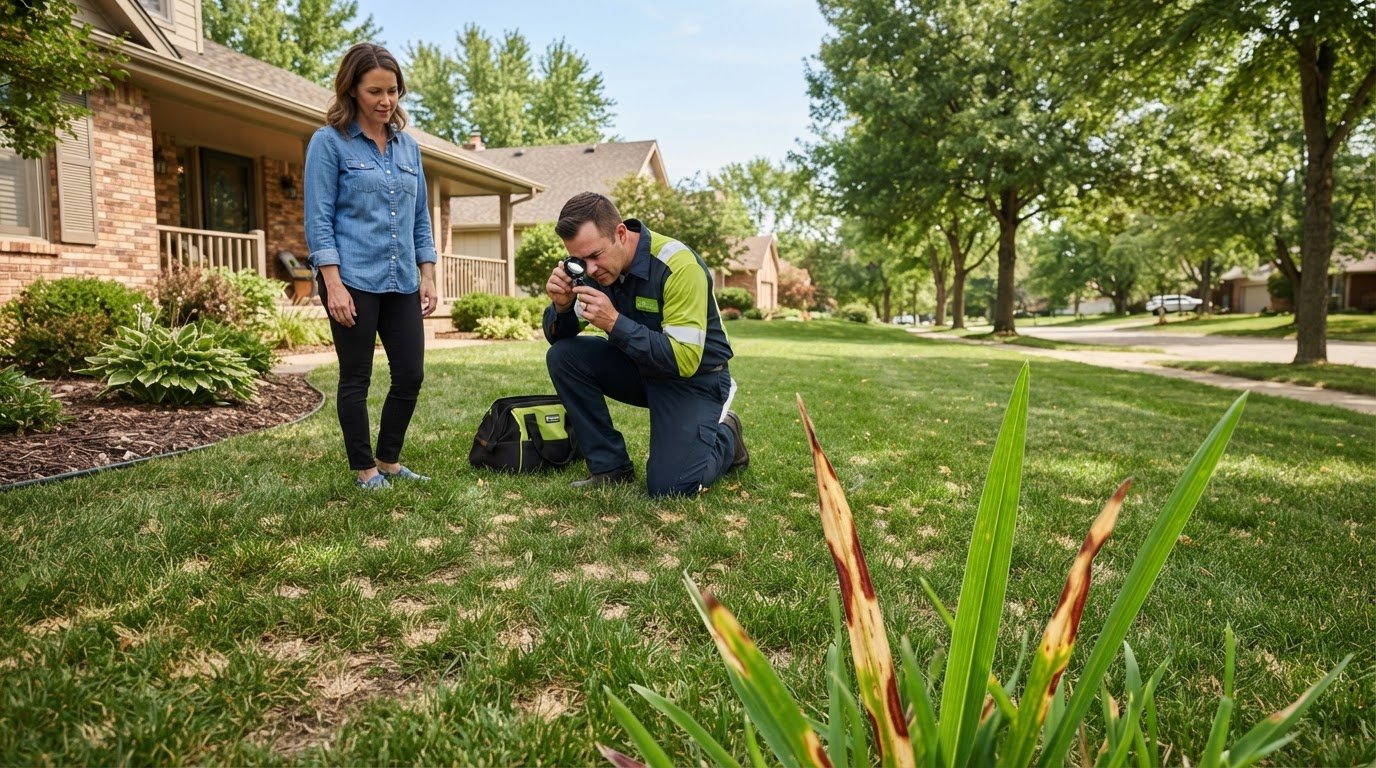
For years, many people believed that Tax Day, April 15, was the perfect time to start spring applications. In reality, the calendar is a poor guide for Nebraska weather. The success of your first application depends entirely on soil temperature. Weeds like crabgrass begin to germinate when the soil consistently hits 55 degrees. If you apply your pre-emergent too late, the weeds have already taken hold. If you're unsure about the timing, Yardworx lawn care services can help by monitoring local conditions daily. We use soil thermometers to ensure every treatment is applied at the precise moment it will be most effective, removing the guesswork for you.
The Ultimate 6-Step Lawn Fertilization Schedule for Nebraska
A truly vibrant yard isn't the result of a single afternoon of work. It comes from following a consistent, science-based lawn fertilization schedule Nebraska homeowners can trust to handle our local weather swings. Our signature 6-step program creates a predictable rhythm for your grass. It ensures your lawn receives the specific nutrients it needs exactly when it's ready to absorb them, rather than overwhelming it with chemicals all at once.
Spring: The Battle Against Crabgrass
The first application in late March or early April is arguably the most important of the year. This step focuses on applying a pre-emergent barrier and a balanced fertilizer. There is a very narrow window of opportunity to stop crabgrass before it sprouts. Once those seeds germinate, they're much harder to control. Step two follows in May, targeting broadleaf weeds like dandelions and clover while providing a nutrient boost to keep the grass thick. Using professional fertilizer programs ensures these applications are timed perfectly with soil temperatures, preventing summer headaches before they start.
Summer: Protection and Resilience
As we move into June, step three introduces grub protection. These pests can destroy a root system in weeks if left unchecked. We also focus on stress management to help the grass survive the upcoming heat. During July and August, step four provides mid-summer color maintenance. We use specialized treatments that maintain that deep green look without forcing excessive growth that would drain the plant's energy during the hottest months. This careful balance keeps your property looking sharp while your neighbors' yards might begin to fade.
Fall: Building the Root System
Many people think lawn care ends when the kids go back to school, but fall is actually the most critical time for long-term health. The University of Nebraska-Lincoln Cool Season Lawn Calendar emphasizes that September is the best time for heavy feeding. Step five focuses on root recovery, helping the grass heal from summer stress. Step six is the "winterizer" applied in late October or early November. This application stores nutrients in the roots, ensuring a faster green-up next spring. This is also the ideal time to consult our Aeration and Overseeding guide to fill in any thin spots. If you'd like to see how these steps can transform your property, you can reach out for a custom quote today.
Mowing and Watering: The Support System for Fertilizer
Applying nutrients is only one part of the equation. To truly see the benefits of your lawn fertilization schedule Nebraska , you must maintain a proper mowing and watering routine. Think of fertilizer as the fuel and mowing as the tune-up. Without the right support system, even the best products won't reach their full potential. When these elements work together, they create a self-sustaining ecosystem that keeps your yard looking professionally manicured year-round.
One of the most common mistakes homeowners make is cutting the grass too short. We follow the "One-Third Rule," which means you should never remove more than one-third of the grass blade at a single time. Cutting deeper than that shocks the plant and forces it to spend its energy recovering rather than growing deep roots. During the peak of Nebraska’s July heat, we recommend adjusting your mower height to between 3.5 and 4 inches. This extra height shades the soil, reducing evaporation and protecting the delicate root crowns from the sun. Our weekly mowing services ensure your lawn stays at this ideal height, which significantly improves nutrient uptake and maintains that clean, lush look.
Irrigation Best Practices for Lincoln
Watering correctly is just as vital as the fertilizer itself. We encourage deep and infrequent watering rather than light daily misting. When you water deeply, you encourage the roots to grow further into the soil to find moisture, making the lawn much more drought-resistant. The best time to water is early in the morning, ideally before 10:00 AM. This allows the grass blades to dry during the day, which prevents the moisture from sitting overnight and inviting fungal diseases. To keep your system running efficiently, regular irrigation maintenance is essential. It ensures even coverage so you don't end up with soggy spots or dry, brown patches.
How Grass Clippings Act as Natural Fertilizer
Don't be too quick to bag those clippings. Mulching your grass back into the lawn acts as a natural, free supplement to your fertilization program. These clippings break down quickly and return vital organic matter and nitrogen back to the soil. In fact, mulching can reduce your lawn's total nitrogen needs by up to 25% over the course of a season. You should only consider bagging if the lawn has become overgrown or if you're dealing with a specific disease outbreak. For a healthy lawn, leaving the clippings is a simple way to boost vitality while keeping your property tidy and well-nourished.
Troubleshooting Common Nebraska Lawn Weeds and Pests
Even with a consistent lawn fertilization schedule Nebraska homeowners follow, nature occasionally finds a way to test your turf's resilience. The "Big Three" invaders in our region are crabgrass, dandelions, and the notoriously stubborn Creeping Charlie. While a single dandelion might seem like a small nuisance, these pests often signal that your lawn's defenses are thinning. Identifying these issues early allows you to intervene before a few weeds turn into a full-scale takeover of your property.
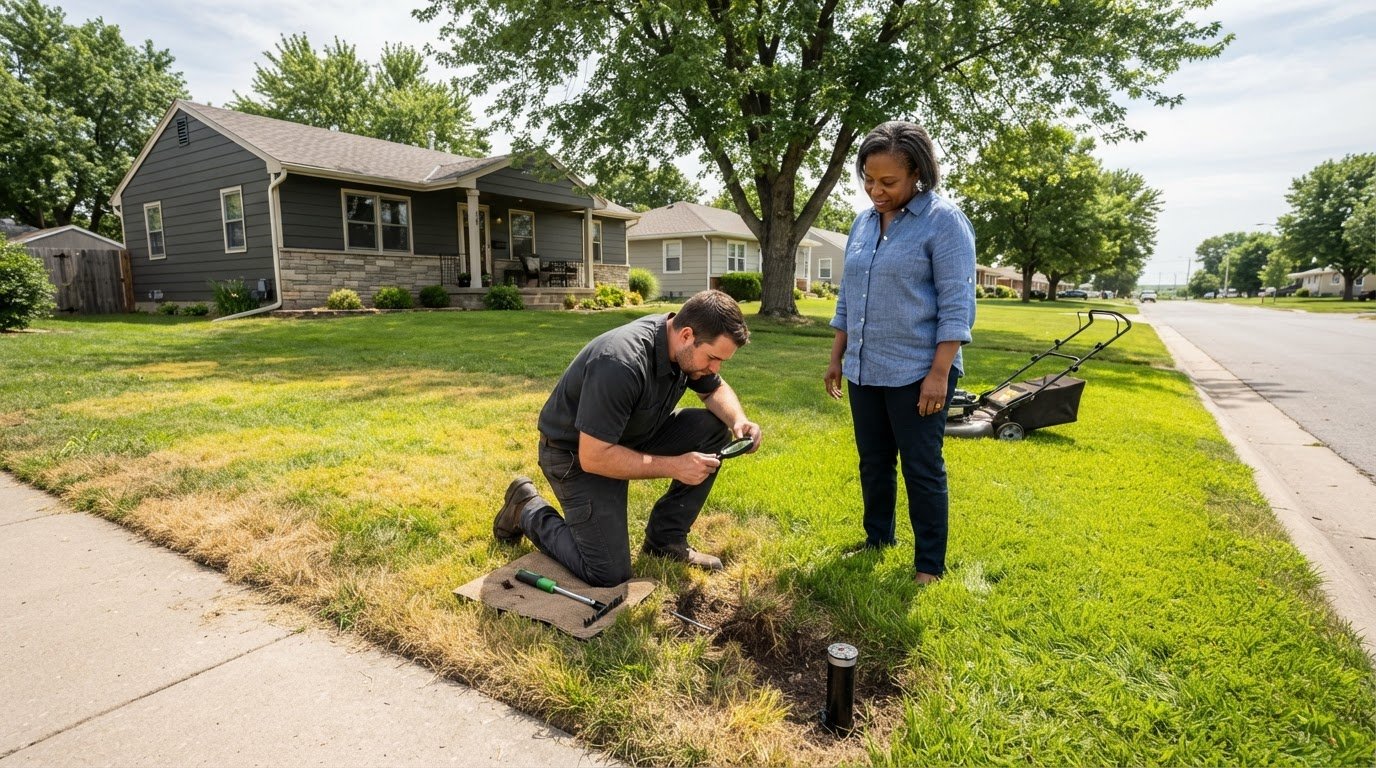
White grubs pose a different kind of threat because they work entirely underground. These pests are the larvae of June bugs, and they spend their life cycle eating the roots of your grass. You'll often spot the damage as irregular brown patches that appear in late summer. If you can pull up a section of turf as easily as a piece of carpet, grubs are likely the culprit. While DIY solutions exist, knowing when to transition to professional pest control can save you from the high cost of replacing dead sod.
Winning the War on Creeping Charlie
Creeping Charlie is a low-growing perennial that thrives in the shaded, moist areas common in Lincoln neighborhoods. It's particularly persistent because it spreads through aggressive runners that root at every joint. Many people fail to control it because they rely on standard spring weed-and-feed products. This weed is actually most vulnerable in the fall. During late September and October, the plant begins pulling nutrients down into its root system for winter survival. This is the precise "window of opportunity" to apply a specialized herbicide that will travel deep into the roots and eliminate the plant for good. Once cleared, thickening your lawn through overseeding prevents the weed from returning.
Grub Control and Prevention
Prevention is much more effective than trying to cure a grub infestation after the damage is visible. Our 6-step program includes a preventative application in June, which is timed to stop the larvae before they begin their feeding frenzy. This proactive approach protects the foundation of your lawn while the grass is already stressed by the summer heat. If you notice birds or skunks digging in your yard, they're likely hunting for these larvae. Taking action early ensures your root system remains strong and your grass stays firmly anchored. If you're seeing signs of damage or want to protect your investment, you can contact our local team for a professional assessment.
The Professional Edge: Why Lincoln Homeowners Choose Yardworx
Choosing a local partner for your property care means more than just hiring a service; it's about building a relationship with a team that truly understands our community. At Yardworx, we don't use generic products shipped from halfway across the country. We utilize fertilizers specifically blended for the unique soil profiles found right here in Lincoln. Following a professional lawn fertilization schedule Nebraska residents trust ensures your grass receives the exact nutrient ratios needed to thrive in our heavy clay. By integrating our 6-step program with professional landscape maintenance, we provide a comprehensive solution that keeps every inch of your outdoor space looking its best.
A Hands-Off Experience for Busy Owners
Our approach is built around the idea of being a "trusted caretaker" for your property. We manage the logistics so you don't have to worry about the details, tracking local weather patterns and soil temperatures to ensure every application is timed perfectly. This hands-off experience is designed to give you back your weekends, turning yard work into family time. We take pride in removing the daily burdens of property upkeep through:
- Weather Monitoring: We track local patterns to time every application for maximum effectiveness.
- Safe Storage: You won't need to store bulky, specialized chemicals in your garage or shed.
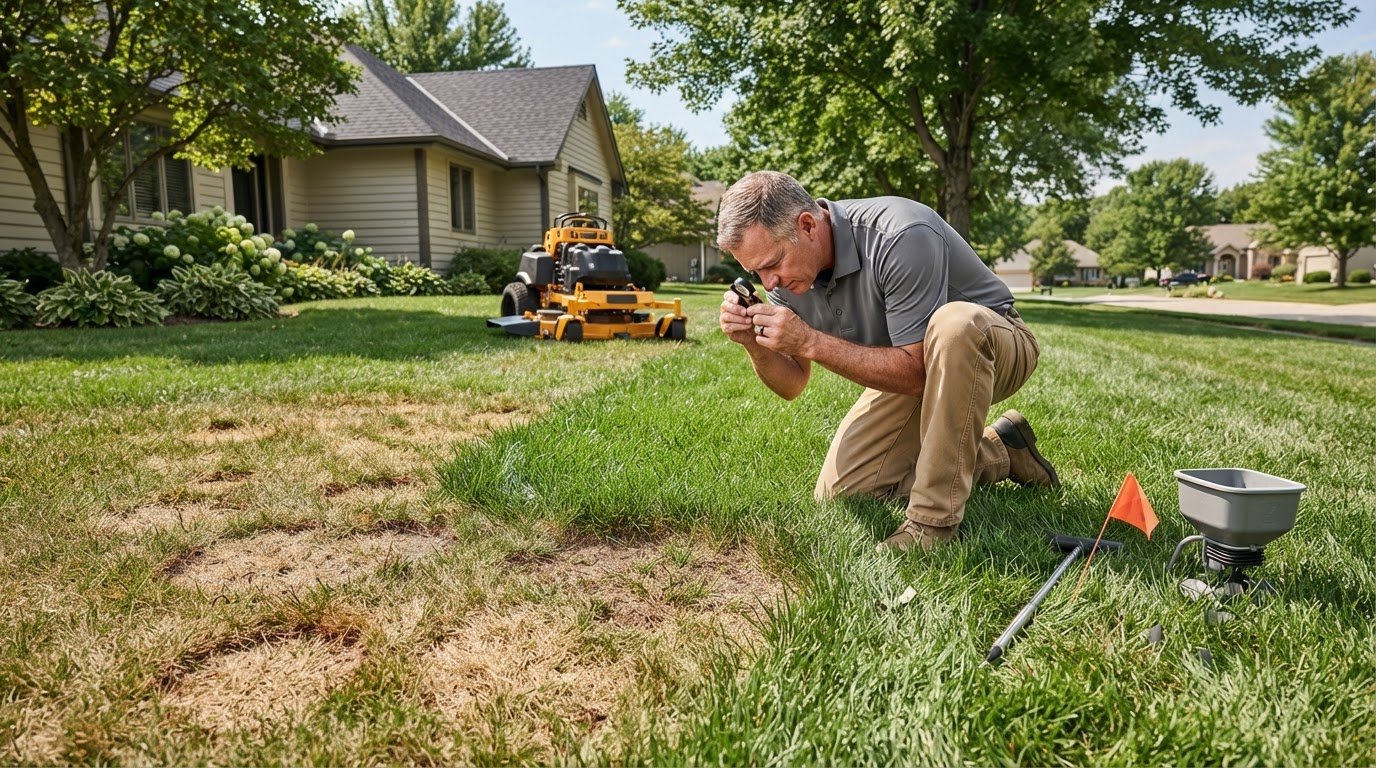
- Precision Equipment: Our team uses professional-grade spreaders to ensure even coverage across your entire lawn.
This steady, methodical rhythm of care provides stability and beauty for your home. It ensures your property remains a source of pride and a safe, vibrant place for your family to gather without the stress of managing the work yourself.
Get Started with Your 2026 Green Lawn Plan
As we look toward the 2026 season, now is the perfect time to secure your spot in our schedule. The transition from winter dormancy to that first spring green-up happens quickly, and being prepared ensures your lawn gets the early head start it needs to stay ahead of weeds. Our local crew takes pride in thoroughness and attention to detail, treating every yard as if it were our own. We invite you to experience the peace of mind that comes with a professionally managed landscape. To discover how we can transform your outdoor space into a lush, vibrant sanctuary, contact Yardworx today for a personalized quote tailored to your property's specific needs.
Enjoy the Lush Lawn You Deserve in 2026
Achieving a vibrant, healthy yard in Lincoln doesn't have to be a source of seasonal stress. By focusing on the biological needs of your turf, such as monitoring soil temperatures for early spring applications and maintaining a higher mowing height during the July heat, you set the foundation for success. Implementing a consistent lawn fertilization schedule Nebraska homeowners can count on ensures your property remains a thick, weed-free sanctuary for family and friends throughout the entire year.
You don't have to manage these complex logistics alone. Our locally owned and operated team is here to handle every detail of our professional 6-step fertilization program, providing the neighborly, reliable service you expect. We take pride in being the trusted caretaker of your property so you can simply relax and enjoy the view. It's time to take the guesswork out of your yard work and embrace a truly hands-off approach to property care. Get Your Free Lincoln Lawn Care Quote from Yardworx and let us help you grow the greenest lawn on the block this coming season.
Frequently Asked Questions
What is the best month to fertilize my lawn in Nebraska?
The best month to start your lawn fertilization schedule Nebraska is usually late March or early April. This timing aligns with soil temperatures hitting 55 degrees, which is when crabgrass begins to germinate. Following this with applications in May, June, July, September, and November ensures your grass receives nutrients throughout the growing season. Starting early prevents weeds from taking hold before your grass has a chance to wake up from winter dormancy.
How often should I water my lawn after applying fertilizer?
You should water your lawn with about a quarter to a half-inch of water shortly after a granular fertilizer application. This moisture helps move the nutrients off the grass blades and down into the soil where the roots can absorb them. If we've applied a liquid weed control, you'll need to wait at least 24 hours before turning on your sprinklers. This ensures the product has enough time to bond with the weeds effectively.
Can I apply grass seed and fertilizer at the same time?
Yes, you can apply fertilizer and seed together, but you must use a specific "starter" fertilizer. Most standard spring fertilizers contain pre-emergent weed control, which prevents all seeds from germinating, including your new grass seed. If you're planning to overseed, it's best to wait until the fall. September is the ideal time in Lincoln to combine aeration and overseeding with a nutrient boost to help new seedlings establish strong roots before the winter freeze.
Why is my lawn still brown even though I fertilized it?
Fertilizer provides nutrients, but it can't solve every issue. If your lawn remains brown, it might be suffering from heat-induced dormancy, fungal disease, or white grub damage. Compacted clay soil often prevents water and nutrients from reaching the roots, making the grass appear unhealthy even after treatment. We recommend checking for grubs or considering core aeration to break up the soil, allowing your fertilization program to actually reach the root zone where it is needed most.
Is the Yardworx 6-step program safe for my dogs and kids?
Your family's safety is our top priority. Our 6-step program is designed to be safe for children and pets once the application has completely dried or been watered into the soil. For liquid treatments, we typically recommend staying off the grass for one to two hours, depending on the humidity and wind. Once the product is dry, it's perfectly safe for your dogs to run and your kids to play on a healthy, vibrant lawn.
What happens if it rains right after a fertilizer application?
Light rain is actually beneficial after a granular fertilizer application because it helps activate the nutrients. It saves you the trouble of running your irrigation system. However, heavy downpours can wash away the product before it settles into the soil. If we applied a liquid weed control and it rains within an hour, the effectiveness might be reduced. In those cases, our team monitors the weather closely and will return to re-treat the area if needed.
Do I really need a professional for lawn fertilization in Lincoln?
While you can certainly DIY, a professional lawn fertilization schedule Nebraska service removes the guesswork and the labor. We use commercial-grade, slow-release products that aren't typically available at big-box stores. Our team also handles the storage of chemicals and the maintenance of calibrated equipment. This professional touch ensures even coverage and prevents common mistakes like "fertilizer burn," giving you a beautiful yard while freeing up your weekends for things you actually enjoy doing.
How much does a lawn fertilization schedule cost in Nebraska?
The total cost for a professional program varies based on the size of your lawn and the current health of your soil. Investing in a scheduled service often saves you money in the long run by preventing expensive weed infestations and lawn diseases. You also avoid the upfront cost of buying professional-grade spreaders and storing chemicals. We focus on providing a fair value that reflects our thoroughness and the high-quality, slow-release nutrients we use.