
If “how to make your grass thicker and fuller Nebraska” is the question on your mind, start by finding out why the turf is thin. Compacted soil, shade, uneven watering, weeds, and heavy foot traffic can all call for different fixes. Seeding before you identify the cause may leave the same problem in place.
Before overseeding a patchy lawn, look at the grass, soil, and growing conditions. Check whether thinning is widespread or limited to particular spots, and note what those areas have in common. Then choose care that fits the cause and the season.
This guide covers common reasons Nebraska lawns thin out and how to decide whether overseeding, aeration, or another adjustment makes sense. Timing matters: University of Nebraska-Lincoln Extension identifies August 15 to September 15 as the best seeding window for cool-season lawns. A practical sequence for repair and ongoing care can help you avoid repeating steps that miss the real issue.
How to Make Grass Thicker and Fuller in Nebraska: Diagnose the Thin Spots First
Start by looking across the lawn. Is the grass thin almost everywhere, are there a few distinct bare patches, or does it fade mainly beneath trees? Those patterns help you decide what to investigate before treating every weak area the same way. For a search like “how to make your grass thicker and fuller Nebraska,” diagnosis comes before an automatic round of seeding.
Lawn density depends on healthy grass growth, suitable site conditions, and consistent care. Compacted soil can restrict roots, while repeated foot traffic can wear down turf and press soil together. Shade may leave grass struggling beneath trees. Uneven irrigation or runoff can create areas that are too dry or stay wet. Weeds and mowing too short may also weaken a lawn over time.
What do thin grass, bare patches, and weak growth tell you?
Use the shape and location of thin areas as clues, not as a final diagnosis. Broad, even thinning is a reason to review overall care and soil conditions. A small bare patch may reflect localized stress, while thinning beneath a tree calls for a closer look at shade and moisture. Note where water flows, whether sprinklers reach the area, and where people regularly walk.
Keep a simple record of what you observe, including when the problem appears and whether it changes after watering or mowing. Visual clues can narrow down the possibilities, but they can’t confirm every cause. If poor growth persists or the soil seems unusual, a soil test can help identify conditions such as pH that may affect grass growth.
Which Nebraska lawn conditions should you assess?
Nebraska’s weather and seasonal shifts affect when grass can recover and when new seed has a better chance to establish. Identify your grass type before choosing seed or planning renovation, since recommendations differ by region and turf type. For Eastern Nebraska, University of Nebraska-Lincoln Extension lists tall fescue, Kentucky bluegrass, buffalograss, and a tall fescue-Kentucky bluegrass blend among suitable options. Check current Extension guidance for recommendations that fit your lawn and the season.
Compare the lawn’s needs with the site: sunlight, soil condition, water coverage, and traffic. Cool-season grass seeding is generally best timed for August 15 through September 15 in Nebraska, according to the research cited for this guide. The basics of lawn care offer general background, but local conditions should shape your next step.
Once you’ve identified the likely cause, decide whether the area needs a change in routine, further testing, or a targeted treatment such as aeration and overseeding. Matching the response to what you observe can help you avoid repeating work that doesn’t solve the problem.
Choose a Nebraska Lawn-Thickening Fix: Overseed, Repair Patches, or Address Soil
Once you’ve narrowed down what may be weakening the turf, match the repair to the scale of the problem. A practical answer to “how to make your grass thicker and fuller Nebraska” depends on whether thinning is widespread, limited to a few spots, or tied to soil or site conditions that seed alone won’t solve.
| Option | Best fit | Check first |
|---|---|---|
| Overseeding | Thin coverage across a larger portion of an existing lawn | Grass type, seed suitability, timing, and whether growing conditions support establishment |
| Spot repair | One or a few distinct bare areas | Why each spot is bare, such as traffic, shade, or water flow |
| Aeration | Compacted soil that makes it difficult for air, water, and roots to move through | Whether compaction is present; aeration can be paired with overseeding when appropriate |
| Correcting site conditions | Weak turf linked to poor light, drainage, irrigation coverage, or repeated wear | Whether the cause can be improved before putting down seed |
The best repair depends on the scale of thinning and its underlying cause. Overseeding adds seed into existing turf, so it may suit broad thinning better than scattered bare spots. Spot repair is more targeted, but new grass may struggle if the same stress remains. If the lawn needs both seed and help with compaction, consider aeration and overseeding as a combined approach.
When is overseeding a better fit than repairing individual patches?
Consider overseeding when established grass remains but coverage is sparse across a wide area. Repairing a few bare spots won’t address thin coverage throughout the yard. When choosing seed, consider the grass already growing, how much sun the area receives, and how the space is used. For example, an area with frequent play or foot traffic may need a different plan from a lightly used section. A mix suited to sunny turf may not be right for a shaded area.
When should you address soil, shade, or drainage before seeding?
Where possible, address what’s limiting growth before seeding. Compacted ground can make establishment difficult, heavy shade can restrict grass growth, and persistent wet or dry spots may signal a drainage or irrigation issue. Don’t add lime or fertilizer based on guesswork. A soil test can guide decisions about pH and nutrients. University of Nebraska-Lincoln Extension’s Nebraska-specific lawn care guides can help you review local recommendations before planning a repair.
Lincoln-area lawns don’t all respond the same way, so a measured plan is more useful than applying one fix everywhere. Yardworx provides aeration and overseeding to help address compacted soil and thin turf. Talk with Yardworx about your lawn to discuss a practical next step.
How to Thicken Nebraska Grass: Prep to New Growth
With the likely cause in mind, follow a steady sequence rather than scattering seed and hoping it takes. Preparation gives new grass a better chance to establish, while careful follow-up helps you spot problems early.
- Identify the grass and likely cause. Confirm what’s already growing and whether the thin area reflects compaction, shade, traffic, or another issue. This helps you choose seed and decide whether the site is ready.
- Prepare the area. Clear leaves, clippings, and other debris. Address the obstacle you identified, such as repeated foot traffic or poor irrigation coverage.
- Seed at the right time. Nebraska timing varies with grass type and current conditions. For cool-season lawns, the research cited for this guide identifies August 15 through September 15 as the preferred seeding window. Check current University of Nebraska-Lincoln Extension guidance before scheduling, especially if your lawn has a different grass type.
- Water with care. Follow the seed-label directions and locally verified watering advice. The aim is to keep the seedbed appropriately moist, not to follow an unverified one-size-fits-all schedule.
- Monitor and adjust. Watch for drying, pooling water, uneven growth, or renewed wear. Keep people and pets off newly seeded areas as much as practical, and delay mowing until the new grass is established enough to handle it.
How should you prepare the lawn before adding seed?
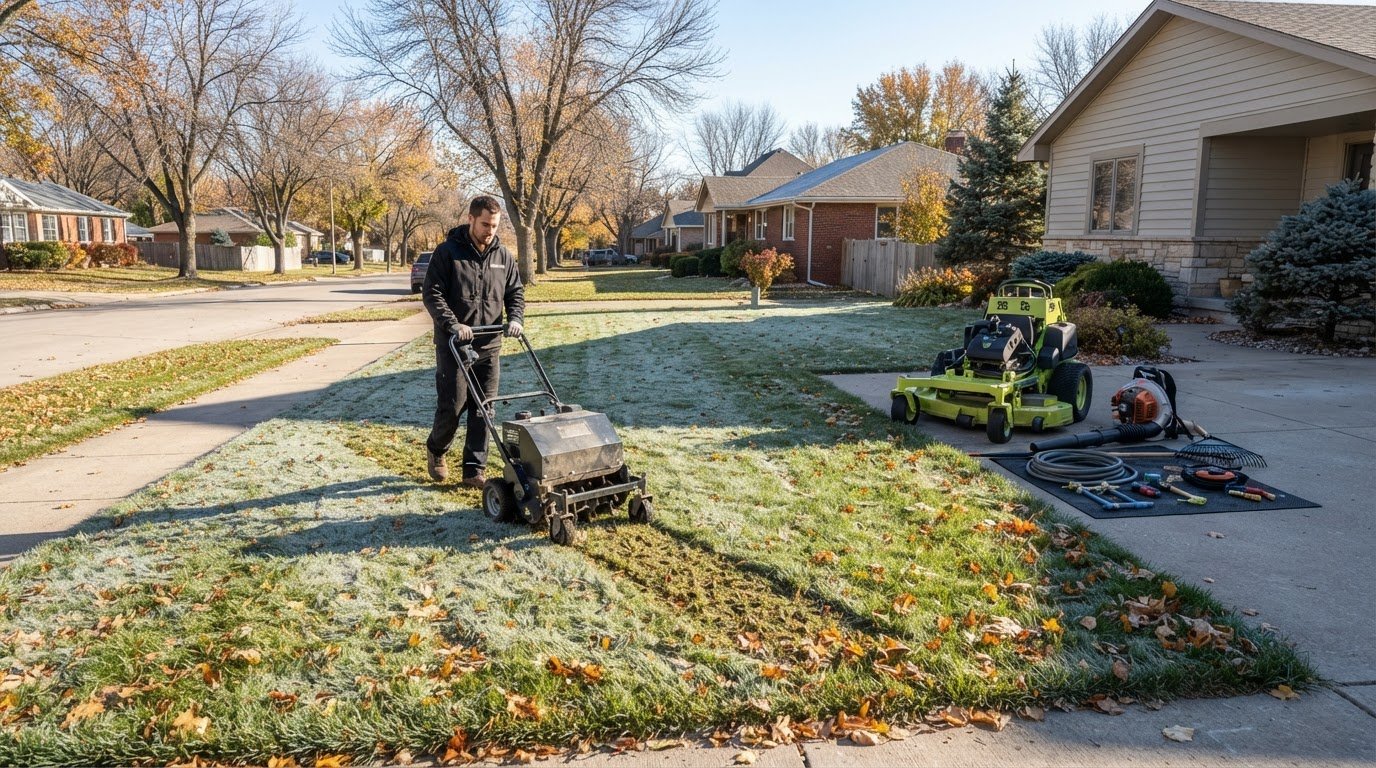
Make the surface ready first. Remove debris that could block seed from reaching the soil, then focus on the diagnosed obstacle. Aeration may help where compacted soil is limiting growth, but it won’t solve deep shade or fix poor drainage on its own. If the area needs both soil preparation and new seed, Yardworx provides aeration and overseeding as a practical combined option.
A soil test can help guide decisions before you add amendments or change nutrient inputs. The University of Nebraska-Lincoln Extension resource on understanding soil tests explains how to interpret results, so you can base adjustments on evidence rather than guesswork.
How do you support new grass after seeding?
Use the seed label and local guidance to shape watering, then adapt as weather changes. A windy, dry stretch may call for closer observation, while heavy rain can leave seed displaced or soil too wet. Keep foot traffic light and avoid mowing until seedlings can tolerate it. Note what’s growing and where; that record can help you distinguish slow establishment from an ongoing site problem.
That measured process is a practical answer to “how to make your grass thicker and fuller Nebraska”: prepare for the cause, seed at a suitable time, and give new growth consistent attention.
Will Seed or Fertilizer Alone Make Grass Fuller? Avoid These Nebraska Lawn Mistakes
Seed and fertilizer can support a lawn, but neither reliably fixes every cause of thin grass. New seed may struggle if it’s planted at the wrong time for the grass type or if shade, compacted soil, or poor moisture conditions remain unchanged. Fertilizer won’t correct those site problems either. To understand how to make your grass thicker and fuller Nebraska, treat seed and nutrients as parts of a plan, not substitutes for addressing what’s holding the turf back.
Why can adding seed fail to fill in a Nebraska lawn?
Timing and follow-up affect establishment, so use current Nebraska guidance for your grass type and conditions instead of treating every open spot as ready for seed. Also distinguish between seed that fails to establish and continuing stress that keeps damaging both new and existing grass. For example, seed in a shaded area may struggle, while repeated wear can thin seedlings before they take hold. The result depends on the site and care after seeding.
Fertilizer has a role when the lawn needs nutrients, but more isn’t automatically better. Base changes on a diagnosed need, such as soil-test results, and follow a planned approach. Yardworx’s lawn fertilizing program can help organize applications across the season.
How can mowing, watering, and weeds affect lawn density?
Small routine problems can work against new growth. Overwatering may leave soil persistently wet, while inadequate or uneven irrigation can leave parts of the lawn dry. Check sprinkler coverage across the yard instead of assuming every area receives the same amount. Heavy foot traffic can wear down seedlings, so limit use of newly seeded sections while they establish.
Keep mowing consistent and appropriate for the grass, and avoid cutting so much that the lawn is stressed. Weeds can compete with turf for space and resources, so identify and manage them as part of the overall plan. If regular mowing is difficult to keep on schedule, Yardworx offers weekly lawn mowing to support routine maintenance.
After each adjustment, look for patterns: whether growth improves, water reaches weak areas, or thinning continues. If you’d like help building a treatment plan around your lawn’s needs, contact Yardworx about lawn care.
Keep a Fuller Lawn in Lincoln with Consistent Care and the Right Help
New grass needs attention beyond the day it’s seeded. A simple check-in routine helps you catch changes early and respond before a small weak area becomes a recurring problem. Let grass type and seasonal conditions guide ongoing care, and adjust your approach as the weather and lawn change.
- Check coverage: Look for areas that remain thin or where seedlings aren’t filling in.
- Review watering: Check that irrigation reaches the whole lawn, and adjust for rainfall and changing conditions.
- Keep mowing consistent: Follow care guidance suited to your grass, and avoid stressing new growth.
- Track repeat bare spots: If the same area thins again, revisit the original cause rather than repeating the same repair.
Repeated trouble is useful information. A bare patch that returns may point to ongoing traffic, shade, or moisture conditions that still need attention. The answer to how to make your grass thicker and fuller Nebraska isn’t one treatment applied on repeat. It’s continued care matched to what the lawn needs.
How can you protect new grass through the growing season?
Keep observing the lawn as it grows. Seedlings may respond differently as temperatures, rainfall, and sunlight shift, so use guidance suited to your grass type and the current season. Manage foot traffic while new grass establishes, and use mowing practices appropriate for the turf. If thinning returns, reassess the conditions at that spot before deciding whether another treatment is appropriate.
When can professional lawn care simplify the work?
Each service has a different role. Aeration can address compacted soil; overseeding adds seed to existing turf; fertilizing supports planned nutrient care; and mowing keeps routine maintenance on track. These services aren’t interchangeable, and the right combination depends on the lawn’s condition. Yardworx provides lawn care in Lincoln, including aeration, overseeding, fertilizing, and weekly mowing, to make ongoing maintenance easier to manage.
With a clear plan and regular attention, you can spend less time guessing which task comes next. Talk with Yardworx about your lawn and find a practical starting point for its care.
Build a Fuller Nebraska Lawn with a Plan That Lasts
A healthier, denser lawn starts with the right fix for the right cause. Diagnose thin areas before choosing seed or treatment, prepare the site so new grass has a fair chance to establish, and keep up with care suited to your grass and Nebraska’s changing seasons. That’s a more dependable approach to how to make your grass thicker and fuller Nebraska than repeating the same treatment without checking what’s holding the lawn back.
Yardworx Lawn & Landscape provides lawn care in Lincoln, including aeration and overseeding, a 6-step fertilizing program, and weekly mowing. Each service supports a different part of ongoing turf care. A well-organized plan can also make lawn maintenance easier to manage.
For help choosing a practical starting point for your lawn, talk with Yardworx about a fuller, healthier lawn. With thoughtful care focused on the cause of thin spots, you can work toward a lawn that looks more even and is easier to enjoy.
Frequently Asked Questions
How can I make my grass thicker and fuller in Nebraska?
Start by identifying why the grass is thin, then choose a fix that addresses the cause. Check your grass type, sunlight, soil condition, irrigation coverage, and areas of repeated traffic. Overseeding may help broad thinning, while isolated bare spots may need targeted repair. Aeration can be useful when soil is compacted. How to make your grass thicker and fuller Nebraska lawns need comes down to diagnosis, suitable timing, and consistent follow-up care.
When is the best time to overseed a lawn in Nebraska?
For Nebraska cool-season lawns, the recommended seeding window is August 15 through September 15, according to University of Nebraska-Lincoln Extension guidance cited in this article. Local weather and lawn conditions still matter, and grass type affects the plan. Before seeding, check current Extension recommendations for your area and make sure the site is ready to support new growth. Seed placed at a suitable time still needs attentive aftercare.
Will overseeding fill in bare spots without aeration?
Yes, overseeding can be done without aeration if the soil isn’t compacted and seed can reach it. Aeration isn’t required for every lawn. It may help where compacted soil is limiting growth, but it won’t resolve shade, poor irrigation coverage, or recurring foot traffic by itself. For a few isolated bare spots, targeted repair may make more sense than overseeding the whole lawn. Match preparation to the cause.
Why is my grass thin even after I fertilize?
Fertilizer supports growth when nutrients are a limiting factor, but it won’t correct every cause of thin turf. Grass may still struggle because of shade, compacted soil, uneven watering, heavy traffic, weeds, or mowing practices. A soil test can help identify nutrient or pH concerns before you change fertilizer or add amendments. In Lincoln, a planned fertilizing program can be part of lawn care, alongside steps that address the site itself.
How often should I water grass seed in Nebraska?
There isn’t one watering frequency that suits every seeded lawn, because weather, soil, seed type, and irrigation coverage vary. Follow the seed-label instructions and current local guidance, aiming to keep the seedbed appropriately moist without leaving it waterlogged. Check the lawn rather than assuming every area gets equal coverage. Adjust as conditions change, and follow any local watering restrictions that apply to your Lincoln-area property.
Can mowing too short make a lawn thin?
Yes, mowing too short can stress grass and contribute to weak, thin turf, especially when the lawn is already struggling. Use a height suited to your grass type and avoid removing too much growth at once. University of Nebraska-Lincoln guidance recommends 2.5 to 3.5 inches for most cool-season grasses in Nebraska. Consistent mowing supports routine lawn care, while newly seeded areas need time to establish before mowing.
Does aeration help make a lawn thicker?
Aeration can help where compacted soil is restricting root growth or the movement of air and water through the soil. It doesn’t directly add grass, so it’s often paired with overseeding when a lawn also needs more coverage. Aeration alone won’t fix shade, drainage, or other ongoing site stresses. Yardworx Lawn & Landscape provides aeration and overseeding in Lincoln as services that can be combined when lawn conditions call for it.