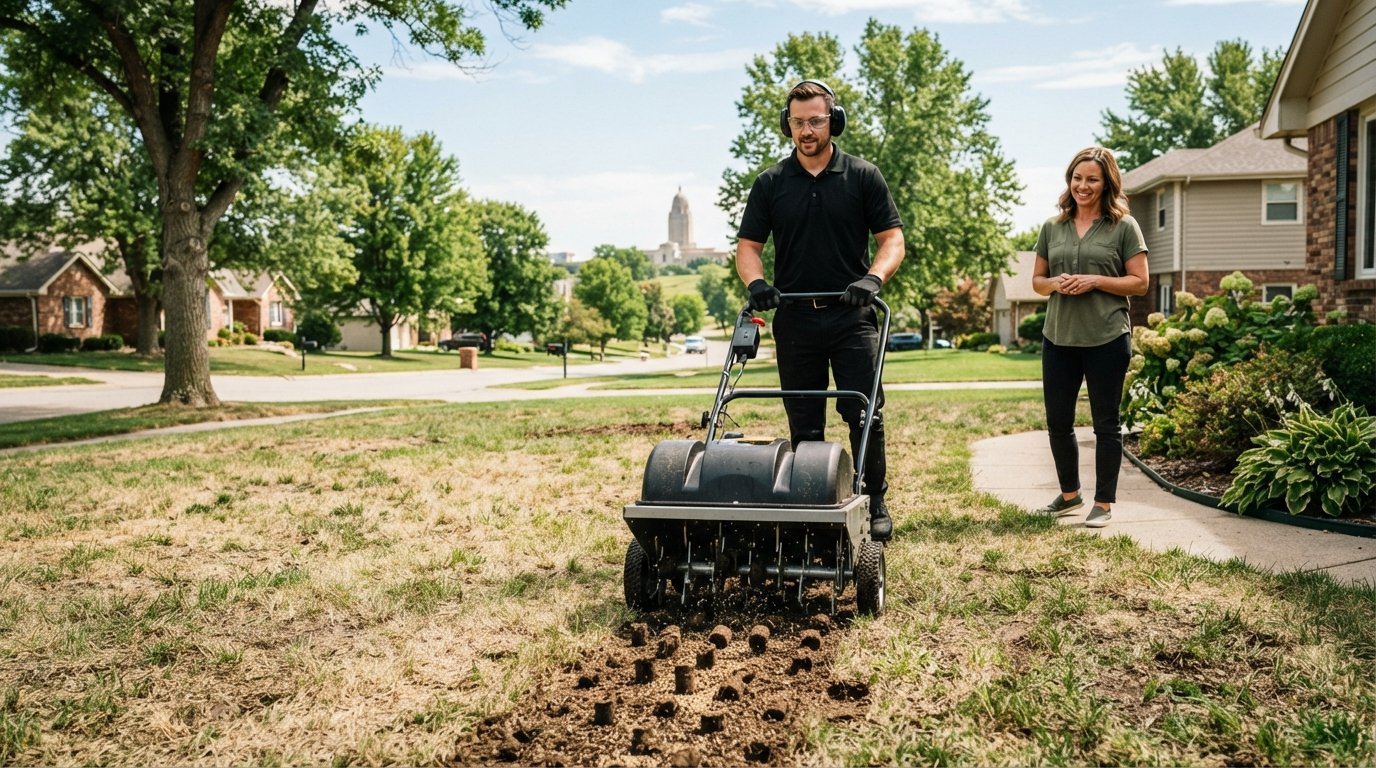

More seed isn’t always the first fix for a thin lawn. If you’ve reseeded before and bare or patchy spots returned, the cause may be compaction, stress, or another condition that seed alone can’t solve. A practical answer to how to thicken lawn in Nebraska starts with finding out why the grass is thinning.
Before choosing a repair, consider whether your yard needs new seed, better growing conditions, or a change to its care routine. Nebraska’s changing seasons make timing important, too. Reseeding without addressing the cause, or at the wrong time, can mean repeating work that hasn’t helped.
This guide explains how to spot common causes of thin grass, choose a suitable repair, and follow a season-aware plan. You’ll learn when seeding, improved routine care, or professional aeration and overseeding may help, and how mowing and ongoing lawn care support fuller-looking turf. The right first step gives your lawn a better chance to fill in and stay healthy.
Why Is Your Nebraska Lawn Thin? Diagnose the Cause Before You Seed
Inspect the lawn before choosing a repair. Scattered thin turf, isolated bare patches, and grass that keeps thinning in the same places can point to different causes. Adding seed without addressing the underlying issue may only repeat work that doesn’t last.
Look for patterns across the yard. Is the grass sparse along a path, beneath a tree, on a slope, or in an area that stays damp? A modern lawn needs suitable growing conditions as well as routine care. Nebraska yards vary, too. Compacted clay can be a factor, particularly in eastern Nebraska, but don’t assume every lawn has clay soil or the same problem.
For a visual overview of lawn-thickening basics, watch this video:
What signs point to compaction, moisture stress, or heavy foot traffic?
Hard ground that’s difficult to push a screwdriver into may suggest compaction. Compacted soil can restrict root growth and make it harder for water to move into the ground. Poor drainage may leave persistently wet areas weak or patchy. Repeated thinning along a shortcut or play area can signal that foot traffic is wearing down the turf.
Check irrigation coverage and recent weather before deciding the lawn needs seed. Compare how well different areas are watered, and note whether thin grass follows a dry slope or collects in a damp low spot. Scattered thin turf may respond to improved growing conditions and overseeding. A fully bare patch may need its cause corrected and the soil prepared before seed can take hold.
Could shade, weeds, or mowing habits be thinning the grass?
Grass needs enough sunlight to grow densely, so areas under trees or beside buildings may struggle even with consistent care. Weeds can move into weak turf, but aggressive removal may expose more soil and leave a larger area to repair. First consider why the grass is sparse, then choose a weed-control approach suited to the lawn.
Mowing too short can add stress, especially during summer. For Nebraska cool-season lawns, a summer mowing height of 3 to 4 inches is a useful reference; check guidance for your grass type before adjusting. Understanding how to thicken lawn in Nebraska starts with matching the fix to the pattern you see. If compaction seems likely or DIY work feels difficult, professional aeration and overseeding may be an option for Lincoln-area properties.
How Nebraska Soil, Grass Types, and Seed Choice Affect Lawn Density
Once you’ve identified where the lawn is struggling, choose seed that fits the turf you already have and the conditions in that part of the yard. Overseeding means spreading grass seed into existing turf to improve its density, rather than replacing the whole lawn. It can help thin grass fill in, but seed is less likely to establish if the site conditions don’t suit the chosen type or the soil is too compacted.
Nebraska isn’t one uniform growing environment. Soil, sun, moisture, and local climate can vary, even within the same property. Clay soil may contribute to compaction in some yards, but it isn’t a diagnosis to assume. Kentucky bluegrass and tall fescue are examples of grasses used in Nebraska, not automatic choices for every lawn. Check current University of Nebraska-Lincoln Extension guidance and the seed label for regional recommendations before buying a mix.
How do you choose grass seed for an existing Nebraska lawn?
Start by identifying the grass you have. Take a clear photo of the blades and the overall lawn, or bring a small sample to a local extension office or knowledgeable lawn-care professional. Then compare seed options with the site. Note how much sun the area gets, whether it sees frequent foot traffic, and whether it tends to dry out or stay damp.
Read the label rather than relying on a generic “Nebraska blend.” Confirm that the seed type suits your region and is compatible with the existing lawn. A shaded strip beside a building may need a different approach from a sunny, well-used play area. If you’re considering a different grass type altogether, treat that as a lawn-change decision, not routine overseeding.
When can aeration or soil preparation help new seed establish?
Compacted ground can make it harder for water, air, and roots to move through the soil, creating a tougher setting for new seedlings. Aeration may help where compaction is present, but it isn’t required for every lawn. Base the decision on soil and site conditions, and prepare the surface according to the seed label. If the lawn is so sparse that overseeding may not be enough, review Renovating a lawn for a more extensive repair approach.
For Lincoln-area properties, professional aeration and overseeding guidance can be useful when compaction is difficult to assess or the work is more than you want to handle yourself. Matching the seed and preparation to the actual yard is a practical first step in learning how to thicken lawn in Nebraska.
Overseeding, Patch Repair, or Soil Work: Choose the Right Fix
The right repair depends on how much of the lawn is affected and whether the same spot keeps failing. Broad thinness across established turf may call for overseeding, while a few bare spots are easier to address individually. If grass repeatedly struggles where water pools or the ground feels hard, deal with the site condition before adding more seed. Diagnosing the problem first can save you from repeating a repair that doesn’t address the cause.
| Approach | May suit | Key limitation |
|---|---|---|
| Overseeding | Thin grass spread through otherwise established turf | Won’t resolve persistent compaction, drainage, or unsuitable growing conditions on its own |
| Localized patch repair | A small number of bare areas after the cause is corrected | May not make the lawn look even if surrounding turf is thin or the seed doesn’t match |
| Soil or drainage work | Recurring puddles, hard ground, or repeatedly weak spots | Requires identifying the underlying issue; adding seed alone won’t fix it |
When is overseeding a better fit than repairing individual bare spots?
Choose overseeding when the lawn is established but looks thin across a broad area. It adds seed among existing grass rather than focusing on one small opening. If the problem is limited to a few bare spots, localized repair may be more practical after you’ve addressed what caused them. In either case, follow the seed-label directions for preparation and care, and check University of Nebraska-Lincoln Extension guidance for recommendations suited to Nebraska conditions.
Seed choice and timing matter, but so does follow-up. Keep the repaired area from being disturbed and follow the label’s watering instructions to give new seed a chance to establish. Overseeding and patch repair aren’t interchangeable: let the scale of thinning guide the method.
When should you address soil or drainage before adding more seed?
Pause before reseeding if the same area repeatedly puddles after rain or irrigation, or if the soil is difficult to penetrate. Observe where water flows and collects, check irrigation coverage, and consider whether traffic or compaction may be contributing. A wet depression and a hard, worn path can both produce sparse turf, but they call for different assessments.
Aeration may be useful when compaction is confirmed, but it isn’t an automatic step for every lawn. For Lincoln-area homeowners considering help, Yardworx offers professional aeration and overseeding. Matching the repair to the problem is central to how to thicken lawn in Nebraska.
A Nebraska Lawn-Thickening Plan: Prepare, Seed, Water, and Monitor
Successful overseeding takes more than a pass with a spreader. Follow each step to give seed a suitable place to grow and to catch problems early.
- Diagnose the thin area. Decide whether you’re dealing with widespread thin turf, a few bare patches, or a recurring issue such as compaction or poor drainage. Correct problems that could prevent seed from establishing before you sow.
- Prepare the surface. Remove leaves, dead grass, and other debris. Loosen the surface only as needed for the lawn’s condition, taking care not to damage healthy turf. If the ground is compacted, assess whether aeration is appropriate rather than treating it as a required step.
- Choose seed and timing. Match the seed to the existing lawn, site conditions, and your part of Nebraska. For cool-season grass, a general fall seeding window is August 15 to September 15, with western Nebraska’s window ending earlier, around September 5. Confirm current local guidance for your grass type before starting.
- Sow according to directions. Follow the seed packaging for application rate and preparation. Aim for good seed-to-soil contact as directed, since seed left on debris or dense thatch may not establish well. Don’t apply weed control or other treatments near seeding unless the product label says it’s safe for newly seeded areas.
- Water and monitor. Keep the area appropriately moist, following the seed directions and adjusting for rainfall and weather. Avoid letting the surface dry out, but don’t assume more water is always better. Watch for runoff or pooling, which may signal that watering needs adjustment or drainage deserves attention.
How should you care for new grass?
Limit heavy foot traffic while seedlings are young, especially on a route used every day. Wait to mow until the new grass and ground can tolerate it, and follow advice for the selected grass type. Once established, consistent mowing and routine care help maintain a healthy-looking lawn.
Be patient. Visible improvement depends on seed establishment, weather, soil, and follow-up care, and results may vary across the same yard. Keep a simple record of when you seeded, how the area was watered, and where growth is uneven. That makes it easier to decide what to adjust. This sequence is central to how to thicken lawn in Nebraska without repeating the same repair blindly.
If you’re in the Lincoln area and would like help with aeration and overseeding, contact Yardworx Lawn & Landscape to discuss your lawn’s needs.
Keep a Nebraska Lawn Dense: Ongoing Care and When to Get Help
New grass needs steady care after it appears, and established turf benefits from habits that reduce avoidable stress. Pay attention to how the lawn responds as weather changes instead of relying on one fixed routine for every part of the yard. Areas under trees, on slopes, and along irrigation edges may need different attention from open, level turf.
Which ongoing habits help protect lawn density?
Mow according to the grass type and its current growth. Cutting too short can stress turf and leave more soil exposed, while mowing at an appropriate height helps maintain a fuller-looking lawn. For Nebraska cool-season grasses, a summer mowing height of 3 to 4 inches is a useful reference. Confirm the suitable height for your specific grass, and avoid removing more growth than recommended at one time.
Check irrigation coverage periodically. Look for dry strips or oversaturated spots, then adjust watering based on rainfall and observed soil moisture rather than following a universal schedule. If an area starts thinning again, note whether the change coincides with shade, traffic, drainage, or watering. A planned lawn fertilizing program may also be part of ongoing care; follow professional guidance and product directions for your lawn’s needs.
When can professional lawn care make the process easier?
Consider a professional assessment if the cause of thinning remains unclear, the same spots keep returning, water regularly pools, or bare areas cover a large part of the lawn. Adding seed repeatedly without resolving an ongoing site issue can mean more effort without addressing why the grass struggles. Share what you’ve observed, including where the problem occurs and what care the area has received.
For residential and commercial properties in Lincoln, Yardworx Lawn & Landscape offers aeration and overseeding, a six-step fertilizing program, lawn treatments, and lawn care. These services may help when the work is difficult to manage yourself, but the right next step depends on the lawn’s condition. Regular mowing and attentive care can support a healthier-looking yard, though results depend on site conditions and ongoing maintenance.
A thoughtful approach to how to thicken lawn in Nebraska doesn’t end when the seed goes down. Keep observing, adjust care as conditions change, and ask for guidance if the same concerns persist. Talk with Yardworx about your lawn and discuss possible next steps for your Lincoln property.
Build a Fuller Lawn One Thoughtful Step at a Time
A denser lawn starts with understanding why the grass is thin. Match the repair to the problem: overseed established turf that needs more coverage, repair limited bare spots after addressing their cause, and investigate recurring compaction or drainage concerns before adding more seed. Choose seed suited to the existing grass and site, then follow its directions for seeding and care.
Ongoing attention matters, too. Mow at a suitable height, adjust irrigation to rainfall and soil moisture, and watch for areas that begin thinning again. That diagnosis-first approach is the practical foundation of how to thicken lawn in Nebraska , though results depend on local conditions and successful seed establishment.
For Lincoln-area homeowners who’d like support, locally owned and operated Yardworx serves the Lincoln metro area with weekly mowing, a six-step fertilizing program, and aeration and overseeding. If you’re unsure which next step fits your yard, contact Yardworx to discuss your lawn. With a clear plan and consistent care, you can work toward a healthier-looking lawn one season at a time.
Frequently Asked Questions
What is the fastest way to thicken a lawn in Nebraska?
There’s no single fastest fix for every Nebraska lawn. First identify why the turf is thin: compaction, shade, weeds, uneven moisture, and wear each call for a different response. Widespread thinness may suit overseeding, while a few bare areas may need localized repair after the cause is corrected. Follow seed directions for preparation and watering. Spreading seed over an unresolved problem can lead to another failed attempt.
When is the best time to overseed a lawn in Nebraska?
For cool-season grasses, a commonly recommended Nebraska seeding window is August 15 to September 15, with western Nebraska’s window ending earlier, around September 5. Timing still depends on grass type and local conditions. Check current University of Nebraska-Lincoln Extension recommendations and the seed label before starting. Weather, soil moisture, and the condition of the existing lawn can affect how well new grass establishes.
Can I thicken my lawn without aerating it?
Yes, if compaction isn’t the reason your grass is thin. Aeration may help where compacted soil limits growth, but it won’t solve issues such as too much shade, inconsistent watering, heavy traffic, or grass that doesn’t suit the site. Inspect the problem area before choosing a repair. Depending on what you find, overseeding, localized patch work, improved routine care, or addressing a soil or drainage concern may be more appropriate.
Why is my lawn still thin after overseeding?
New seed may struggle if it doesn’t contact the soil well, receives uneven moisture, or is sown at an unsuitable time. Shade, weeds, compaction, poor drainage, and foot traffic can also interfere with establishment. Review the seed-label directions and compare conditions in thin areas with healthier parts of the yard. If the same patch keeps failing, investigate the cause before adding more seed.
How often should I water newly seeded grass in Nebraska?
Follow the seed label and adjust for weather, soil, and seedbed conditions rather than using one schedule for every yard. The goal is to keep the seedbed suitably moist without waterlogging the soil or creating runoff. Check it regularly, especially during dry or windy weather. As seedlings establish, adjust watering according to the seed directions and current local guidance.
Does fertilizer alone make a thin lawn thicker?
Not necessarily. Fertilizer can support grass growth when nutrients are appropriate, but it won’t resolve every cause of thin turf. Compaction, shade, drainage problems, weeds, or poor seed establishment may need a different response. Check product directions and timing before applying fertilizer, especially around newly seeded areas. If you’re unsure what’s affecting the lawn, seek local guidance before choosing a treatment.
When should I call a lawn-care professional about thin grass?
Consider professional help if thinning keeps returning, large areas are bare, drainage remains poor, or you can’t identify the cause. A lawn-care professional can help determine whether aeration, overseeding, fertilizing, or another approach fits the site. Yardworx Lawn & Landscape serves residential and commercial properties in Lincoln with lawn care, a six-step fertilizing program, and aeration and overseeding. Discuss the lawn’s condition before choosing a service.