
Lincoln’s average first frost arrives around October 10 to 15, but useful lawn-prep work starts weeks earlier. If you’re unsure what to tackle first, or worried you’ve missed your chance, a clear plan helps you focus on what still matters. Preparing lawn for winter in Lincoln is less about doing everything at once and more about timing basic care to local conditions.
It’s understandable to wonder whether your lawn needs one last round of care before cold weather settles in. This guide lays out a Lincoln-focused sequence to help you prepare turf for winter and make spring feel less like guesswork. You’ll learn when to consider aeration and overseeding, how to handle leaves and final mowing, and what to check before winterizing irrigation. You’ll also see which tasks may be easier to delegate when they call for specialized equipment or repeat visits, so you can choose the right level of help for your yard.
Preparing a Lincoln Lawn for Winter Starts with Local Timing
Winter preparation is a series of manageable tasks, not one treatment every lawn needs. In Lincoln, fall can shift from mild days to freezing nights quickly, so the useful window depends on the weather, your lawn’s condition, and the care it has already received. Preparing lawn for winter in Lincoln means helping turf enter dormancy in good condition, not trying to complete a year’s worth of care in one push.
Lincoln lawns commonly include cool-season grasses such as tall fescue and Kentucky bluegrass, but check your own grass type before following species-specific advice. Nebraska Extension is a useful source for recommendations suited to local conditions. Its current guidance also matters for fertilization: a late-fall “winterizer” application isn’t automatically appropriate for every established lawn.
For a visual overview of winterizer fertilization, watch this educational guide. Its advice isn’t Lincoln-specific, so use local recommendations and your lawn’s needs to guide decisions.
What Lincoln’s fall-to-winter transition means for lawn care
Weather varies from year to year, so a calendar date is a planning cue, not a universal deadline. The average first frost for the Lincoln area is October 10 to 15, according to the local timing information in this guide. Use that as a seasonal benchmark, then adjust based on actual temperatures and your lawn’s growth. Each task needs suitable conditions, and once an ideal window passes, the practical options may change.
For background on routine lawn maintenance practices, including mowing and fertilizing, an overview can help put seasonal work in context. For specific decisions, local Nebraska Extension guidance and your grass type should take priority.
Which lawn tasks matter before winter arrives?
Winter care is a focused part of the annual maintenance calendar. Depending on your lawn, fall priorities may include:
- Mowing: Keep up with growth and finish with an appropriate cut before it stops.
- Leaf management: Remove or mulch leaves so a heavy layer doesn’t smother grass.
- Fertilization: Base applications on current local recommendations and the lawn’s needs, not an automatic “winterizer” schedule.
- Aeration: Consider it if compacted soil or past lawn conditions make it useful.
- Irrigation winterization: Plan seasonal maintenance before freezing weather threatens the system.
Not every yard needs every service. Previous care, visible compaction, leaf volume, and irrigation setup all affect what to prioritize. Yardworx offers seasonal services such as aeration, leaf removal, irrigation maintenance, and lawn care. If pest concerns are also on your mind, see the separate pest control in Lincoln page. Consider each need on its own, and build a winter plan around the work your lawn actually requires.
A Lincoln Fall Lawn Checklist: Mowing, Leaves, and Fertilizing
Attention to mowing, leaves, and fertilizer can make fall care more manageable. Adapt this checklist to your lawn’s growth and condition instead of treating every task as mandatory. For homeowners comparing ongoing options, Yardworx provides lawn care services in Lincoln.
Mowing and leaf cleanup before the ground freezes
Continue mowing while the grass is actively growing, adjusting how often you cut to match its growth. Avoid leaving turf excessively long going into winter, but don’t cut it shorter than needed just to finish the season. The final cut can be around 2.5 to 3 inches, based on the local timing guidance in this article. Check Nebraska Extension recommendations for your grass type and conditions.
Keep an eye on fallen leaves, too. A few scattered leaves may be manageable, but a thick or matted layer can block light and hold moisture against the grass. Mulch a light covering with the mower if it breaks into small pieces and doesn’t blanket the turf. Rake or arrange leaf removal when coverage is too heavy to mulch without burying the lawn. For broader seasonal context, consult a year-round lawn maintenance guide.
- Check growth: Mow as needed while the grass is still growing.
- Assess leaf cover: Mulch light coverage; clear thick or matted layers.
- Finish thoughtfully: Avoid leaving grass excessively long, and use local, grass-specific guidance for the final cut.
Fertilizing decisions for a Lincoln lawn
Fertilizer timing and product choice should reflect the lawn’s grass type, condition, and past care. Don’t assume every established lawn needs a late-fall “winterizer.” Nebraska Extension’s current guidance no longer recommends that application for most established lawns, so check its recommendations and follow the product label before applying anything. A winter fertilizer discussion from Chicago Botanic Garden can provide general context, but local guidance should inform your decision in Lincoln.
If you’d like help considering a fertilizing plan, Yardworx offers a six-step fertilizing program. Review the fertilizing program details to see whether professional care fits your lawn’s needs. Use the same practical test for each fall task: address what your lawn needs, and leave out what it doesn’t.
DIY or Professional Winter Lawn Prep: Choose What Fits Your Yard
You don’t need to hire a professional for every fall task. Routine mowing and light leaf cleanup are often manageable at home if you have the equipment and time. The key question is whether a task calls for specialized equipment, repeated visits, or a closer look at the lawn’s condition. Use this comparison to decide what makes sense for your yard while preparing lawn for winter in Lincoln.
| Task | DIY considerations | When professional help may be useful |
|---|---|---|
| Mowing | Continue while grass is growing, adjusting frequency to growth and using suitable equipment. | If you lack the time or equipment to keep up with recurring cuts. |
| Light leaf cleanup | Rake or mulch scattered leaves if you can keep the lawn from being covered by a thick layer. | If leaf volume makes cleanup a larger, time-consuming seasonal job. |
| Lawn treatments | Check your turf condition and follow the product label carefully before applying. | If you’re unsure whether a treatment fits your grass type or lawn’s needs. |
| Aeration and overseeding | Consider whether you have suitable equipment and can complete the work at an appropriate time. | If compaction, thin turf, or recurring wear suggests a closer evaluation would help. |
When homeowners can handle fall tasks
Simple maintenance doesn’t automatically call for a service visit. If you have a mower and can keep up with active growth, mowing may be a straightforward do-it-yourself job. Light leaf cleanup can be, too, if you can clear or mulch leaves before they form a heavy cover. For locally relevant seasonal guidance, the University of Nebraska-Lincoln Extension’s UNL Fall Lawn Care Guide can help you check how recommendations apply to Nebraska lawns.
Pause before applying lawn treatments. Identify the turf as best you can, consider the lawn’s condition and past care, and follow the product label. If you’re uncertain about those details, seeking advice is more sensible than applying a product by guesswork.
When professional aeration or overseeding may help
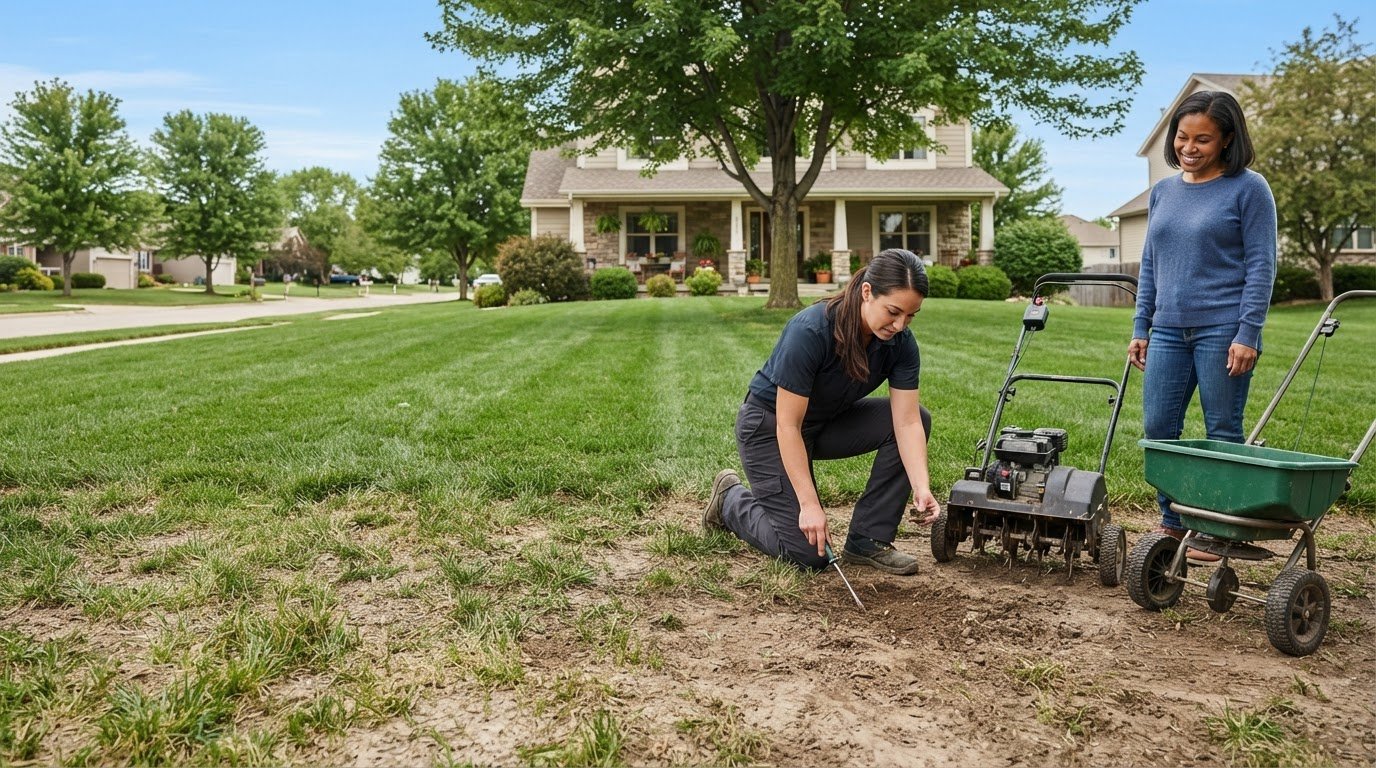
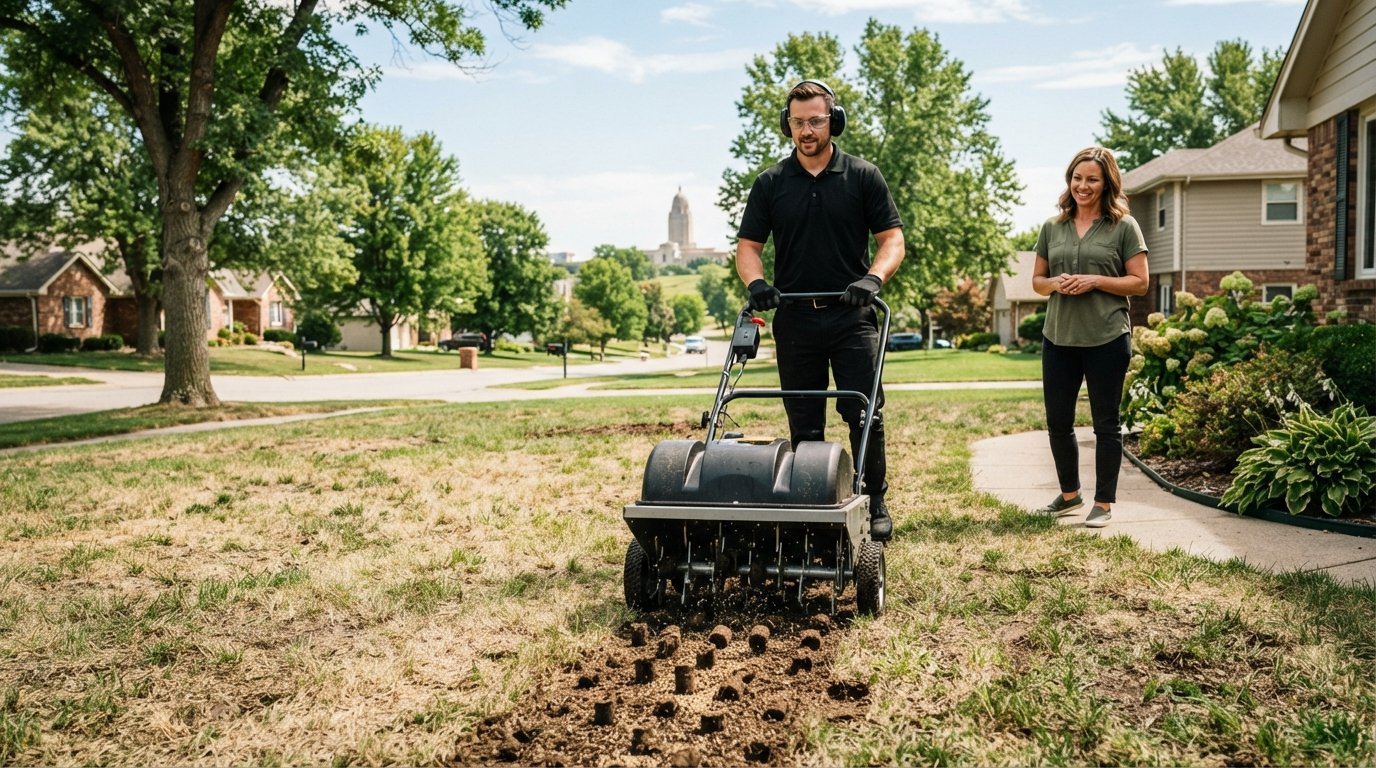
Compacted soil, thin areas, or spots that wear down repeatedly may be reasons to consider aeration or overseeding. Those signs don’t mean every lawn needs the work, and results aren’t guaranteed. Suitability depends on the lawn’s condition, grass type, and timing, so weigh those factors before deciding. Yardworx offers aeration and overseeding as options, not requirements for every property. If you’re weighing whether specialized equipment or help makes sense, compare aeration and overseeding services and choose what fits your lawn and schedule.
Winterize Irrigation and Finish Fall Cleanup in the Right Order
A short walk-through can help organize the final fall jobs. Before temperatures drop, note where leaves are collecting, whether any lawn areas look thin, and where irrigation components are visible. Then handle the tasks that fit your lawn and the conditions. Preparing lawn for winter in Lincoln includes protecting the irrigation system as well as tending the turf, but the right order depends on what your property needs.
A practical order for late-fall lawn tasks
Use this sequence as a flexible checklist, not a fixed schedule. Weather and lawn conditions change from year to year, so complete outdoor work while conditions are suitable and before freezing weather creates problems.
- Walk the lawn. Look for heavy leaf cover, thin or worn areas, and visible sprinkler heads or other irrigation components.
- Manage leaves. Mulch light coverage if it won’t smother the grass. Rake or arrange leaf removal for thick, matted layers.
- Finish mowing as needed. Continue while the grass is actively growing, adjusting to its growth rather than following a rigid date.
- Review unfinished lawn tasks. Consider the lawn’s condition and past care before deciding whether any seasonal work remains appropriate.
- Plan irrigation winterization. Check your system’s instructions and arrange the appropriate maintenance before freezing conditions threaten its components.
Keep this list focused on the lawn and irrigation. A fall check doesn’t need to become a long list of unrelated property projects.
How to handle sprinkler-system winterization
Water left inside irrigation components can freeze and cause damage. Systems differ, however, and the correct procedure depends on their design and manufacturer instructions. Don’t guess at equipment settings or attempt a blowout without understanding the system’s requirements. Check the manual, or use qualified help if the procedure is unfamiliar or specialized equipment is needed.
Irrigation winterization timing depends on the weather and your system’s requirements, so plan around both rather than a calendar date alone. Lincoln’s typical planning window is late October to early November, after the last watering and before a hard freeze, but local conditions can shift that timing. Yardworx offers irrigation maintenance in Lincoln for homeowners who need system-specific help. Review the service details and include irrigation care in your winter checklist.
How Yardworx Can Help Prepare Lincoln Lawns for Winter
Some homeowners prefer to handle routine tasks themselves, while others value having equipment-intensive or recurring work taken care of. Yardworx Lawn & Landscape serves the Lincoln metro area with lawn care, a six-step fertilizing program, aeration and overseeding, leaf removal, and irrigation maintenance. These are options to match with specific lawn needs, not a package every property must have. A thoughtful plan for preparing lawn for winter in Lincoln starts with what your yard actually needs.
Which Yardworx services may fit your winter-preparation plan?
- Leaf removal: Consider it if fallen leaves are building up faster than you can clear them or covering large sections of turf.
- Aeration and overseeding: These may be worth considering if the lawn has compacted soil, thin areas, or recurring wear. Check whether the work suits your lawn and the current season.
- Irrigation maintenance: If you have a sprinkler system and aren’t sure how to prepare it for freezing conditions, system-specific help can take the guesswork out of the task.
- Lawn care and fertilizing: Ongoing care or a fertilizing program may suit homeowners looking for a planned approach, guided by the lawn’s condition and current recommendations.
Not every concern belongs in a winter lawn plan. Yardworx also offers mosquito and tick control, but that’s a separate service for homeowners dealing with an outdoor pest concern, not a required step in preparing turf for cold weather.
What to share when asking for local lawn-care help
A few details can make a conversation more useful. Describe what you’ve noticed, such as heavy leaf buildup, thin or worn spots, or areas where the soil seems compacted. Mention recent maintenance, including aeration, overseeding, or fertilizing, and share what you know about your grass type. If you need irrigation support, note any system details you have, such as its controls or manufacturer information.
Ask which tasks make sense for your property and the conditions this season. That lets you understand your options without assuming every service is necessary. Yardworx is a locally owned and operated business serving the Lincoln metro area, with seasonal services for specific tasks that take time or specialized equipment.
For information about seasonal priorities and available services, contact Yardworx to discuss your property. Share what you’ve observed, then decide which, if any, services fit your needs.
Give Your Lawn a Confident Start to Spring
Preparing lawn for winter in Lincoln is easier when you focus on what your yard actually needs. Keep mowing while grass is growing, prevent heavy leaves from covering the turf, and base fertilizer decisions on local guidance and your lawn’s condition. Plan irrigation winterization around both the weather and your system’s requirements.
You don’t have to tackle every task alone. Yardworx is locally owned and operated in the Lincoln metro area, with seasonal lawn care, aeration and overseeding, leaf removal, and irrigation maintenance available for homeowners who need help with specific jobs. The right combination depends on your property, its recent care, and the tasks you’d prefer to handle yourself.
Share what you’ve noticed and ask which seasonal steps make sense for your lawn. Contact Yardworx to discuss your Lincoln lawn’s seasonal needs. A practical plan now can help you head into winter with greater peace of mind and welcome spring with less guesswork.
Frequently Asked Questions
When should I start preparing my lawn for winter in Lincoln?
Start planning in late summer, then adjust tasks as fall weather and your lawn’s condition become clearer. Aeration and overseeding are generally best timed from late August to mid-September, while leaf cleanup and final mowing come later as leaves fall and grass growth slows. Lincoln’s average first frost is around October 10 to 15, but use it as a benchmark, not a fixed deadline. Check current Nebraska Extension guidance and local conditions.
Should I fertilize my lawn before winter in Nebraska?
Not automatically. Fertilizer timing and product choice depend on your grass type, lawn condition, and previous care. University of Nebraska-Lincoln Extension no longer recommends a late-fall “winterizer” application for most established lawns, despite advice that may still promote it. Check current Extension recommendations and follow the product label before applying fertilizer. If you’re unsure what your lawn needs, seek local guidance rather than applying a treatment just because it’s fall.
Should I keep mowing my lawn in the fall?
Yes, continue mowing while the grass is actively growing, and adjust how often you cut to match its growth. As growth slows, mowing may become less frequent. Avoid leaving grass excessively long going into winter, but don’t cut it shorter than appropriate for your turf. Current local guidance gives 2.5 to 3 inches as a suggested final mowing height. Check recommendations for your grass type and conditions before the last cut.
Do I need to remove all the leaves from my lawn before winter?
No, you don’t necessarily need to remove every leaf. A light scattering can often be mulched with a mower if it breaks into small pieces and doesn’t cover or smother the grass. Rake, collect, or arrange leaf removal if leaves form a thick or matted layer. In Lincoln, keep checking as more leaves fall, since a clear lawn one week can become heavily covered after windy weather.
Is fall a good time to aerate and overseed a lawn in Lincoln?
Fall can be a suitable time, especially for cool-season lawns, but timing and need matter. The recommended window for aeration and overseeding in Lincoln is late August to mid-September, allowing time for seed to establish before frost. That window may have passed by late fall, so don’t assume the work is still appropriate. Consider the lawn’s condition, grass type, and current guidance from Nebraska Extension before scheduling.
How do I prepare my sprinkler system for a Lincoln winter?
Prepare the system before freezing weather, following its manufacturer instructions or getting qualified help if the procedure is unfamiliar. Water left in irrigation components can freeze and cause damage, but systems differ, so avoid guessing at blowout methods or equipment settings. In Lincoln, late October to early November is a typical planning window, after the last watering and before a hard freeze. Actual timing depends on weather and system requirements.
Can I prepare my lawn for winter myself, or should I hire a lawn-care service?
You can handle routine mowing and light leaf cleanup yourself if you have the time and suitable equipment. Professional help may be useful for larger leaf buildup, aeration or overseeding that needs specialized equipment, or irrigation maintenance requiring system-specific knowledge. Not every property needs every service. Yardworx Lawn & Landscape offers seasonal lawn care, aeration and overseeding, leaf removal, and irrigation maintenance in Lincoln, so you can consider help for the tasks that fit your yard.